Siding, Researched
Siding decisions, measured before you pay
One wall is dented, or the paint has gone, or a storm took a corner off, and the first quote you get will probably be for the whole house. Before that, it is worth knowing how many squares your house actually has, what the federal government requires before anyone disturbs old paint, and which material the people who build new houses in your region are choosing this year.
Most siding advice is written by the company that wants to do the work, or by the company that makes the product. That is not a failing of the people who read it — it is a defect in who is talking. We are a referral service: we publish research, we connect homeowners with independent siding contractors, and we are paid a fixed fee for the introduction whether the job is one panel or four walls.
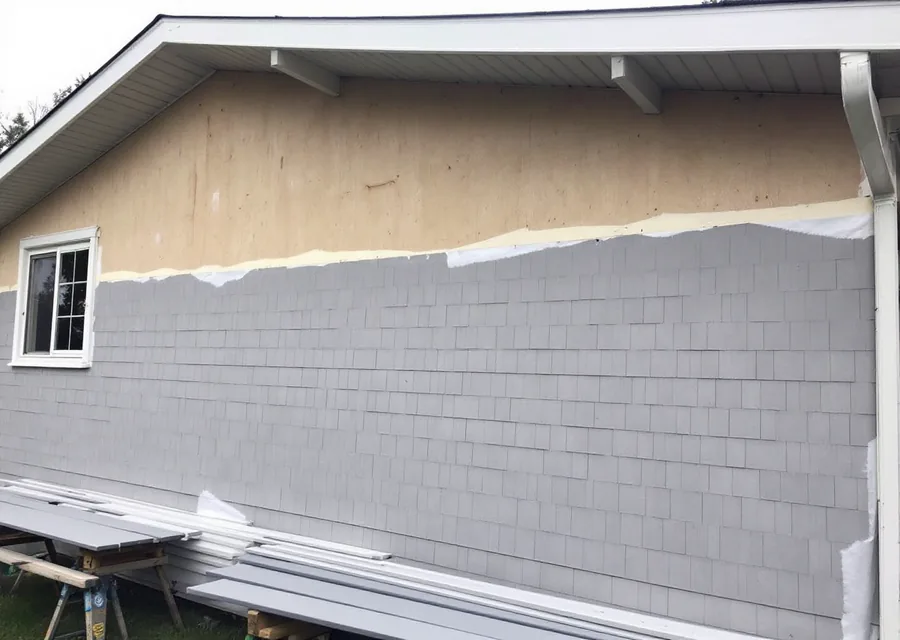 Mid-job wall
are fiber cement, 9% in 2005
Census Bureau
Four things that decide what this costs you
- How much wall there is. Siding is sold and priced by the square — a hundred square feet — and a contractor who has not measured your house is quoting somebody else's. The arithmetic is perimeter times height, minus the doors and windows, plus waste, and it takes ten minutes with a tape. The calculator on the cost page does it, so that a quote can be checked against the house rather than against another quote.
- What is under the old siding. Rotten sheathing, no house wrap, a wall that was never flashed. None of it is visible until the tear-off, and every one of it is a line that appears on the invoice and was never on the estimate. The honest quote names an allowance for it; the cheap one discovers it on the day.
- When the house was built. Before 1978, disturbing painted surfaces is federally regulated work for a certified firm, and old cement-shingle siding may contain asbestos. Both add lines to a quote, both are the law, and both are the first things a low quote leaves out.
- Whether one wall is enough. Hail hits the side facing the storm. A leaking gutter rots one corner. A whole-house quote for a one-wall problem is the most common way to spend four times the money, and a company paid by the size of the job has no reason to say so.
Where To Start
Start with the question, not with a material
Nobody wakes up wanting new siding. They wake up to a dent, a crack, a color that has gone, or an estimate that seemed high. So the useful entry point is the question you actually have, and each of these leads to a page built around that one thing.
What does siding replacement cost
We publish no averages, on principle. What we publish is the arithmetic: a calculator that counts your house's squares from its dimensions, the six lines every honest quote carries, what the tear-off can add, the federal line for a house built before 1978, and the FTC's advice on the lowest bidder.
One wall is damaged
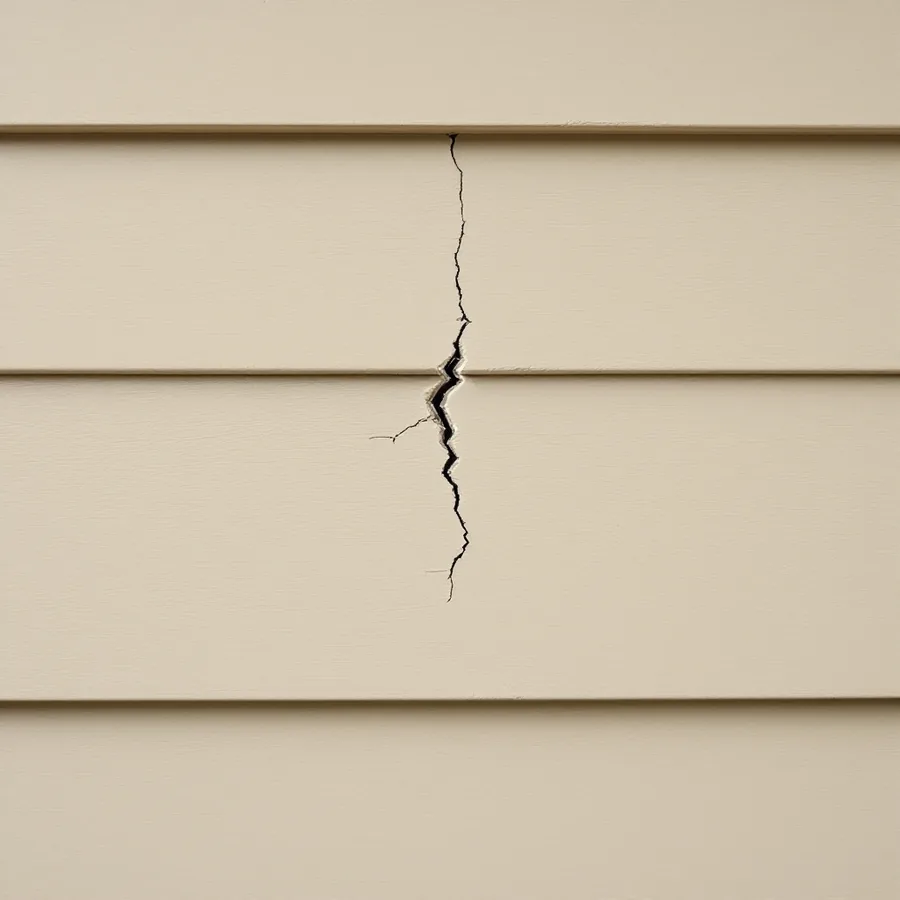
Hail on the windward side, a gutter that rotted one corner, a lawn mower through a panel. Which damage is a repair, which is one wall, and why matching old vinyl is the real problem.
Which material
Vinyl, fiber cement, wood, engineered wood, metal, stucco, brick: what each asks of an owner, and what the houses already standing in your state and climate are clad in.
The house was built before 1978
Paint that old is presumed to contain lead until tested, and the EPA requires a certified firm to disturb it. Cement shingles that old may contain asbestos. What that changes on a quote. Coming next.
Fiber cement
The material that went from nine percent of new houses to twenty-three in twenty years: what it is, where it fails, why installation decides everything, and what it costs to paint. Coming next.
Board and batten
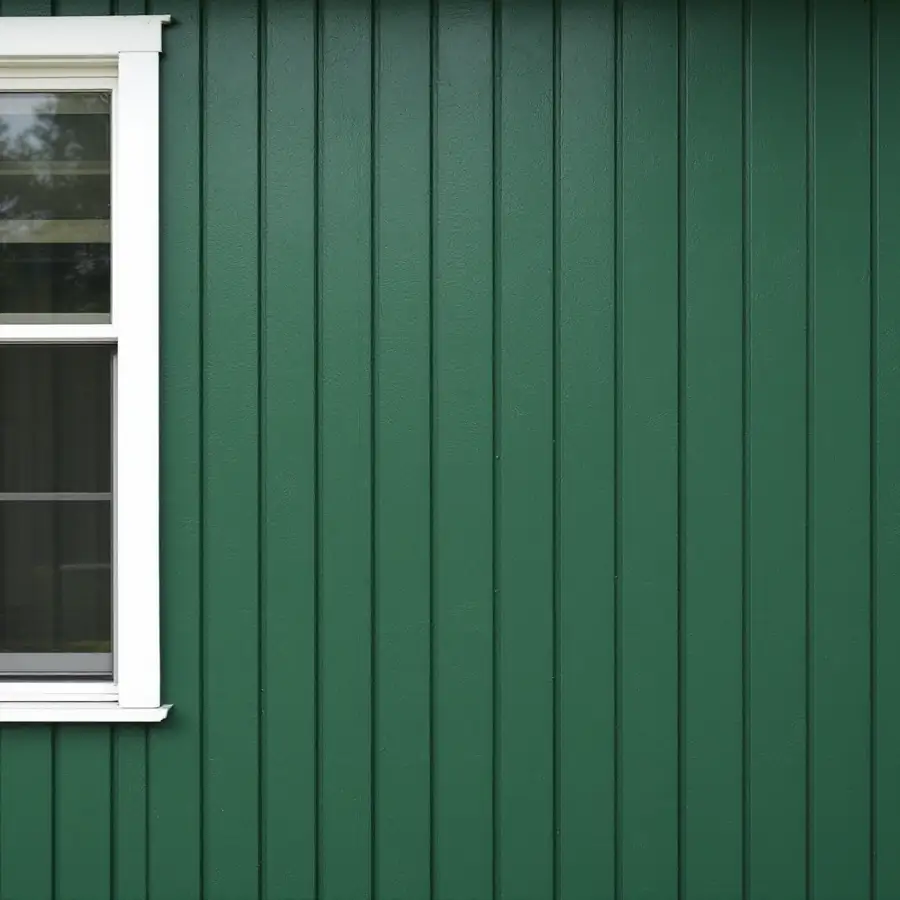
The vertical profile that most searches are actually about. In vinyl, fiber cement and wood, what it changes about installation, and where it belongs on a house. Coming next.
The Data
What new houses are actually clad in, by region
The Census Bureau asks the builder of every new single-family house what its primary exterior wall material is, and has since 1973. It is the only national count of what the people who build houses for a living choose, and it is not what the brochures say.
A contractor who installs one material all week is the contractor to have install it. The regional share is a fair proxy for who does what every day.
| Region | Vinyl | Fiber cement | Stucco | Brick | Wood |
|---|---|---|---|---|---|
| United States | 26% | 23% | 26% | 16% | 6% |
| Northeast | 70% | 8% | 1% | 8% | 11% |
| Midwest | 64% | 12% | <1% | 4% | 16% |
| South | 21% | 24% | 23% | 26% | 3% |
| West | 5% | 31% | 55% | 1% | 7% |
What twenty years of the same survey shows
In 2002 vinyl was on 40 percent of new houses nationally; in 2025 it is on 26 percent. Fiber cement, which the Census began counting separately in 2005 at 9 percent, is now at 23 percent. Wood, which clad 44 percent of new houses in 1981, is at 6 percent. There is no national default any more, and the region decides more than the brochure does: a house in the West is more likely to be stuccoed than anything else, a house in the Northeast is very probably vinyl, and a house in the South is a genuine four-way choice.
What that means for a homeowner replacing siding is simple. The material the contractors in your region install every day is the material they install well, and the material they install occasionally is the one to ask harder questions about. The share is not a recommendation; it is a fair proxy for who has the practice. For the houses already standing rather than the new ones, our count of what 77 million detached houses are clad in splits the same question by climate zone and by state.
The Number
Three sizes a siding job comes in
Not the brand, not the city, and not the company's truck. The size of the job is the first thing that decides the number, and it is the thing a whole-house quote skips.
| Size | What it usually is | What moves the number | Can it wait for a second quote? |
|---|---|---|---|
| A panel or a few | A cracked vinyl panel, a board split by a ladder, a corner post knocked loose | The visit; whether the profile and color can still be matched; whether the damaged piece can be unlocked without disturbing its neighbors | Yes, unless water is getting behind the wall |
| One wall | Hail on the side that faced the storm, rot under a failed gutter, sun-faded south side | The wall's squares, matching the other three walls, what the tear-off finds, whether the wall can be done to a corner so the join does not show | Usually, and the second quote is where the whole-house upsell disappears |
| The house | Siding at the end of its life on every side, a material change, a house being re-wrapped and insulated | Total squares, material, tear-off and disposal, sheathing repairs, house wrap and flashing, the pre-1978 lead line, permits, trim and every window and door | Yes, always; nothing about a whole house is an emergency except a wall that is open to the weather |
Is it urgent, or has it been made to feel urgent?
Some siding damage genuinely is: a wall opened by a storm with the sheathing exposed, a panel hanging near a power line, water visibly getting behind the cladding. Those are tarp-and-call situations. Most siding is not: fading, a few cracks, dents on one side, paint that has gone. Those can wait for a written quote, a second one, and a measured square count. The trick is knowing which list you are on, and a company that books an estimate for tonight for a faded south wall has made the decision for you.
Did anyone measure, or just look?
A siding quote that does not state the square count is a quote that cannot be checked. Two contractors measuring the same house should be within a square or two of each other; two contractors guessing can be twenty apart, and the difference is the same material at a different price. Ask for the squares, then count them yourself.
What we will not publish
A price for anything. An average for a house pools a one-story ranch in a mild climate with a three-story Victorian that turned out to have lead paint and no sheathing, and describes neither. Every page above us that publishes one is using it as a hook. We publish the drivers and the arithmetic instead, so that a quote can be read.
Built Before 1978
The two federal rules that change a quote on an older house
Neither is in most estimates, both are the law, and both are cheaper on the quote than on the day.
Lead paint and the certified firm
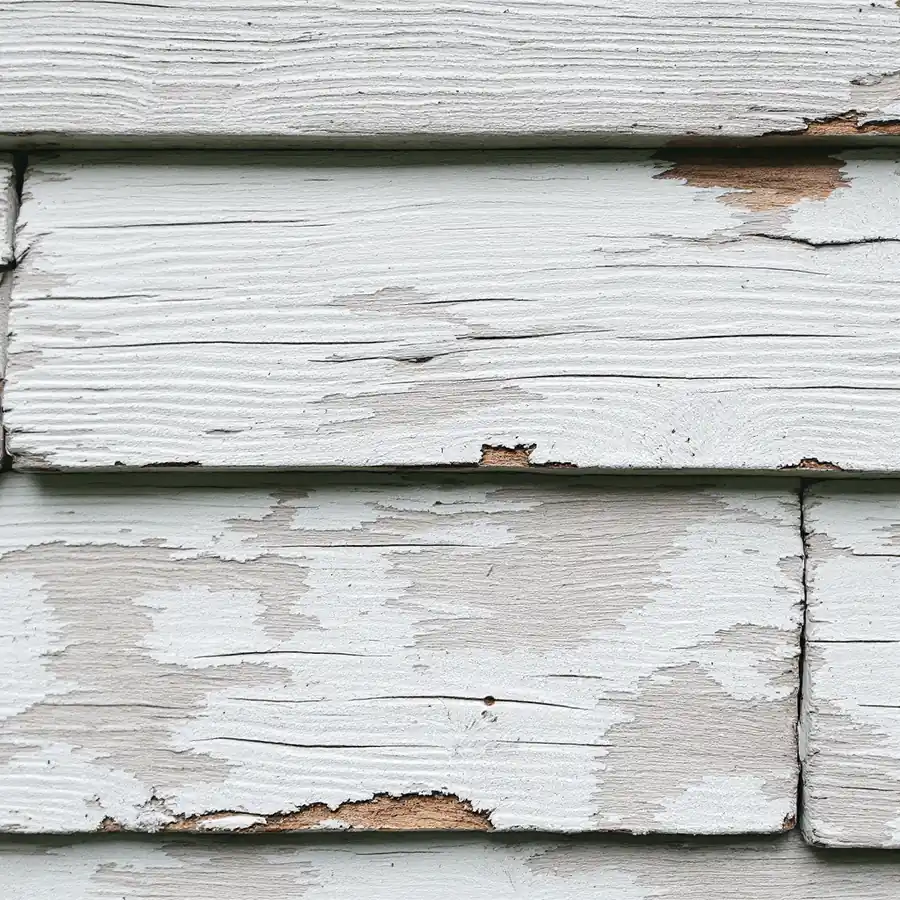
The EPA's Renovation, Repair and Painting Rule requires that “anyone paid to perform work that disturbs painted surfaces in homes, childcare facilities and preschools built before 1978 be certified and their employees be trained (either as a certified renovator or on-the-job by a certified renovator) in the use of lead-safe work practices.” Old wood siding under new siding is a painted surface, and a house built before 1978 is presumed to have lead in that paint until a test says otherwise. A contractor who is not certified cannot lawfully do the job, and a quote that does not mention containment, cleanup and certification on a house that old is a quote that has not read the rule.
Asbestos-cement shingles
The EPA lists “Roofing and siding shingles” among the places asbestos may be found in a home. Its guidance on what to do about material in good condition is reassuring: “Generally, asbestos-containing material that is in good condition and will not be disturbed (by remodeling, for example) will not release asbestos fibers.” Its guidance on what changes that is specific: “Asbestos-containing materials may release fibers when they are disturbed, damaged, removed improperly, repaired, cut, torn, sanded, sawed, drilled or scraped.” Which is why the honest options on a house with cement shingles are to leave them in place and side over them, or to have them removed by people the EPA describes this way: “Do have removal and major repair done by people trained and qualified in handling asbestos.” Breaking them up with a hammer to save a line on the quote is the one thing not on the list.
The Moment
The one thing that never gets easier than the day the wall is bare
The Department of Energy has a name for it, and a set of numbers for how rarely it happens.
What the Department of Energy counted
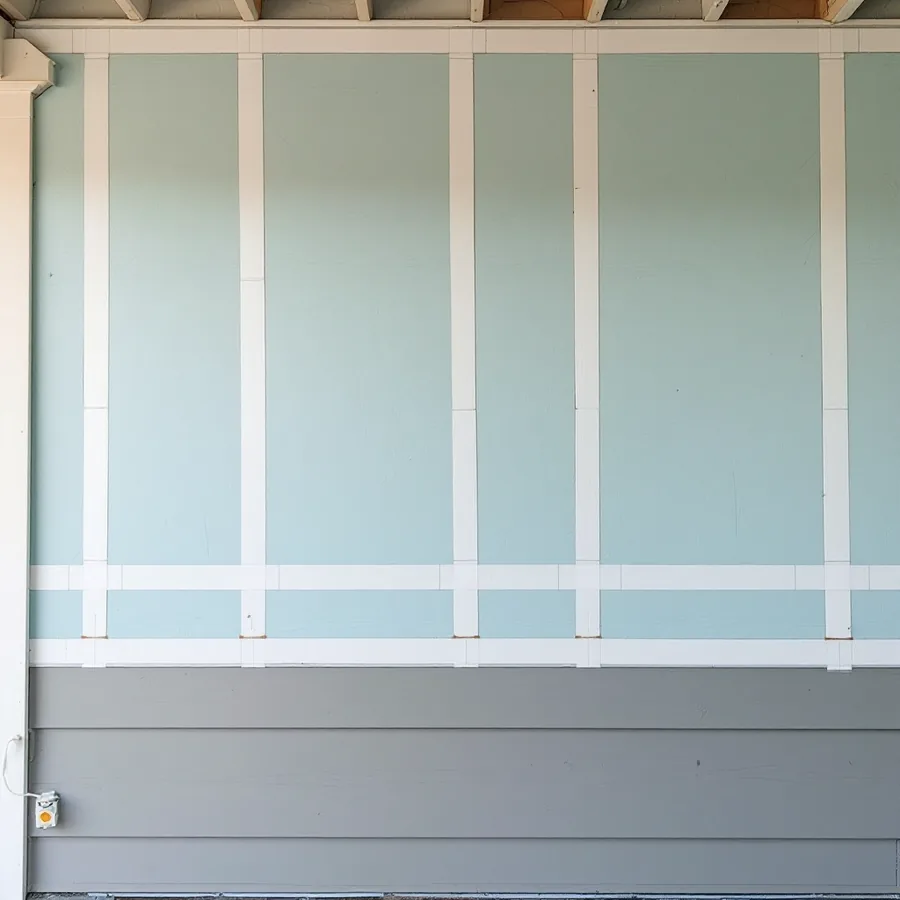
A Department of Energy presentation on adding insulation when re-siding reports that in 2021 “~3.5M homeowners spent money on siding projects”, and that “very few projects added 1-in or more of exterior continuous insulation.” Its survey of practice: “50% added fan-fold”, and “3-5% insulated siding (total market).” Fan-fold is a thin board whose job is to give the siding a flat surface, not to insulate. The day the old siding is off is the one day in the life of the wall when an inch of rigid foam and a properly taped house wrap cost only the material and an hour, and it is the day most re-siding projects walk past.
What to ask while the wall is still bare
That is not an argument to buy insulated siding from whoever is quoting; it is an argument to ask, before the quote is signed, what goes on the wall between the sheathing and the new siding, and whether a taped foam layer is a line you can add. A contractor who answers with a product name has answered the wrong question.
After A Storm
What counts as damaging weather, in the Weather Service's words
A storm-chasing salesman on the doorstep the morning after has a definition of a severe storm. So does the National Weather Service, and only one of them is written down.
The definition, and what each half does to siding
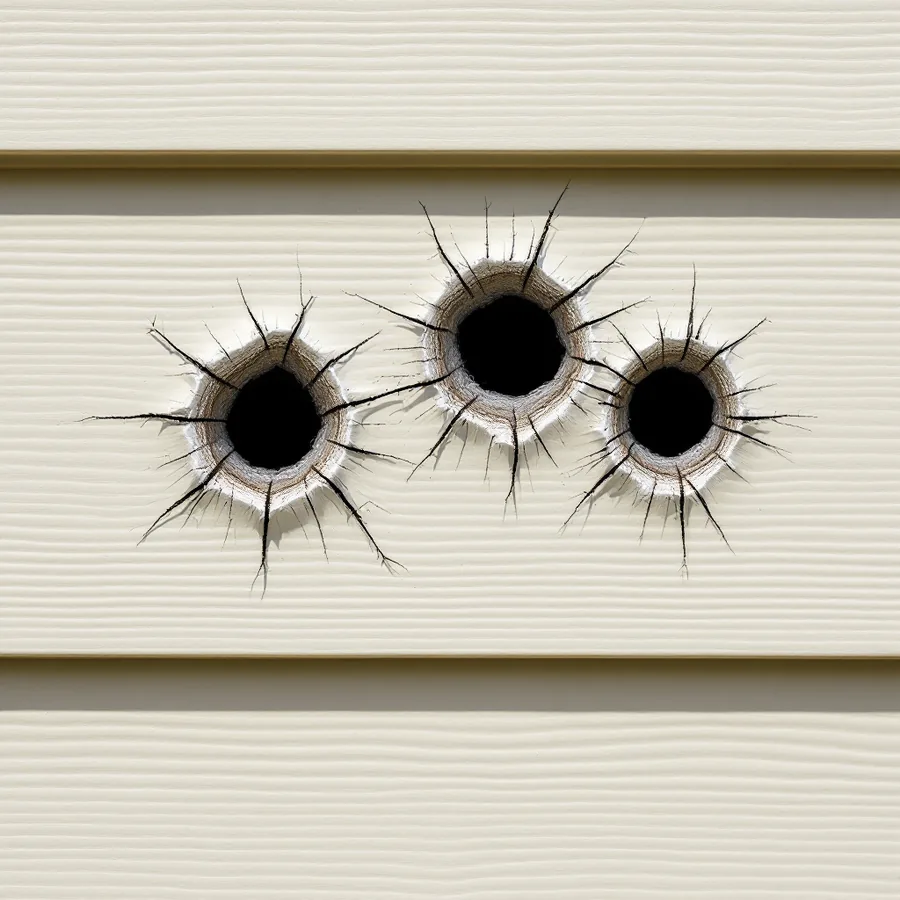
The Storm Prediction Center's definition of a severe thunderstorm is any storm that produces a tornado, “58 mph (50 knots) or greater” winds, or “1 inch in diameter or larger.” Hail below an inch marks aluminum and can crack cold vinyl; hail at and above it dents everything on the side that faced the storm and leaves the other three walls alone. Wind at and above the threshold unlocks vinyl panels along their bottom edges and lifts them off the wall in sheets, usually on the corner that took the gust.
What that means for the claim and the quote
What that means for a claim and a quote: the damage is directional, dated and photographable, and a contractor who proposes to replace four walls for a storm that hit one has stopped describing the storm. Photographs the morning after, from the ground, with the date visible, are worth more than the salesman's inspection, and they are yours.
The Standard
What a real siding assessment looks like
It measures, it probes, it names what is behind the wall, and it can usually be shown to you.
The federal sources we read instead of brochures
The Census Bureau on what new houses are clad in. The EPA on lead paint and asbestos in older houses. The Department of Energy on the wall behind the siding. NOAA on what counts as damaging wind and hail. The FTC on hiring a contractor: “Consider only contractors who are licensed and insured”, and “Don't automatically choose the lowest bidder.” None of them sells anything, all of them publish their reasoning, and every quotation on this site is taken from the page it is linked to.
Read This Before Trusting Us
How we make money, and why it changes what we write
We are paid a fixed fee when a homeowner is connected with an independent siding contractor through this site. The fee is the same whether the visit ends in one replaced panel or four re-clad walls. We do not install, repair or sell anything, we do not employ installers, and we do not choose which contractor answers beyond requiring that it be licensed and insured.
That structure is the reason this site can say, in writing, that hail on one wall is a one-wall job, that a house built before 1978 needs a certified firm before anybody scrapes, and that the cheapest quote is often the one that has not yet found what is under the old siding. A company paid by the size of the job cannot afford those sentences. How we make money and how we research are each a page.
The fee is fixed
It does not rise with the invoice. A company paid a percentage has a reason to prefer the larger job; a fee that is the same for a panel and a house removes that reason from every sentence on this site.
Who answers the call
An independent siding contractor covering your area. We do not employ them, we do not set their prices, and we do not choose between them beyond those two requirements. What they quote is between you and them, in writing, and the pages here are meant to make that quote readable.
What we will not do
Publish a price. Promise a time of arrival for a company we do not run. Sell materials. Give health advice about lead or asbestos beyond quoting the federal agency that does. The list is on the terms page, and the privacy page says what happens to what you tell us, which is very little.
Common Questions
Common questions
Are you a siding company?
No. We are a referral and research service. We connect homeowners with independent siding contractors in their area, and we are paid a fixed fee for the introduction. We do not perform, supervise or guarantee any work.
Why do you not publish prices?
Because an average without a house describes nothing. A single-story ranch with sound sheathing and a three-story house built in 1960 with lead paint and rot under two windows are the same words and a different bill. We publish what moves the number and a calculator for your own square count instead, so that a quote can be read rather than compared to a figure that was never about your house.
Does one damaged wall mean the whole house needs siding?
Usually not. Hail, a failed gutter and a lawn mower each damage one wall, and one wall is a one-wall job if the material and color can be matched to a corner so the join does not show. Where old vinyl has faded beyond matching, the honest options are to re-side the visible walls together or accept a color step at a corner, and the decision is yours rather than the estimator's.
What changes if the house was built before 1978?
The EPA requires anyone paid to disturb painted surfaces in a pre-1978 home to be certified and to use lead-safe work practices. Old siding under new siding is a painted surface. That adds testing or presumption, containment, cleanup and certification to the quote, and a quote on a house that old that mentions none of it has not read the rule.
What is a square?
One hundred square feet of wall, the unit siding is sold and priced in. A house's square count is its wall area minus its openings plus a waste allowance, and it is the one number on a quote you can check with a tape measure and ten minutes.
Where does the number come from when you say we do none of the work?
From the fee structure. We are paid the same for a small job and a large one, so no page on this site benefits from steering you toward the larger number. Where we describe a problem as one wall, that description costs us nothing to make and is therefore worth something to you.
Where This Comes From
Sources
- Primary exterior wall material of new single-family houses, by region, 1973–2025 — U.S. Census Bureau, Survey of Construction: Characteristics of New Housing (table: Exterior Wall Material – Primary).
- Lead-safe certification for work on homes built before 1978 — U.S. Environmental Protection Agency, Renovation, Repair and Painting Program.
- Asbestos in siding shingles, and when it is and is not a hazard — U.S. Environmental Protection Agency, Protect Your Family from Exposures to Asbestos and Learn About Asbestos.
- The definition of a severe thunderstorm — NOAA Storm Prediction Center, SPC Products.
- Re-siding practice and the missed insulation opportunity — U.S. Department of Energy / Pacific Northwest National Laboratory, Adding Insulation when Re-Siding (AIRS), 2023 peer review presentation.
- Hiring a contractor: licensing, written estimates and the lowest bidder — Federal Trade Commission, Consumer Advice: How To Avoid a Home Improvement Scam.
Our editorial standards explain how we source and check what we publish. Nothing here is a price, a promise about a third party, or health advice. We are a referral service rather than a contractor. Last updated .
Before you call anyone
The flat-fee match — we are paid for the introduction, not for the size of your job
Most siding advice is written by the company that wants to do the work or the company that makes the product. That is not a failing of the people who read it; it is a defect in who is talking: the measurement, the estimate and the invoice come from one party, and no amount of care on your side fixes that.
We are built the other way round. We do not install, repair or sell anything, so the payment reaches us when you are connected to a licensed, insured siding contractor — the same amount whether you need one panel replaced or four walls re-clad. Nobody here has a reason to talk you into the larger number. You can check that rather than take it on trust: how we make money is written down, and this site keeps telling readers when one wall is enough. Why does not everyone work this way? Because a flat fee leaves money on the table every time the job turns out to be big.
Waiting is the one thing that actually costs money. A wall that is open to the weather does not get better and does not wait for a convenient week; the water that gets behind the siding finds the sheathing, the framing and the drywall inside. A cracked panel over a window lets the next storm in. And if it turns out to be one panel and a quarter-hour, say so when you ask. We will tell you, and that answer earns us nothing.
Not for you if: you want a price over the phone — nobody honest gives one without measuring the house; you need a guarantee of arrival within the hour — we cannot promise that for a company we do not run; the building is commercial; or you would rather do it yourself, in which case the pages on this site are written so that you can.