Board and Batten Siding
Board and batten siding: a pattern, not a material
Reviewed by the Siding Pros USA editorial team · · 39 min read
Board and batten is a way of laying out a wall: wide vertical boards, and a narrow strip called a batten over every joint. It began in wood and is now sold in vinyl, fiber cement, engineered wood, steel and aluminum. Cost, installation, lifespan and upkeep all follow the material.
Board and batten is a pattern, and the price follows the material
- What it is. Wide vertical boards with a narrow batten over each joint. Wood, the material it began in, is now the main wall material on 6 percent of new houses, by our count of Census Bureau data for 2025.
- The pattern decides the look. Board width, batten width and spacing set the rhythm of the wall, and they can be chosen in any material.
- The material decides the money. What the wall costs to buy, to hang and to keep is set by whether it is wood, vinyl, fiber cement, engineered wood or metal.
- The wall behind decides whether it lasts. Vertical siding needs something horizontal to be fastened to and a clear path for water to drain. Both are lines on a quote, and both are easy to leave off.
Board and batten is one layout, whatever it is called at the lumberyard: the boards run up and down, their edges meet or nearly meet, and a batten covers each joint. That is the whole definition. It says nothing about what the boards are made of, and trade documents that hyphenate it as board-and-batten siding mean the same thing.
That silence about material is where most of the confusion comes from. A quote for board and batten house siding in rough-sawn cedar and a quote for the same house in vertical vinyl panels describe two different jobs with different crews, different fasteners, different wall preparation and a different future. Comparing their totals tells you nothing until you know which material each one names. So this page is organized the way a quote should be: pattern first, then material.
Exterior board and batten siding is also not the same subject as the board and batten wall treatments built indoors from thin strips and paint. Those are trim carpentry. Everything below is about exterior cladding that has to keep rain out of a house.
Our Count
Our count: 21 years of Census data on what the wood look is built from
The Census Bureau asks the builder of every sampled new single-family house what its main exterior wall material is. We took 21 years of that file and followed one material through it: wood, the one board and batten began in.
| Region | Wood, 2005 | Wood, lowest year | Wood, highest year | Wood, 2025 | Wood-clad houses, 2005 → 2025 | Fiber cement | Vinyl |
|---|---|---|---|---|---|---|---|
| United States | 7% | 4% (2021, 2022) | 9% (2008, 2009) | 6% | 115,000 → 60,000 | 9% → 23% | 34% → 26% |
| Northeast | 9% | 8% (2011) | 13% (2015) | 11% | 12,000 → 7,000 | 2% → 8% | 83% → 70% |
| Midwest | 12% | 9% (2012) | 18% (2008, 2019, 2020) | 16% | 37,000 → 21,000 | 7% → 12% | 64% → 64% |
| South | 3% | 1% (7 years between 2014 and 2022) | 5% (2008, 2009) | 3% | 23,000 → 18,000 | 9% → 24% | 28% → 21% |
| West | 11% | 3% (2021) | 15% (2009) | 7% | 48,000 → 16,000 | 15% → 31% | 8% → 5% |
What the count shows
Nationally, wood was the main wall material on 7 percent of new houses in 2005 and on 6 percent in 2025, which is about one new house in 17. The low on the way was 4 percent. Because far fewer houses were completed in 2025 than in 2005, the number of new wood-clad houses fell from about 115,000 to about 60,000 a year. Over the same 21 years, fiber cement went from 9 percent to 23 percent.
The regions do not move together. In the Midwest wood rose, from 12 percent to 16 percent, the largest gain of any region; the Northeast also edged up, from 9 percent to 11 percent. In the West it fell from 11 percent to 7 percent, with a low of 3 percent in 2021, while fiber cement there doubled. In the South wood has not been above a few percent in the whole period and stands at 3 percent. A new house in the Midwest is about five times as likely to be clad in wood as one in the South.
What it means for a board and batten wall
The Census counts materials, not patterns, so it cannot say how many houses are board and batten. What it can say is that the material the pattern was born in is a minority of new walls in every region, the Midwest included. That points to a likely reading, which the Census cannot confirm because it does not count patterns: much of the board and batten going up today is the pattern made in something else. So the question of what board and batten siding is made of has five answers today, and wood is only one of them.
Why it matters to your quote
A crew hangs fastest and best the material it hangs every week. In a region where wood is on three new houses in a hundred, a carpenter who has hung many true board and batten walls is hard to find, and the crew quoting your job is probably a fiber cement or vinyl crew. That is not a problem. It is a reason to ask which material the quote names before you compare it with another. The full table of all materials by region is on our home page; the tool further down this page reads this count for your region.
Limits of the count
The survey covers new single-family houses, not re-siding work on existing ones. It records one primary material per house, so a house with a board and batten gable over brick is counted as brick. Shares are published as whole percentages, so our house counts are rounded estimates. And wood here means all wood siding: boards, shingles and panels together.
The Definition
What is board and batten siding
Board and batten siding is vertical boards with a strip over each joint. Three variations are sold under the same name.
The original
The Forest Service's guide to wood siding describes vertical siding as boards applied vertically, often with “narrow strips called battens nailed over the joints.” The boards are the wall. The battens do two jobs: they keep rain out of the joints, and they hide the gap that opens and closes as the boards swell and shrink across their width. Vertical siding with strips over the seams is called board and batten, whatever it is made of.
Reverse board and batten
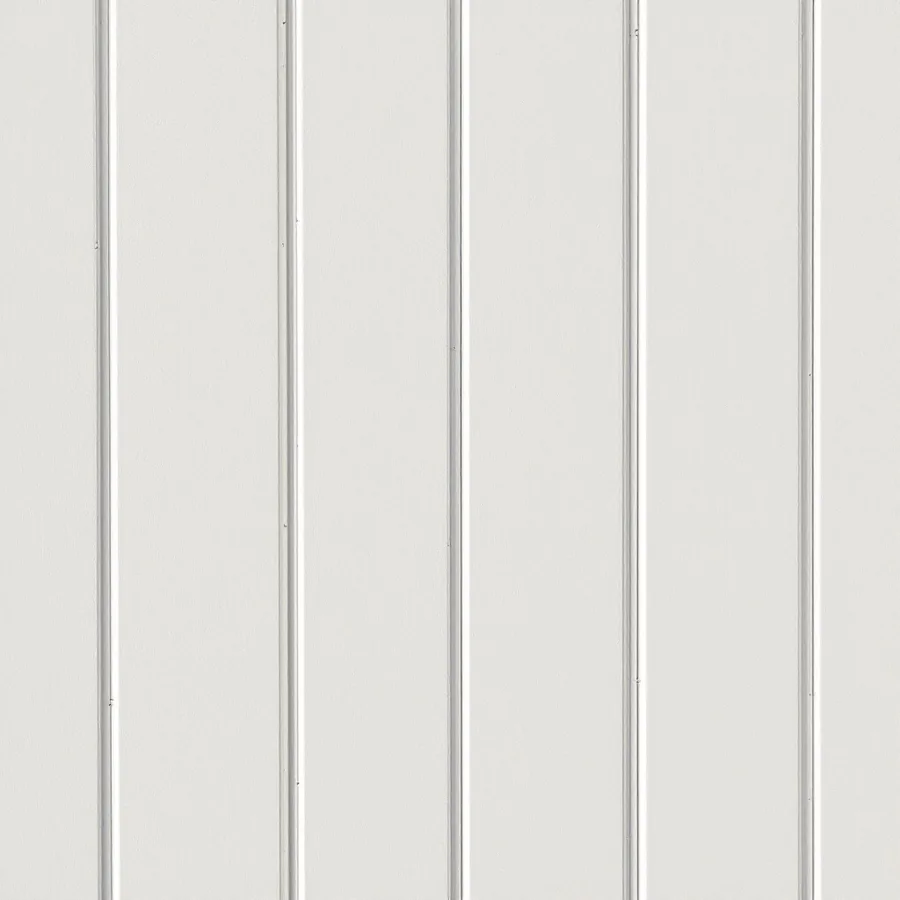
Reverse board and batten siding swaps the layers. The narrow battens go on the wall first and the wide boards are nailed over them, leaving a recessed channel at every joint instead of a raised rib. From the street, reverse board and batten reads as wide boards separated by dark grooves. The same look is manufactured in plywood and in vinyl, where the groove is pressed into a sheet.
Panels with applied or molded battens
Most board and batten sold today is not separate boards. A board and batten panel in fiber cement or engineered wood is a flat sheet, and the battens are trim strips fastened over it at whatever spacing you choose. Board and batten panels in vinyl and metal go further: the rib is formed into the panel itself. Some people call these faux board and batten. They are real siding; what is imitated is the joint. With board and batten siding panels the battens no longer cover a gap between boards, they cover the edges of sheets, and where a batten falls on plain sheet it covers nothing at all.
Horizontal board and batten
Horizontal board and batten siding turns the pattern on its side. It is used as an accent on modern houses. Laid flat, every batten becomes a ledge that water sits on, so horizontal board and batten depends completely on the flashing and the material. It is a design choice to make with the installer and the manufacturer's instructions open on the table.
Five Walls, One Look
Board and batten siding by material
There is no single best board and batten siding. There is a best one for a climate, a budget and a tolerance for upkeep. The table puts the five side by side; the sections after it take them in turn, with engineered wood under fiber cement.
| Material | How the batten is made | Upkeep | What moves the quote | Watch for |
|---|---|---|---|---|
| Wood | A separate strip nailed over the joint between two real boards. | A finish to renew for the life of the wall. | Species, grade, board width, and the finish system. | Boards nailed so they cannot move, which split. |
| Vinyl | Molded into the panel. | Washing. No paint. | Panel thickness, color, and the accessory trim. | Panels nailed tight, which buckle in the sun. |
| Fiber cement | A trim strip of the same material fastened over a flat sheet. | Repainting at long intervals; caulk checked. | Factory finish or primed, batten spacing, labor. | Unflashed horizontal joints between panel courses. |
| Engineered wood | A trim strip over a flat sheet, or formed in the panel. | Repainting; cut edges kept sealed. | Finish, batten count, and the edge-sealing labor. | Unsealed cuts and panels too close to the ground. |
| Steel and aluminum | A rib rolled into the panel. | Washing; scratches touched up. | Gauge, finish, concealed or exposed fasteners, trim. | Thin panels that show every dent and wave. |
Composite and cement, and other names
Composite board and batten siding is a loose shop term. It usually means engineered wood, sometimes a polymer or mineral-filled board, so ask for the product's data sheet rather than the word. Board and batten cement siding is fiber cement. Aluminum board and batten siding and what some regions call board and batten tin siding are both metal panels; the difference between them is covered under metal below.
Material One
Vinyl board and batten siding
Board and batten vinyl siding is the version least like the original: vertical vinyl siding with the rib molded in.
What it is
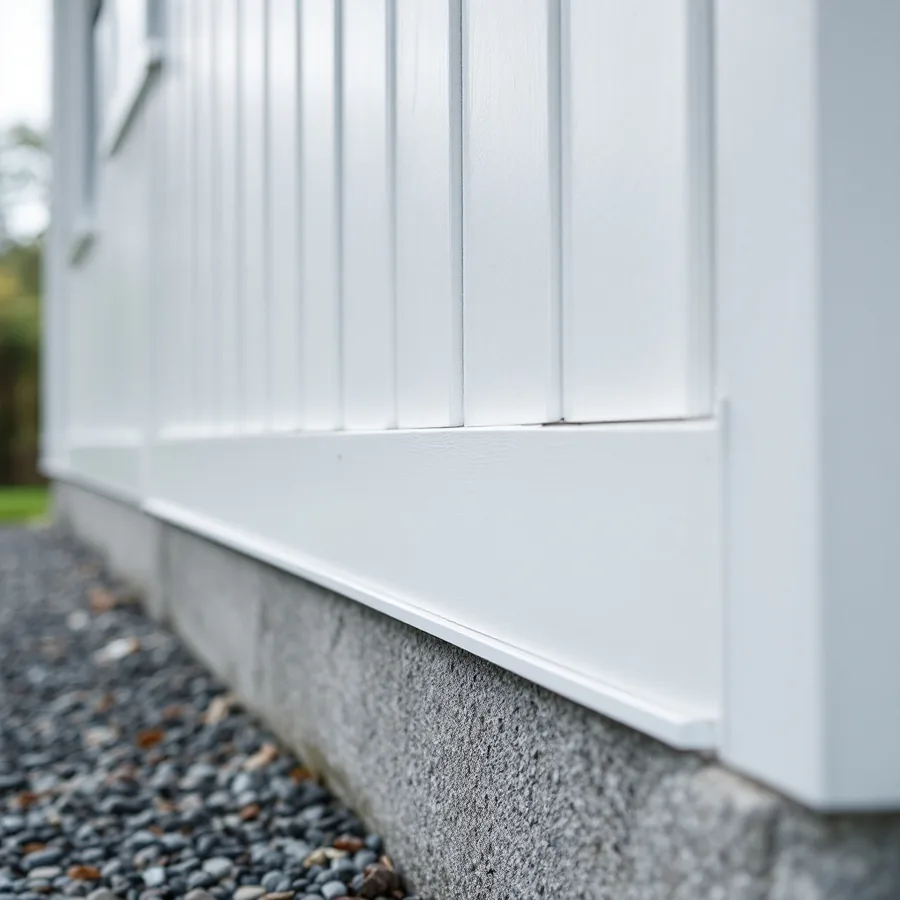
Vinyl board and batten siding comes as long panels that lock into one another along their edges and hang from a nailing strip. Each panel shows one or two boards and a raised batten. Nearly all vertical vinyl siding is this profile, so the two names are used for the same product.
What the inch size in the name measures
Vinyl is sold by a width in inches, and the number confuses almost everyone. It is the width of one repeat or of the whole panel, not the board alone. One national manufacturer's specification that we read gives a 5.5-inch face with a 1.5-inch batten: seven inches from rib to rib. That is what a 7 inch board and batten vinyl siding panel is.
| Size in the name | What the number usually is | What to check on the sheet |
|---|---|---|
| 7 inch board and batten vinyl siding | One board face plus one batten. | Face width and batten width, stated separately. |
| 8 inch board and batten vinyl siding | A single wide repeat, or the exposed width of a single-board panel. | Whether the panel carries one board or two. |
| 10 inch board and batten vinyl siding | The exposed width of a panel, often with a wider board. | How many battens appear across the panel. |
| 12 inch board and batten vinyl siding | The exposed width of a two-board panel, or one wide board. | Face width, because twelve can mean two narrow boards. |
| 16 inch board and batten vinyl siding | Rare in vinyl; more often the batten spacing of a fiber cement or metal wall. | Whether the product is vinyl at all. |
Thickness, and why it shows more on a vertical wall
The same specification lists a thickness of .048 inch, which sits at the heavy end of residential vinyl. Thickness matters more here than on lap siding. A vertical panel has long flat faces with no overlap to stiffen them, so a thin one shows waves in raking light. When you compare vinyl board and batten products, the thickness line on the data sheet is the first thing to look at, and the color is the second, because dark vinyl needs a formulation that resists heat.
Insulated and reverse profiles
Insulated board and batten vinyl siding has foam bonded to the back of the panel. It is stiffer and lies flatter, and it adds a little thermal resistance; it is a separate price tier and should be a separate line. Reverse board and batten vinyl siding presses a channel into the panel instead of raising a rib. Modern vertical vinyl siding often uses that reverse profile in a dark color for a flatter look.
How vinyl moves
Vinyl grows and shrinks along its length with temperature, and a vertical panel is as long as the wall is tall. It has to hang from its fasteners rather than be pinned by them, with room at the top and the bottom. Nailed tight, it buckles on the first hot afternoon, and walls that face south or west show it first.
Material Two
Metal and steel board and batten siding
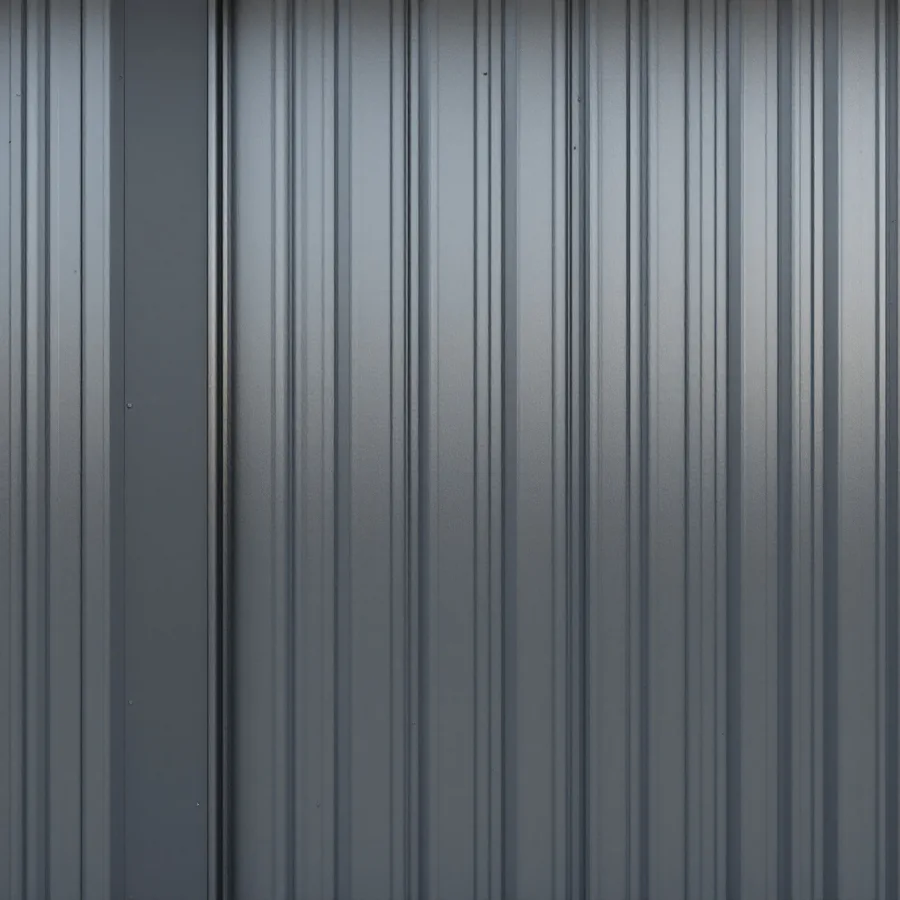
Board and batten metal siding is a rolled panel with a tall rib every foot or so. It is the ribbed panel of farm and commercial buildings, finished for a house.
Steel
Steel board and batten siding is what most people mean by metal board and batten. The words that matter on a quote for board and batten steel siding are gauge, which is thickness, and finish, which is the paint system and its warranty. A steel board and batten panel in a heavy gauge with concealed fasteners is a very different wall from a thin one screwed through its face, though both are sold under the same name. The crisp edges are the attraction. Metal batten siding of this type gives the board and batten look without the upkeep of wood. How the panel warranties behind it treat chalk, fading and salt air is laid out in our count of metal siding warranties.
Aluminum
Vertical aluminum siding is lighter and does not rust, and it dents more easily than steel. Older houses often have it in a painted finish that has chalked; that wall can usually be repainted rather than replaced.
Finishes: wood grain and flat color
Vertical wood grain metal siding carries a printed finish that imitates cedar. It reads convincingly from the street and less so up close. Vertical modern metal siding goes the other way, with matte black, charcoal or white and no texture at all. Either way, board and batten metal depends on its trim: the base, corners and window surrounds in matching finish are a large share of the material line.
What to watch
Fasteners must be a metal compatible with the panel, or the wall stains and corrodes at every screw. Cut edges need the treatment the maker specifies. And a metal wall is unforgiving of an uneven substrate, so the furring behind it has to be straight.
Material Three
Wood and cedar board and batten siding
Wood board and batten siding is the original: real boards, with a real batten over each real joint. It is also the one that needs a carpenter who has done it before.
Species and surface
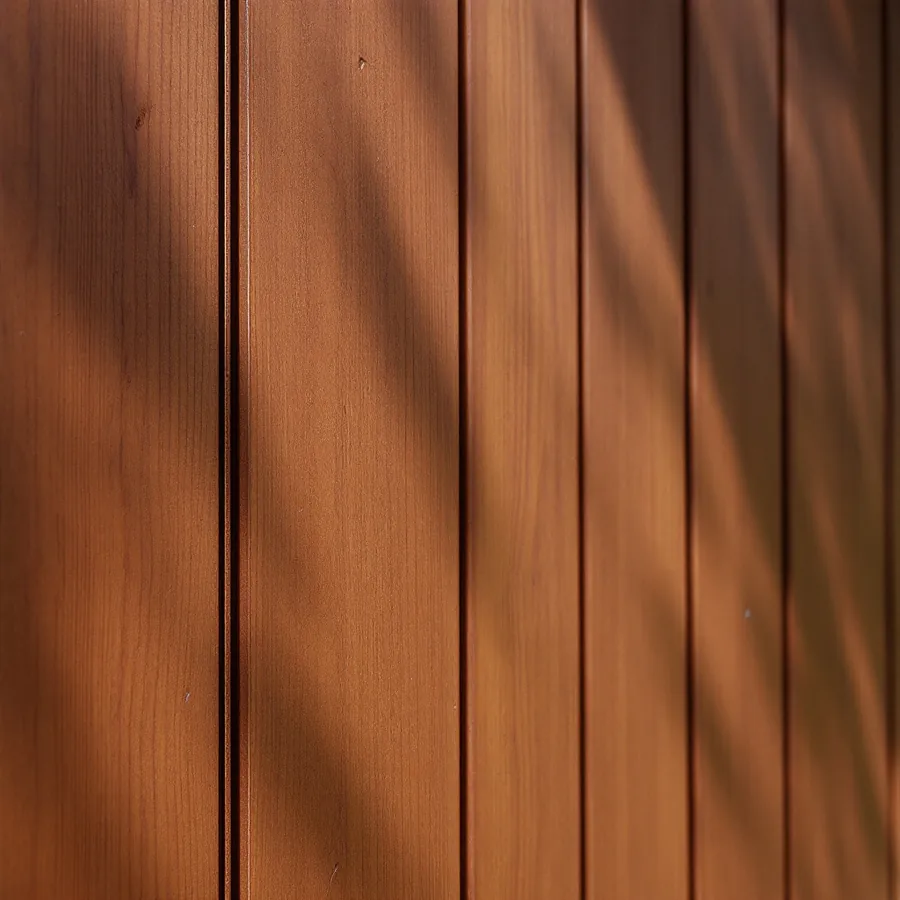
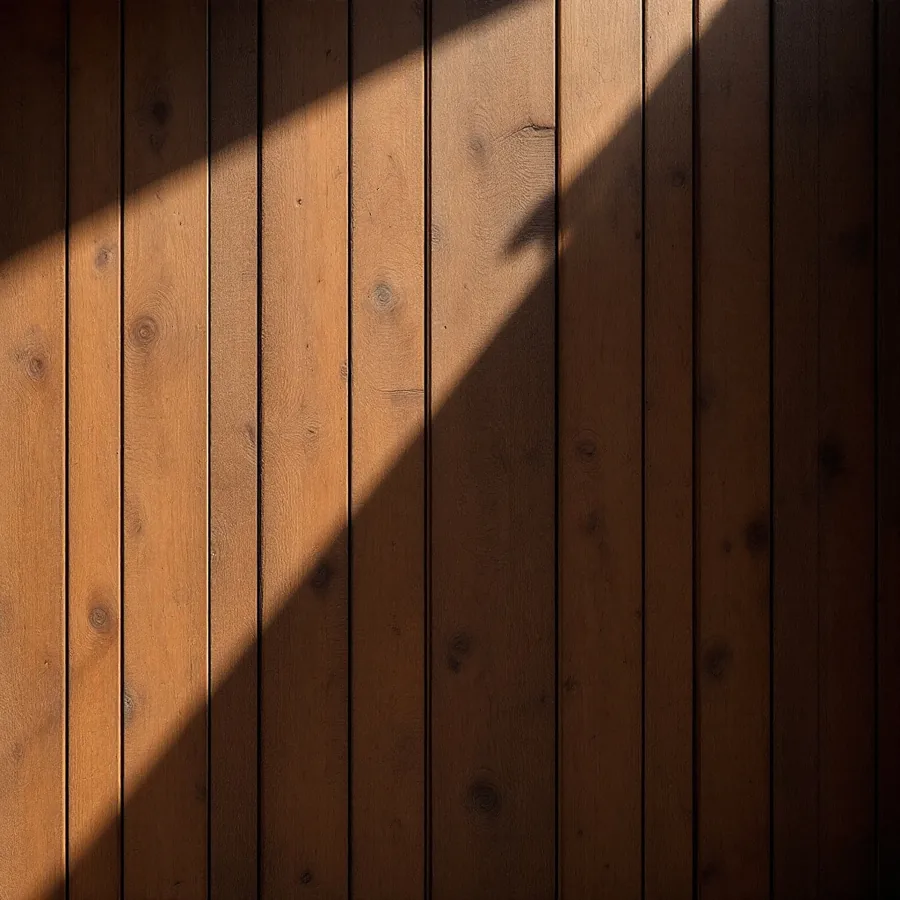
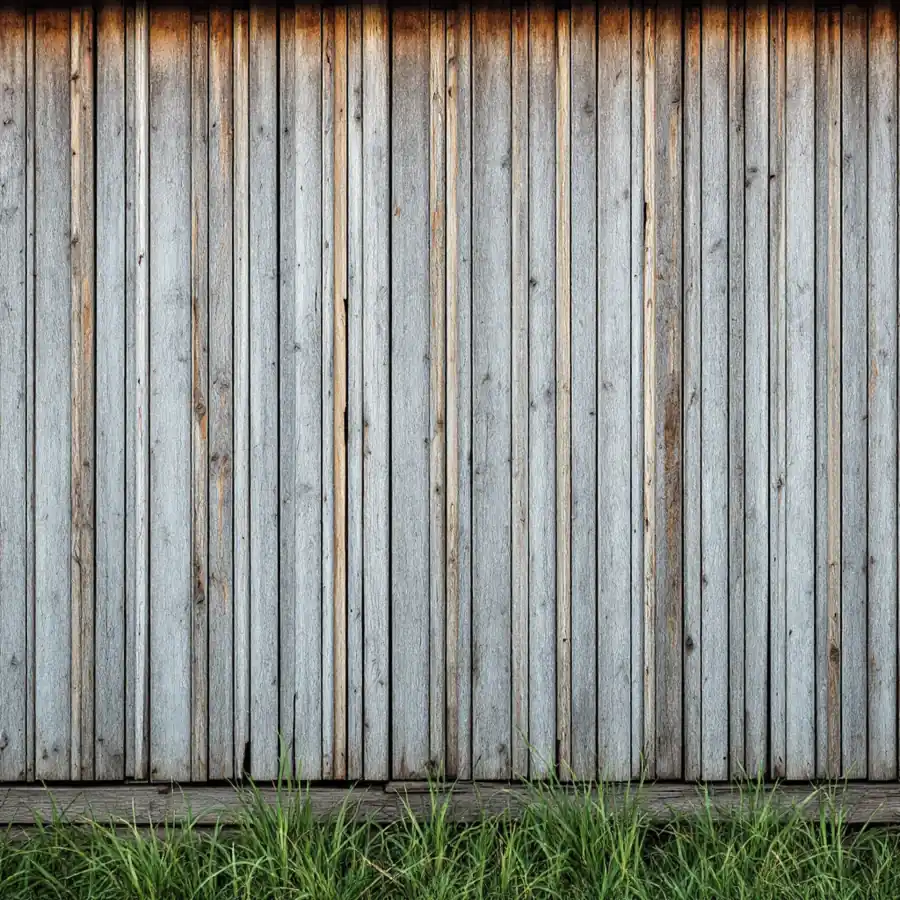
Cedar board and batten siding resists decay, takes stain well and shrinks less than most softwoods. It is sold smooth or rough-sawn. Rough cut board and batten siding, the surface straight off the saw, holds a penetrating stain far better than a planed face, and it is what gives rustic board and batten siding its texture. Pine, cypress, fir and larch are all used for board and batten wood siding where they are local. The Forest Service guide notes that lumber used for this pattern is frequently flat-grained, and that flat-grained lumber shrinks and swells more and holds paint less well than edge-grained. That is one reason stain is the usual finish here.
The wood itself has a page: wood siding, with the shrinkage of thirteen woods worked out from the Forest Service handbook.
Why the boards must be free to move
A wide board swells in damp weather and shrinks in dry weather, across its width, every year. Vertical wood siding that is nailed along both edges cannot do that and splits down the middle. The traditional answer is to fasten each board so it can move and to let the batten bridge the gap, fastened between the boards rather than through them. Whoever hangs board and batten wood has to understand that one idea, and it is the first thing to ask about.
Finish
Wood board and batten needs a finish, and the finish needs renewing for as long as the wall stands. Penetrating stains are the usual choice on rough-sawn boards and are simpler to renew than paint, because they wear away instead of peeling. The backs and the bottom ends of the boards should be treated before they go up; the bottom end grain is where a vertical board drinks.
Plywood and panel versions
Vertical wood siding panels put the look on a sheet. Plywood vertical groove siding has channels cut into its face to suggest boards. It is fast to hang and depends on its edges and its finish staying sealed. Of the vertical wood siding types it is the quickest and the budget version; a cedar wall of real boards is the premium one.
Material Four
Fiber cement board and batten siding
Board and batten fiber cement siding is a system of two parts: large vertical panels, and batten strips of the same material laid over them.
Panel plus batten
Vertical fiber cement siding starts as flat sheets fastened to the wall. The battens are separate trim boards; one national manufacturer's guide describes them as strips three quarters of an inch thick. Because the battens are applied, you choose their spacing, and the installer has to plan it so that a batten lands over every vertical joint between sheets. Vertical cement board siding that is laid out without that plan ends up with a visible seam between two battens.
The joint nobody mentions
Sheets come in fixed lengths. On any wall taller than one sheet there is a horizontal joint where one course of panels sits on the next, and that joint needs metal flashing and usually a trim band. It is the detail to look for first on a quote for a tall wall. Ask where it will fall on your house and what covers it.
Finish and weight
Fiber cement arrives primed for painting or finished in color at the factory. It does not rot and does not burn. It is heavy, it is cut with shears or a dust-collecting saw because the dust contains silica, and it is fastened to a schedule the manufacturer sets. All of that is labor, which is why this material's quote is usually led by the labor line rather than the material line.
The material has a page to itself: fiber cement siding, with the clearances from a published manual and the questions to ask about cutting and joints.
Engineered wood, the near relative
Engineered wood panels with applied battens are laid out the same way and weigh far less. Their conditions are different: every cut edge has to be sealed, and the maker's clearances above ground and roof lines are terms of the warranty.
The Rhythm
Board and batten dimensions, sizes and spacing
Board and batten spacing is the decision that most changes how the wall looks, and in two of the five materials, fiber cement and engineered wood, it is yours to make.
In wood, the board sets the spacing
With real boards there is nothing to choose separately: the battens fall where the joints are, so board and batten dimensions are simply the board width. Wide boards with narrow battens look traditional. Board and batten siding sizes in wood follow what the lumberyard stocks, and wider boards move more, which is the practical limit on width.
On panels, you choose
On fiber cement and engineered wood the battens can go anywhere, with one constraint: they should be fastened into framing or solid backing, and one must cover each sheet joint. That is why board and batten measurements on these walls tend to follow the stud layout. Closer spacing looks busier and more traditional; wider spacing looks calmer and more modern, and uses fewer battens.
Exterior board and batten rules that are worth keeping
- Lay out from the openings, not from the corner. A batten that dies into the side of a window a finger's width from the trim looks like a mistake. Good layouts center on windows and doors and let the odd space fall at the corners.
- Keep one spacing per wall. The eye reads a change in rhythm before it reads anything else.
- Line up the stories. On a two-story wall the battens above a horizontal joint should continue the ones below.
- Mind the batten's depth. Board and batten siding texture comes from shadow. A thicker batten throws a stronger line; a thin one almost disappears at noon.
Smooth or textured
Smooth or textured is a choice in every material except rough-sawn wood. Smooth faces look sharper and more modern and show every dent and wave. A wood grain texture hides small flaws and reads as traditional. Textured board and batten metal siding has a matte, slightly rough coating that cuts glare on dark colors.
The detail drawing
A board and batten siding detail worth asking for is a simple elevation showing where every batten falls on the front of the house. It takes an installer a few minutes, and it settles the look before anything is cut.
The Family
Vertical siding: the family board and batten belongs to
Board and batten is the best-known kind of vertical siding and not the only one. The Forest Service guide makes the case for the whole family in one line: “Vertical siding tends to make a house appear taller.”
Types of vertical siding
| Type | The joint | The look |
|---|---|---|
| Vertical board and batten siding | Covered by a raised strip. | Strong shadow lines, traditional or farmhouse. |
| Vertical shiplap siding | Boards rabbeted to overlap each other, with a small reveal. | Flat, with fine regular lines. |
| Vertical tongue and groove siding | A tongue on one board fits a groove in the next. | Flat and tight; the joint can be a V or flush. |
| Vertical nickel gap siding | A shiplap or tongue and groove board with a deliberate narrow gap. | Crisp dark lines, modern. |
| Vertical panel siding | Large sheets; joints at the sheet edges only, sometimes with grooves cut in the face. | Plain, or grooved to suggest boards. |
Vertical plank siding and vertical board siding are general names for any of the board types above. Vertical lap siding is a contradiction in terms: lap siding sheds water because each course overlaps the one below, and turned upright it has no downhill lap, so the products sold under that name are really shiplap or board and batten. Vertical siding panels are the sheet products in every material, and all of these types share the same need for horizontal nailing.
Vertical vs horizontal siding
The comparison of vertical siding vs horizontal siding comes down to three things. Appearance: vertical lines add height, horizontal lines add width. Water: on a horizontal wall every course laps the one below; on a vertical wall the joints run with the water, which is fine as long as the bottom ends and the horizontal breaks are flashed. Labor: vertical siding needs horizontal nailing and more layout, so on the same house in the same material it is usually the higher labor line. The material matters more than the direction; a well-detailed wall of either kind outlasts a badly detailed one of the other.
Choosing for a house
For walls that take weather, the forgiving choice is a profile whose joint is covered, hung by an installer who knows it. That is the case for board and batten in any material: the batten hides the joint as the boards move. Flush profiles show every flaw in the wall behind them. Whether to run vertical siding on the whole house or only on part of it is the next decision, covered under mixing below.
The Money
Board and batten siding cost
Board and batten usually costs somewhat more than lap siding in the same material, and the material matters far more than the pattern. How much is board and batten siding in dollars? We publish no price averages: for this pattern a single figure would average five materials.
Is board and batten siding expensive?
Compared with lap siding in the same material, usually somewhat, and for reasons you can name. It needs horizontal nailing behind it. It needs more layout. In panel systems the battens are extra material and extra labor, counted by the spacing. And vertical trim at corners, windows and the base is more involved. Whether board and batten siding is expensive in absolute terms depends on the material: vertical vinyl is at the low end of what a wall can cost and clear cedar is near the top.
What moves each material's line
| You asked about | What moves the material line | What moves the labor line |
|---|---|---|
| Board and batten vinyl siding cost | Panel thickness, color, insulated or not, accessory trim. | Furring or backing for vertical nailing; stories. |
| Metal board and batten siding cost | Gauge, finish, concealed or exposed fasteners, the trim system. | Straightness of the substrate; cuts at openings. |
| Fiber cement | Factory finish or primed; number of battens. | Weight, dust-controlled cutting, flashing at panel joints, painting if primed. |
| Wood | Species, grade, board width. | Blocking, hand nailing, and the finish, which is a second job. |
Vinyl board and batten siding cost and vertical vinyl siding cost are the same question, and both turn mostly on thickness. Vertical siding cost in general runs above the same material hung horizontally for the reasons given above.
Is board and batten cheaper than vinyl siding?
The question mixes a pattern with a material. Board and batten in vinyl is vinyl siding, in a vertical profile. Asked properly, it has three answers. Is board and batten siding cheaper than vinyl lap in the same grade? Usually not, because of the nailing base and the layout. Is vertical siding cheaper than horizontal? In the same material, rarely. And whether board and batten is cheaper than metal siding depends on which board and batten: vinyl usually is, cedar usually is not.
Per square foot, and why the unit misleads
Board and batten siding cost per square foot is the figure everyone wants and the one that hides the most. Siding is priced by the square, a hundred square feet of wall, and the wall area of a house is not its floor area. To know what board and batten siding costs on your house, start by counting the squares; our calculator does it from the house's dimensions. Then read the quote against the six lines every siding quote is made of. The pattern changes the size of those lines. It does not add a seventh.
On The Wall
How board and batten siding is installed
Board and batten siding installation starts with something horizontal to nail to and follows the seven steps below. They are here so you can judge a quote and a crew; we do not hang siding, and this is not a manual.
The step every vertical wall needs
Wall studs run up and down. So do the boards. A vertical board nailed only where it crosses the plates at the top and bottom of the wall is barely attached, so anyone who knows how to install vertical siding starts by giving it something horizontal to fasten to: blocking between the studs, structural sheathing rated to hold fasteners, or furring strips across the wall. Furring has a second benefit. The Department of Energy's Building America guidance notes that furring over the wall creates a drainage gap behind the cladding, which lets a wet wall dry.
The sequence
- Strip and inspect. Old siding off, sheathing probed, rot cut out and replaced.
- Wrap and flash. House wrap lapped like shingles, and flashing at every window, door and horizontal break.
- Nailing base. Blocking or furring set straight, because a vertical wall shows every dip.
- Layout. Battens laid out from the openings so the pattern lands evenly.
- Boards or panels. Hung plumb from a level base, with the clearance above ground the maker requires.
- Battens and trim. Battens over the joints; corners, base trim and window surrounds last.
- Finish. Stain, paint or caulk where the material needs it.
How it differs by material
How board and batten siding is installed depends on what it is made of. In wood, the craft is in letting boards move. Board and batten vinyl siding installation is about hanging panels loosely enough to expand. Fiber cement is about panel joints and flashing. Metal is about a flat substrate and compatible fasteners. Vertical siding installation of every kind shares the nailing base and the flashing. In every case the manufacturer's instructions are the authority, and following them is usually a condition of the warranty.
Board and batten corners
At a corner the pattern stops at a corner board or corner post, wide enough that the last batten does not crowd it. Good layouts treat board and batten corners as the place where the leftover space goes, split evenly between the two ends of the wall.
Board and batten around windows
Board and batten around windows needs two things. The first is flashing above the head trim, because the vertical joints deliver water straight down onto it. The second is layout: battens should either center on the window or frame it evenly, never land just beside the casing.
Starter strip, transition trim and mounting blocks
Three small parts decide how finished a vertical wall looks. A board and batten siding starter strip, or base trim, is the level line the panels stand on; on vinyl it is a channel the panel ends sit in, and a vertical siding starter strip set out of level shows in every batten above it. A board and batten siding transition is the trim where vertical meets horizontal or where one panel course sits on the next; board and batten transition trim always has flashing behind or over it, because a vertical siding transition strip without flashing is a ledge. And a vertical siding mounting block gives a light, a faucet or a vent a flat surface to sit on, so the fixture is not screwed across the battens.
Doing it yourself
Board and batten looks like simple carpentry, and on a shed it can be. On a house, installing board and batten siding means scaffolding, flashing, and on anything built before 1978 a federal rule about paint. A board and batten installation is a fair job for an experienced amateur on a single-story outbuilding, and a job for a licensed crew on a home.
Part Of The House
Mixing board and batten with lap siding, brick and stone
Most board and batten is not a whole house. It is a gable, an entry, an upper story or a bump-out, set against something horizontal.
The board and batten gable
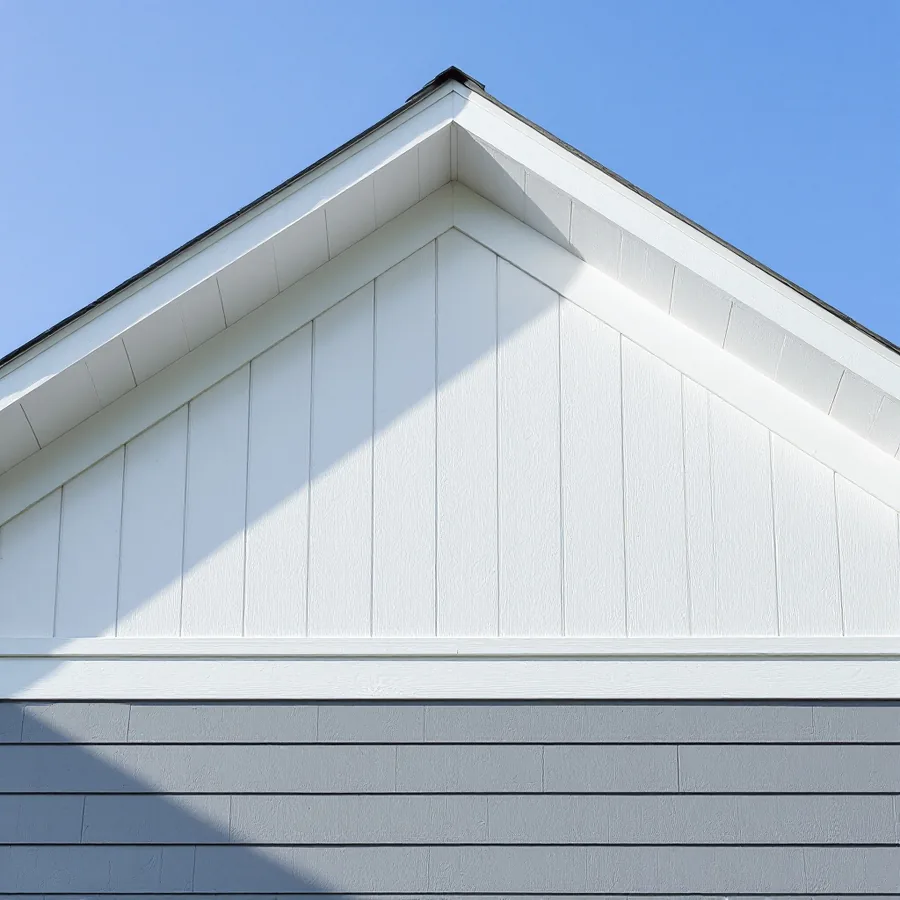
A board and batten gable over lap siding is a familiar combination. The triangle is a natural place to change direction, and the change needs a horizontal trim band with flashing above it where the two meet. That band is a waterproofing detail first and a design detail second.
Board and batten mixed with horizontal siding
Mixing board and batten and lap siding works when each has a part of the house to itself: vertical on the projecting volume, horizontal on the main body, or the reverse. Mixing vertical and horizontal siding on the same flat wall with no break in plane tends to look arbitrary. In a vertical and horizontal siding mix, keep both in one material and one color family if you want the texture to do the work, or contrast them deliberately.
Board and batten with brick
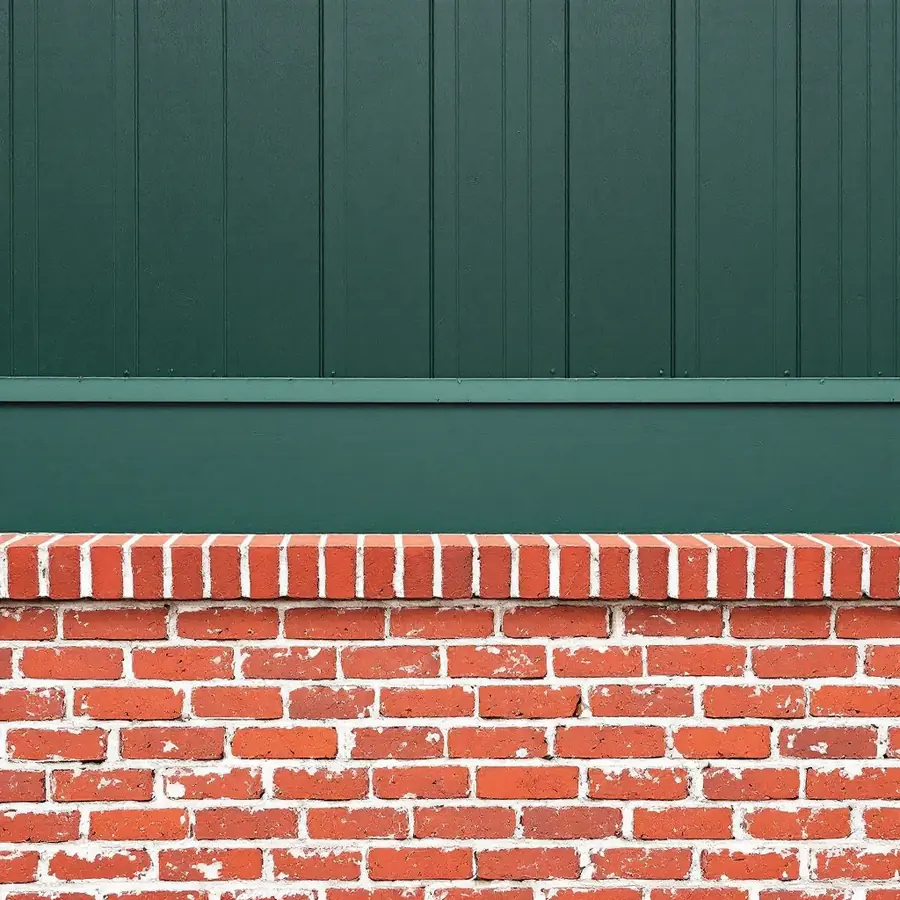
Board and batten with brick puts the siding above a masonry base or beside a brick front. On such an exterior the joint between the two is the detail to ask about: the siding has to stop above the brick ledge with flashing that throws water out over the masonry, not behind it. Board and batten siding with brick or stone below is among the most durable arrangements for the bottom of a wall, because the part nearest the ground and the splash is masonry.
Color
Board and batten siding colors
Board and batten colors behave differently from colors on a flat wall, because every batten throws a shadow. Light colors show the pattern most; dark ones flatten it.
White
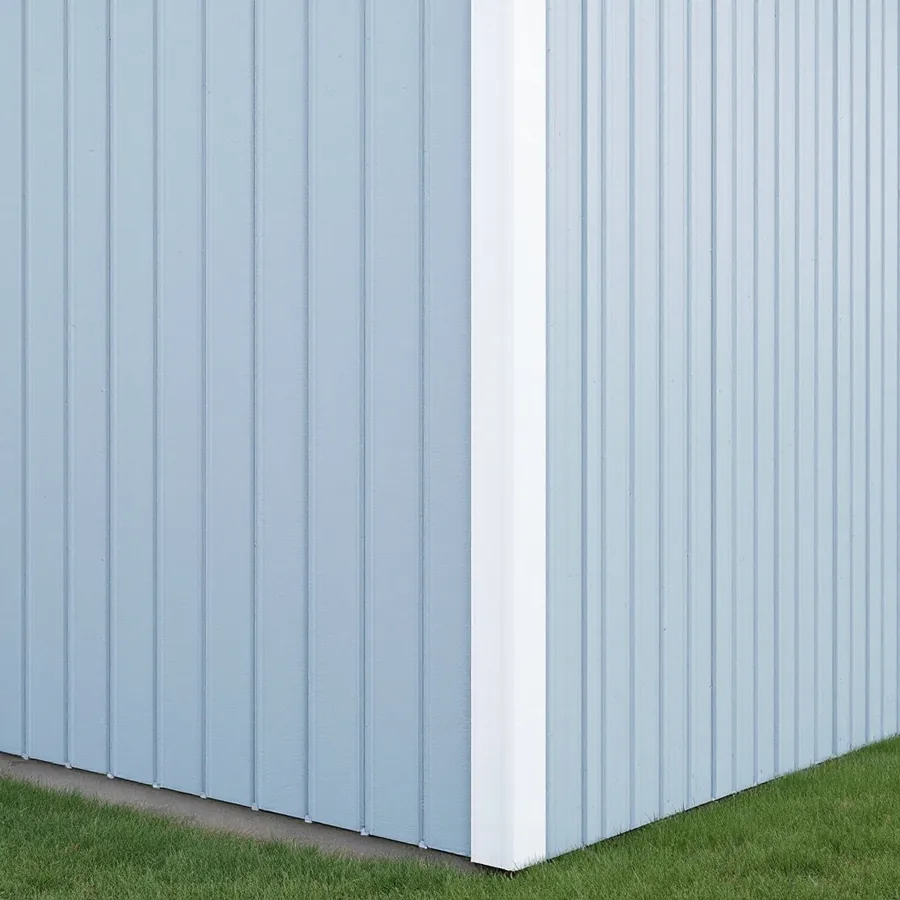
White board and batten siding is the modern farmhouse look, and the reason is optical: on white, the shadow beside each batten is at its strongest, so the pattern reads from across the street. White board and batten vinyl siding also avoids the heat problem of dark vinyl described below.
Black and charcoal
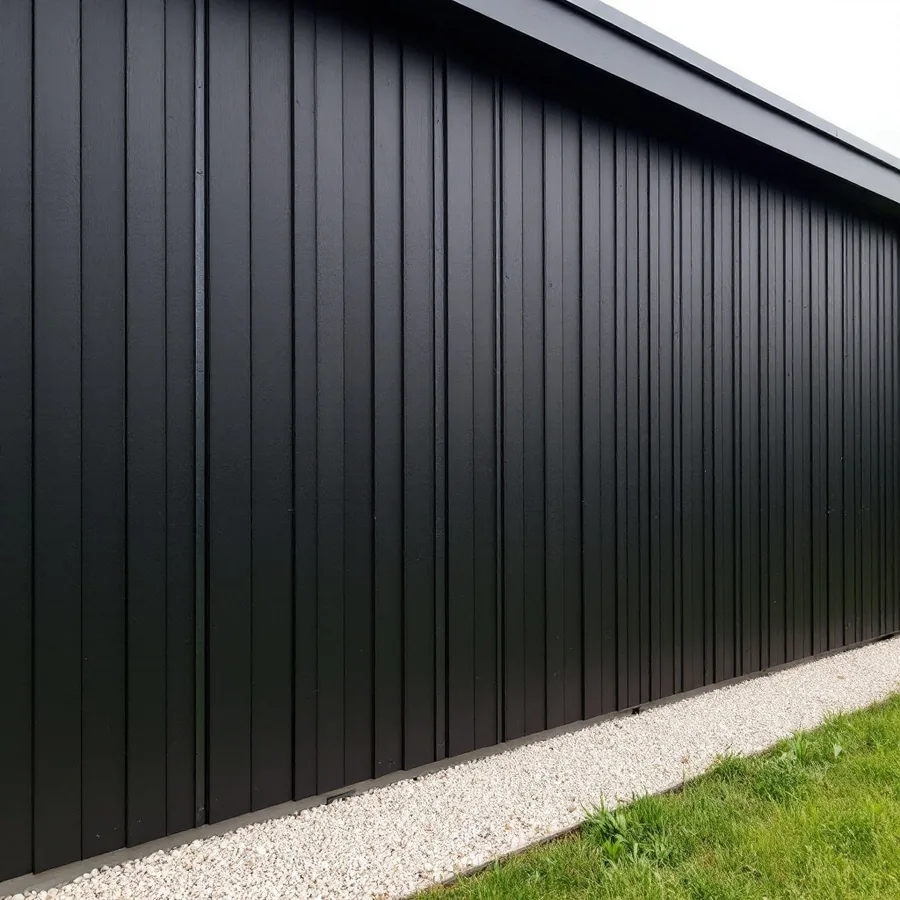
Black board and batten siding does the opposite. The shadows vanish into the color, and the wall becomes a dark plane with a faint texture. Black board and batten and black vertical siding suit modern houses for that reason. Charcoal board and batten siding keeps a little more of the pattern. Two cautions apply to all dark walls: they run hotter in the sun, which matters for vinyl, and black vinyl board and batten siding has to be a product formulated for dark colors. Dark painted finishes also show chalking and scratches sooner.
Green, gray and blue
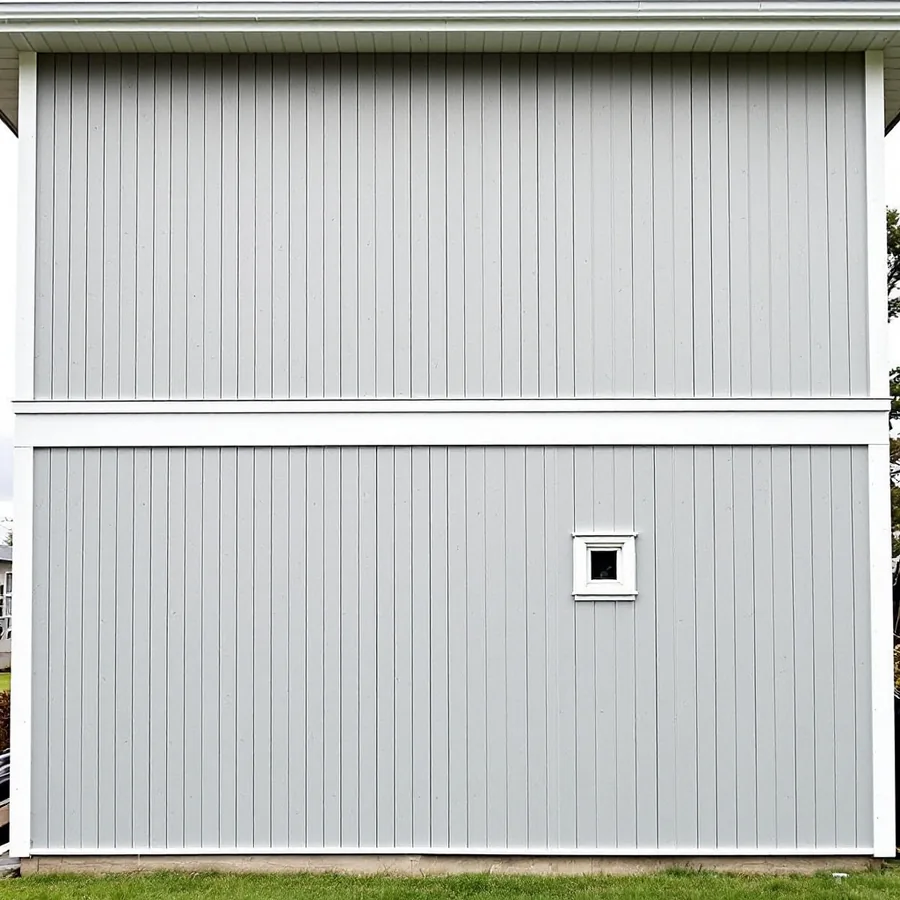
Green board and batten siding, and sage green board and batten siding in particular, sits well against trees and stone. Green board and batten in a deep tone reads almost as black in shade. Gray board and batten siding is a middle course: enough contrast to show the battens, dark enough to hide dust. Blue board and batten siding ranges from pale coastal shades to navy, and the navy end behaves like charcoal.
How the material limits the palette
In vinyl and metal the color is fixed at the factory: vinyl is colored through and cannot be changed later except with paint the maker approves, and metal comes with a coil coating, a long finish warranty and a fixed chart. Fiber cement, engineered wood and wood can be any color and can be repainted, which is the real difference: in those materials the color is a decision you can revisit. Judge any color on a large sample outdoors, in sun and in shade, because a hand-sized chip shows no battens and therefore no shadows.
On Real Houses
Houses it suits: farmhouse, modern, ranch and barn
A board and batten house can be a nineteenth-century barn or a black box finished last year. The pattern is the same; the proportions change.
Farmhouse
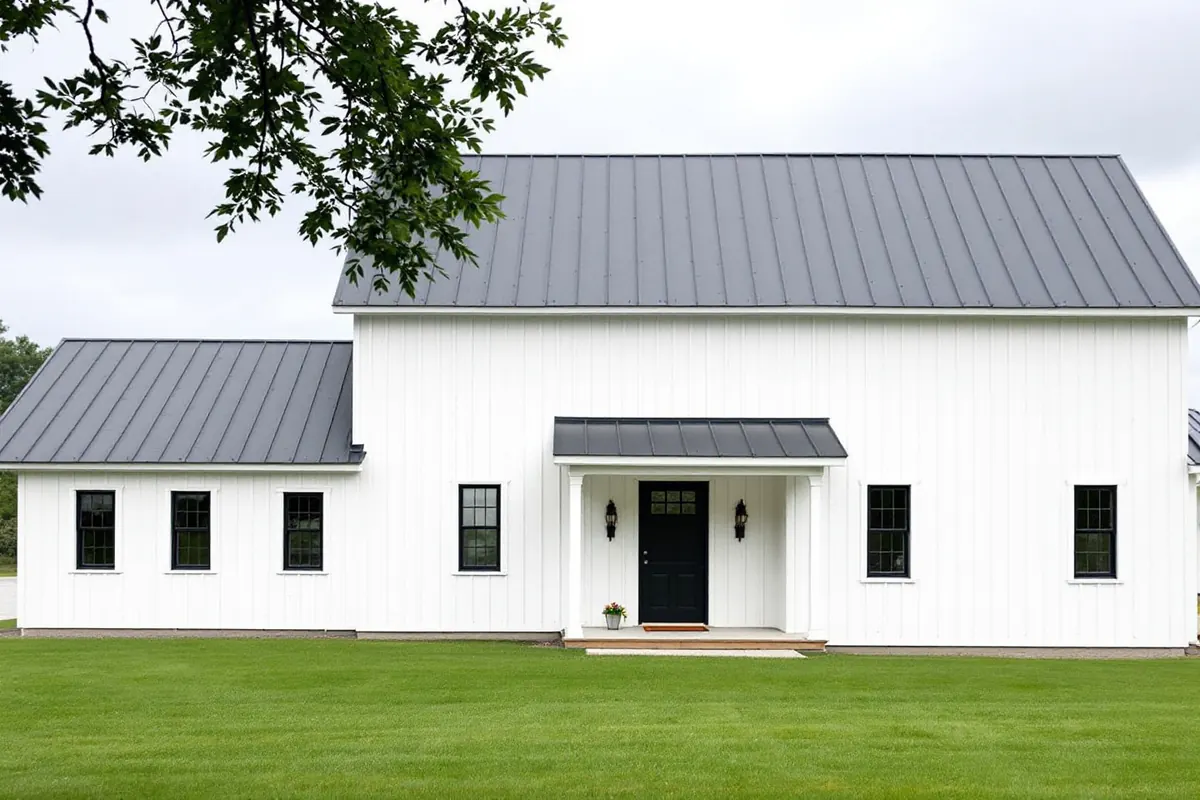
Farmhouse board and batten siding is white or pale, with wide boards, a metal roof and dark window frames. Board and batten farmhouse designs usually put the pattern on the whole house or on the gables over lap siding. Farmhouse vertical siding of this kind is made in fiber cement, engineered wood and vinyl.
Modern
Modern board and batten uses narrower, more closely spaced battens, dark colors and little trim. Modern board and batten siding is often steel or a reverse profile. A modern board and batten exterior depends on precision: with no trim to hide behind, every line has to be straight.
Ranch and two-story
A board and batten ranch house gains apparent height from the vertical lines, which is the classic argument for vertical siding on ranch house walls that otherwise look long and low. A two story house with board and batten siding has the opposite problem: full-height vertical lines can make it look tall and narrow, and it always has a horizontal panel joint to detail. Many two-story designs put board and batten on one level only.
Barn, garage and barndominium
The board and batten barn is where the pattern came from: rough boards, cheap, quick to put up, and easy to repair one board at a time. A board and batten garage often matches the gables of the house. A board and batten barndominium is usually steel, because the building is a metal frame with horizontal girts already in place for vertical panels.
On a mobile or manufactured home
Board and batten siding on a mobile home is a re-siding choice, and vertical siding is often what the factory installed in the first place. Manufactured homes are built to a federal standard rather than a local building code, and their wall framing and sheathing can be lighter than a site-built house. That makes the question of what the siding is fastened to more important, not less. Vinyl is a frequent pick because it is light. Ask for a contractor who has re-sided manufactured homes before, and ask what they found behind the old panels on the last one.
Looking at pictures, and what they hide
Board and batten siding pictures are worth reading carefully. They rarely say what the material is, and soft light flatters every wall. In pictures of houses with board and batten siding, look for three things: the batten spacing relative to the windows, what happens at the horizontal joint on a tall wall, and how the pattern ends at the corners. Pictures of metal walls in particular tend to show new ones; ask to see one that has been through a few winters.
Houses near you are a better guide than any gallery. They were built for your climate by crews you could hire, and they show how the walls really weather. A ten-year-old vertical wall down the road tells you more than a showroom: look at its batten spacing, its horizontal joint and its corners, the same three choices every style comes down to. A slow drive past is worth more than an hour of pictures.
Compared
Board and batten vs lap siding, shiplap and beadboard
Board and batten differs from lap siding, shiplap and beadboard in how the joint between boards is made.
| Comparison | The other profile | The practical difference |
|---|---|---|
| Board and batten vs lap siding | Horizontal courses, each overlapping the one below. | Lap is simpler to hang and to flash, and nearly every crew does it daily. Board and batten needs horizontal nailing and more layout. |
| Shiplap vs board and batten | Boards rabbeted to overlap edge to edge, lying flat. | Shiplap gives a flat wall with fine lines and shows flaws in the wall behind. The raised batten hides them. |
| Beadboard vs board and batten | Narrow boards or sheets with a small rounded bead at each joint. | Beadboard is a porch-ceiling and interior material. It is not a whole-house cladding. |
Lap is the default and board and batten is the choice, and the choice costs a little more labor in any material. Between board and batten and shiplap, pick by how flat you want the wall to look and how true the wall behind it is.
Older Houses
On a house built before 1978
One federal rule and one piece of federal guidance can add lines to a siding quote, and neither depends on the pattern you choose.
Lead paint
The Environmental Protection Agency requires that “anyone paid to perform work that disturbs painted surfaces in homes, childcare facilities and preschools built before 1978 be certified.” Old painted siding coming off a wall is a painted surface being disturbed. On a house of that age, the firm's certification and its lead-safe practices belong on the quote.
Cement shingles
Many mid-century houses are clad in gray cement shingles that may contain asbestos. The EPA's guidance on asbestos is plain: “Generally, asbestos-containing material that is in good condition and will not be disturbed (by remodeling, for example) will not release asbestos fibers.” Removing them disturbs them. Ask what the old cladding is before anyone cuts or breaks it, and what the plan is if it tests positive.
Work It Out
Work out what you are being quoted
Answer three questions to see the lines a board and batten quote in that material should carry, what the Census count says about your region, and the question to ask first. Nothing is sent anywhere, and no prices come back.
We are paid the same fixed fee for an introduction whichever material you choose, so nothing here leans toward one of them.
Before You Sign
6 questions to ask before you sign
These six questions separate a crew that has hung this pattern from one that has seen a photograph of it.
| Ask | What it tests | A weak answer |
|---|---|---|
| Which material is this, and which product? | Whether the quote can be compared with another at all. | “Board and batten.” |
| What are you fastening it to between the studs? | Whether the horizontal nailing base has been priced. | “The sheathing,” without knowing what the sheathing is. |
| Where do the battens fall on the front wall? | Whether anyone has done a layout. | “Every sixteen inches,” with no mention of the windows. |
| Where is the horizontal joint, and how is it flashed? | Whether the tall-wall detail exists. | “We caulk it.” |
| How many squares did you count? | Whether the house was measured. | A floor area. |
| What year was the house built, and what does that change? | Whether they know the federal paint rule. | “Nothing, for siding.” |
The Federal Trade Commission's advice on hiring a contractor applies unchanged: “Get multiple estimates,” and “Don't automatically choose the lowest bidder.” On this pattern, check whether the lowest quote has priced the wall behind the boards.
Who Is Talking
Who we are, and what we are paid for
We are not a contractor and we do not sell siding or manufacture it. We are a referral service, paid a fixed fee for an introduction that is the same for vinyl and for cedar, for a gable and for a whole house. That is why this page can say that the pattern is not the expensive part and that a cheap quote may be missing a line. When you want someone to measure the house, we connect you with independent siding contractors. Who pays us and how is on our about page, and how we check what we publish is in our editorial standards.
What the introduction is, and is not
It is a connection to an independent siding contractor in your area. It is not a price, a promise about when they arrive, or a guarantee of their work. Those are theirs to make and yours to get in writing.
Straight Answers
Questions people ask about board and batten siding
What is board and batten siding?
A vertical siding pattern: wide boards with a narrow strip, the batten, over each joint. It began in wood and is now also made in vinyl, fiber cement, engineered wood, steel and aluminum. The pattern sets the look of the wall; the material sets what it costs to buy, to hang and to keep.
What is board and batten siding made of?
Any of five materials. Our tabulation of the Census Bureau's survey shows wood as the main wall material on only 6 percent of new houses completed in 2025. The Census counts materials, not patterns, so it cannot confirm this, but the likely reading is that much of the board and batten going up now is made in fiber cement, vinyl, engineered wood or metal. Ask which one a quote names before comparing it with another.
Is board and batten siding more expensive than lap siding?
In the same material, usually somewhat. Vertical siding needs horizontal blocking or furring behind it and more layout, and in panel systems the battens are extra pieces to buy and to fix. We publish no averages. Count your squares with our calculator, then read each quote against the levers in the cost section above.
What is the best material for board and batten siding?
There is no single best one. Vinyl asks least of you and limits color. Fiber cement and engineered wood can be repainted and need careful joints. Steel gives the sharpest lines. Wood is the original, needs a finish for life and a carpenter who has hung it before. Ask us for an introduction and ask the contractor which of the five they hang every week.
What is reverse board and batten?
The layers swapped: narrow battens go on the wall first and the wide boards are nailed over them. The joint then shows as a recessed groove instead of a raised strip, and the wall looks flatter and more modern. The same look is also made as grooved plywood and as vinyl panels with the channel pressed in.
How far apart should the battens be?
In wood, the spacing is simply the board width, because the battens fall where the joints are. On panels it is your choice, provided each batten is fastened to solid backing and one covers every sheet joint. Closer spacing looks traditional and wider looks modern. Set the layout out from the windows and doors, not from the corner.
Does vertical siding leak more than horizontal?
Not when it is detailed properly. On a vertical wall the joints run with the water instead of across it, so the points that matter are the flashing above windows, the horizontal joint on walls taller than one panel, and the bottom ends of the boards, which must stop clear of the ground.
Can board and batten be mixed with other siding?
Yes, and it usually is. A gable in board and batten over lap siding, or vertical siding above a brick base, are familiar combinations. The joint between the two materials is a waterproofing detail first: it needs a trim band with flashing above it, and a quote should say so.
How long does board and batten siding last?
That follows the material and the detailing, not the pattern. Any of the five fails early at an unflashed joint or where the boards sit too close to the ground, and lasts when those details are right. We publish no number of years, because the installer decides it more than the product does.
Do you install board and batten siding?
No. We are a referral service, not a contractor. Ask us for an introduction to an independent siding contractor near you; we are paid a fixed fee for the introduction, the same whatever material you choose. Before you sign with anyone, put the six questions in the table above to them.
Where This Comes From
Sources and method
- Wood, fiber cement and vinyl as the primary wall material of new houses, by region, 2005 to 2025: our own tabulation of the U.S. Census Bureau, Survey of Construction: Characteristics of New Housing. We took the published regional shares for each year, found the low and high of the wood series, and multiplied share by houses completed to estimate counts.
- What vertical wood siding and battens are, grain, finishes and fasteners: USDA Forest Service, Forest Products Laboratory, Wood Siding: Installing, Finishing, Maintaining.
- Furring, drainage gaps and fastening cladding over the wall: U.S. Department of Energy, Building America Solution Center, Continuous Rigid Insulation Sheathing/Siding.
- Lead-safe certification for work on homes built before 1978: U.S. Environmental Protection Agency, Renovation, Repair and Painting Program.
- Asbestos in older cladding: U.S. Environmental Protection Agency, Protect Your Family from Exposures to Asbestos.
- Hiring a contractor: estimates and the lowest bidder: Federal Trade Commission, Consumer Advice: How To Avoid a Home Improvement Scam.
- Panel dimensions quoted for vinyl and fiber cement: the published specifications of two national manufacturers, read on the date below. We name no brands and recommend none; the figures illustrate how sizes are stated, and your product's own sheet is the authority.
Our editorial standards explain how we source and check what we publish. Every quotation on this page is taken from the public documents listed above, and we publish no price averages. We are a referral service rather than a contractor. Last updated .
Before you call anyone
The flat-fee match — we are paid for the introduction, not for the size of your job
Most siding advice is written by the company that wants to do the work or the company that makes the product. That is not a failing of the people who read it; it is a defect in who is talking: the measurement, the estimate and the invoice come from one party, and no amount of care on your side fixes that.
We are built the other way round. We do not install, repair or sell anything, so the payment reaches us when you are connected to a licensed, insured siding contractor — the same amount whether you need one panel replaced or four walls re-clad. Nobody here has a reason to talk you into the larger number. You can check that rather than take it on trust: how we make money is written down, and this site keeps telling readers when one wall is enough. Why does not everyone work this way? Because a flat fee leaves money on the table every time the job turns out to be big.
Waiting is the one thing that actually costs money. A wall that is open to the weather does not get better and does not wait for a convenient week; the water that gets behind the siding finds the sheathing, the framing and the drywall inside. A cracked panel over a window lets the next storm in. And if it turns out to be one panel and a quarter-hour, say so when you ask. We will tell you, and that answer earns us nothing.
Not for you if: you want a price over the phone — nobody honest gives one without measuring the house; you need a guarantee of arrival within the hour — we cannot promise that for a company we do not run; the building is commercial; or you would rather do it yourself, in which case the pages on this site are written so that you can.