Wood Siding
Wood siding: the species decides how much the wall moves
Reviewed by the Siding Pros USA editorial team · · 20 min read
Wood siding is boards, shingles or panels of real wood, finished with paint or stain. It swells and shrinks with the weather, and that movement cracks paint and opens joints. By our calculation from the Forest Service's tables, thirteen siding woods differ about twofold in how much they shrink as they dry.
Wood siding is chosen by species, and species move differently
- The spread. Across the grain, the woods we tabulated shrink from 4.4 percent to 9.1 percent as they dry: about twice as much at one end as the other.
- On a board. Drying once from green to 12 percent moisture content, an 8-inch board narrows by 0.21 inch to 0.44 inch, depending on the wood. The yearly swing on a wall is smaller, in the same order of species.
- The cut. The Forest Service puts it in one line: “Tangential shrinkage is about twice as great as radial.” A board sawn the stable way moves about half as much.
- Why it matters. Paint, caulk and nails all have to survive a smaller version of that movement every year. Species and cut are decided before any of them.
This page covers exterior wood siding: what it is, the types, the panel products, how it is finished and kept, and what is sold to look like it. We publish no price averages and we sell nothing.
Our Tabulation
Our tabulation: how much 13 siding woods shrink as they dry
The Forest Products Laboratory's Wood Handbook lists how much each American wood shrinks as it dries. We took thirteen siding woods from that table and worked out what the percentages mean for one siding board.
| Species | Across the growth rings (tangential) | Along the radius (radial) | An 8-inch board narrows by |
|---|---|---|---|
| Redwood, old growth | 4.4% | 2.6% | 0.21 in. |
| Redwood, young growth | 4.9% | 2.2% | 0.24 in. |
| Northern white-cedar | 4.9% | 2.2% | 0.24 in. |
| Western redcedar | 5.0% | 2.4% | 0.24 in. |
| Atlantic white-cedar | 5.4% | 2.9% | 0.26 in. |
| Eastern white pine | 6.1% | 2.1% | 0.29 in. |
| Ponderosa pine | 6.2% | 3.9% | 0.30 in. |
| Eastern hemlock | 6.8% | 3.0% | 0.33 in. |
| Loblolly pine | 7.4% | 4.8% | 0.36 in. |
| Sitka spruce | 7.5% | 4.3% | 0.36 in. |
| Douglas-fir, coast | 7.6% | 4.8% | 0.36 in. |
| Western hemlock | 7.8% | 4.2% | 0.37 in. |
| Western larch | 9.1% | 4.5% | 0.44 in. |
What the table shows
The stable end of the list is redwood and the cedars, at around five percent. Western redcedar shrinks 5.0 percent across the grain; coast Douglas-fir shrinks 7.6 percent; western larch tops the list at 9.1 percent. On an 8-inch board that is the difference between 0.24 inch and 0.36 inch of shrinkage in drying. Cedar and redwood are known as siding woods for resisting rot. The table shows a second reason: they shrink least.
What the second column means
Every species shrinks far less along the radius of the log than around its rings. A board sawn so its face runs along the radius is called edge-grained or quartersawn, and it shrinks by the smaller figure. The ordinary cut is flat-grained and shrinks by the larger. That is why the Forest Service's siding bulletin says: “Paint will last longer on smooth, edge-grained surfaces.”
How we worked it out
The shrinkage figures are the handbook's, measured from green wood to oven-dry. The inches are ours. The handbook gives a formula for part of that range and suggests 30 percent moisture content as the point where shrinkage begins; we applied it to an 8-inch board drying to 12 percent.
Limits of the tabulation
These are species averages, and the handbook warns that individual pieces vary. The seasonal swing on a finished wall is smaller than drying from green, though the order of the species is the same. The table is about shrinkage, not decay: resistance to rot is a separate property that we did not tabulate.
The Material
What is wood siding
Wood siding is solid wood cut into boards, shingles or sheets and fastened over the wall to shed rain.
What is wood siding called
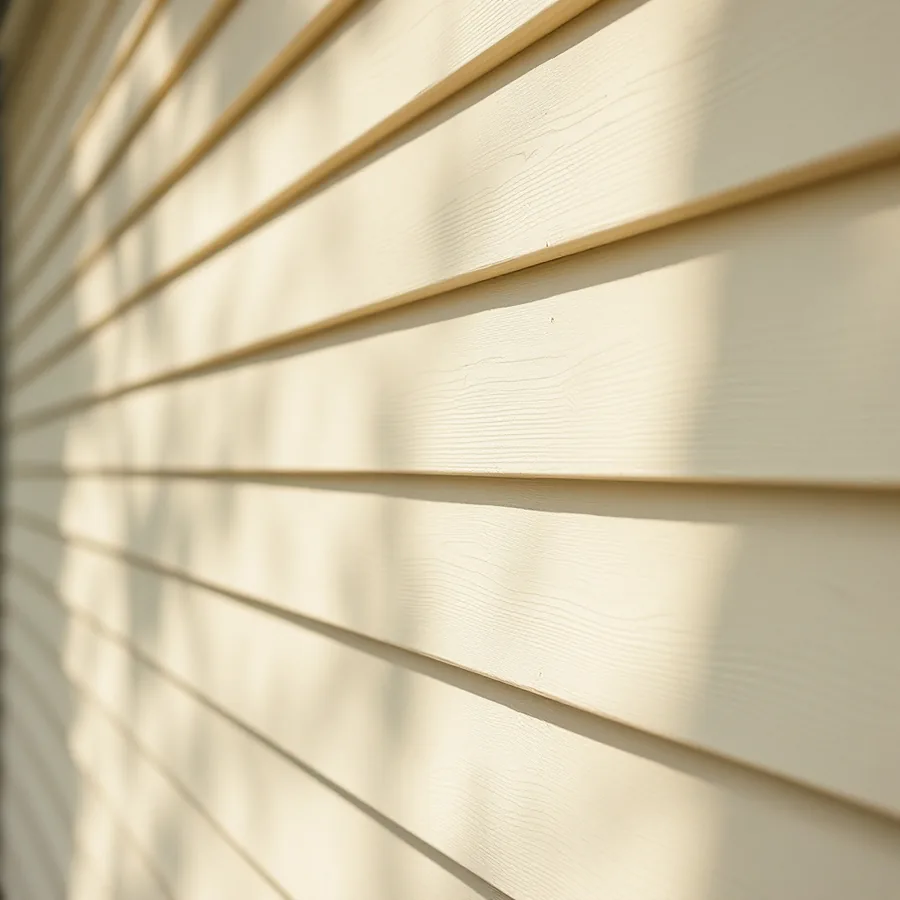
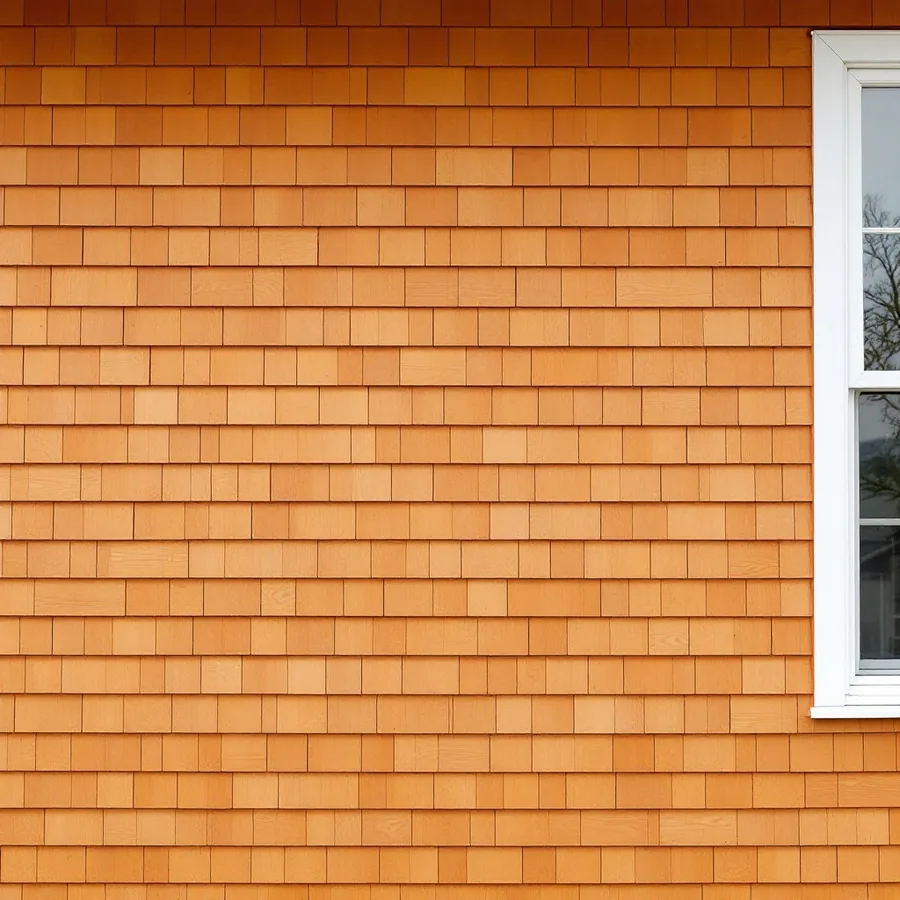
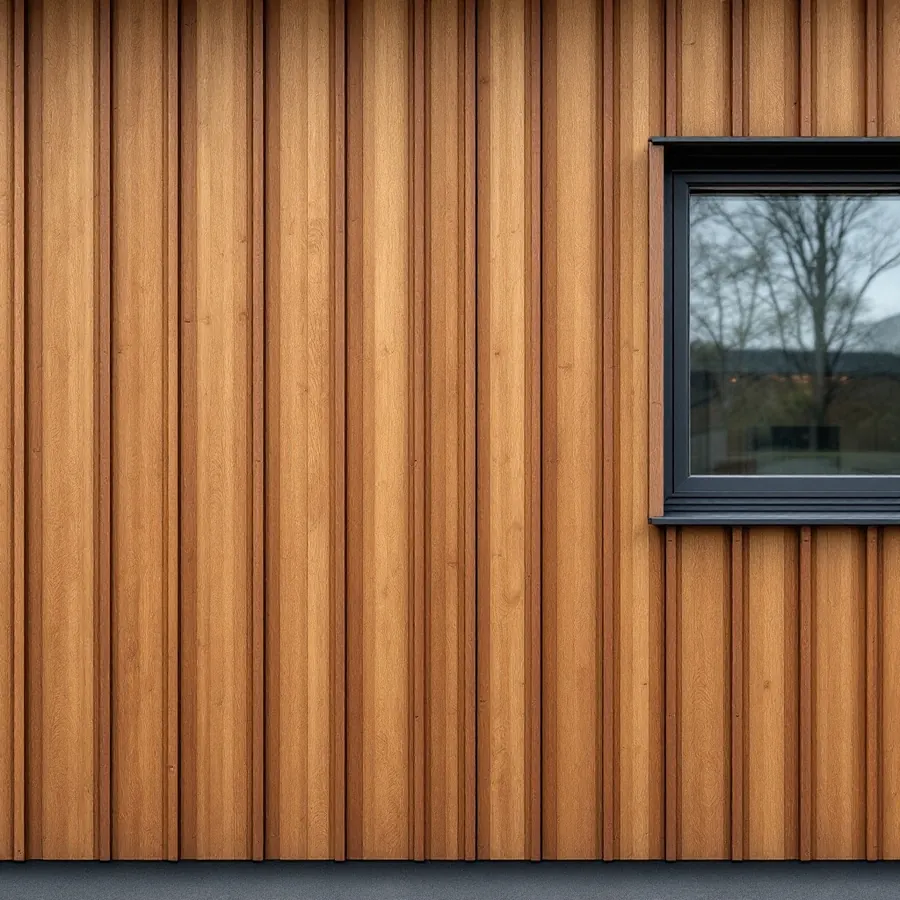
By its shape. Horizontal boards are clapboard, lap or bevel siding. Vertical boards are board and batten or tongue and groove. Small overlapping pieces are shingles and shakes. Sheets are plywood or panel siding.
How common wood siding is
The Census Bureau's survey of new single-family houses found wood as the main wall material on 7 percent of houses completed in 2005 and on 6 percent in 2025. The share runs from 3 percent in the South to 16 percent in the Midwest. Our board and batten page follows the wood share through all 21 years of that file, region by region.
What it is good at, and what it asks
Wood is easy to cut, fit and repair one board at a time, it can be any color, and nothing else looks like it up close. In exchange it needs a finish, kept up for as long as the wall stands, and it has to be kept from sitting wet.
The Shapes
Types of wood siding
Wood siding types are named for the way each board meets the next. The six below are the ones you will be offered, and old houses use the same few joints.
| Type | The joint | Direction |
|---|---|---|
| Bevel or clapboard | Tapered boards, each lapping the one below. | Horizontal. |
| Dutch lap or drop siding | A milled board with a concave groove along the top and a rabbet that sits over the board below. | Horizontal. |
| Shiplap | Rabbeted edges overlap, leaving a flat face with a fine line. | Either. |
| Tongue and groove | One edge is milled to a tongue that slots into the groove of its neighbor. | Either, most often vertical. |
| Board and batten | Wide boards with a strip over each joint. | Vertical. |
| Shingles and shakes | Small pieces in overlapping courses; shingles sawn, shakes split. | Courses run horizontally. |
Lap, clapboard and bevel
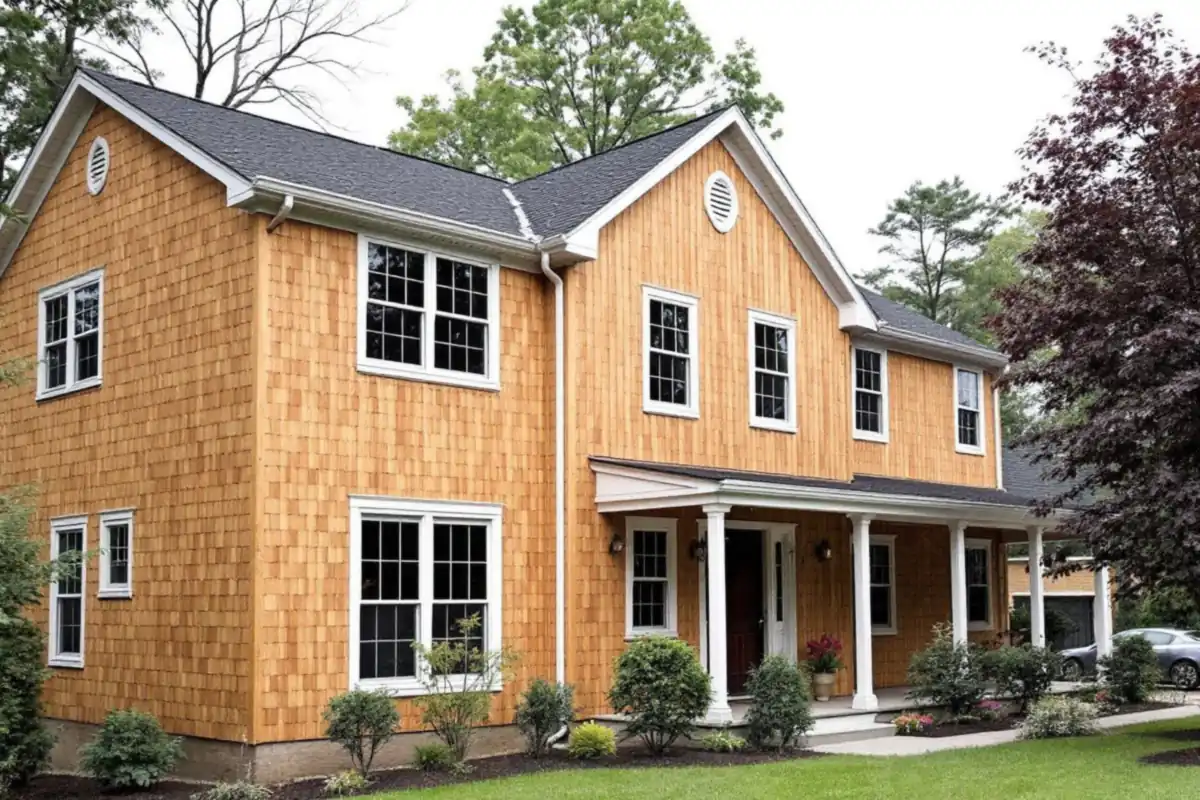
Wood lap siding is the pattern most people picture; the Forest Service bulletin calls bevel siding perhaps the most widely used. Clapboard, lap and bevel are names for one thing, differing only in width and in how the lower edge is shaped. Dutch lap adds a curved groove for a deeper shadow. Horizontal boards of any of these kinds make a house look lower and longer.
Shiplap, plank and vertical boards
Shiplap wood siding gives a flat wall with a neat line at each joint, and wood plank siding is a loose name for it and for square-edged boards. Vertical wood siding is tongue and groove, shiplap or board and batten. Of the vertical wood siding types, board and batten is the most forgiving, because the batten covers the joint as the boards move. For any vertical pattern the Forest Service's observation holds: “Vertical siding tends to make a house appear taller.”
Shingles and shakes
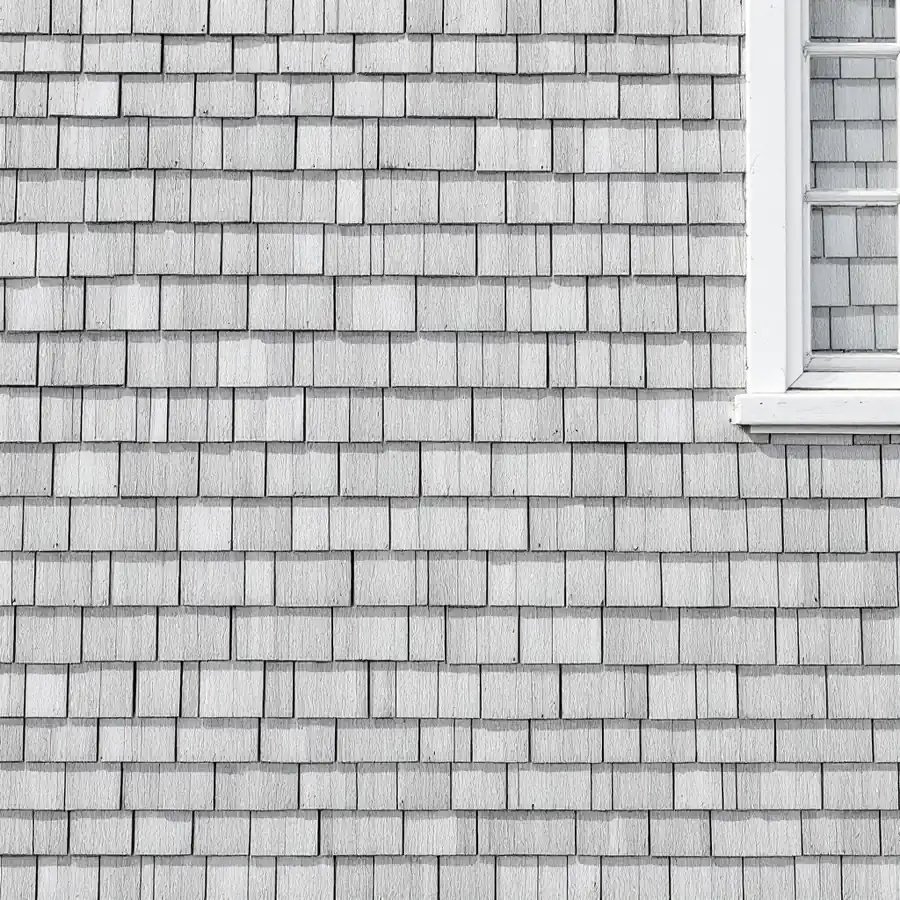
Wood shingle siding is sawn smooth on both faces and lies flat and even, which suits coastal and cottage houses. Wood shake siding is split, thicker and rougher, and throws a heavier shadow. Both use many small pieces, so the labor line is larger than for boards.
Old wood siding types
Old wood siding on a house built before the middle of the last century is usually bevel clapboard, drop siding or shingles, often in a tighter-grained wood than is sold now. That is worth knowing before you replace it: a mill can usually match an old profile, and sound old boards are often worth keeping.
Choosing among wood siding options
Among wood siding options, pick the profile for the look and the species for the behavior. In a damp climate, favor the types that shed water at every course: bevel and shingle. A dry climate leaves a wider field.
Sheets
Wood siding panels
Wood siding panels are sheets of plywood made for exterior walls, usually with grooves cut in the face to suggest boards.
What wood panel siding is
Wood panel siding is plywood sold in sheets, and it goes up fast: one sheet covers what several boards would. Panels are sold smooth, rough-sawn or grooved, and most are hung vertically. The best known is T1-11, a plywood with evenly spaced vertical grooves. Engineered boards made of wood strands and resin are a different product with their own rules.
Where panels fail
Panel walls fail at the edges. The bottom edge and the horizontal joint between sheets take in water unless they are flashed and sealed, and the face veneer checks and peels when the finish is neglected. The Forest Service bulletin notes that plywood's flat grain can lead to early paint failure and that penetrating stains are often the better finish for it.
Which Wood
Which wood: stable species and modified wood
Cedar and redwood move least and hold paint best; pine, spruce and fir cost less and ask more of the finish. Here is what the tabulation means at the lumberyard.
The stable softwoods
Cedar and redwood are the traditional siding woods, and the Forest Service bulletin recommends them where paint will be used. They sit at the calm end of our table. Pine, spruce and fir are cheaper and more widely available, move more, and depend more on their finish and on careful nailing. What the local mills cut is usually the sensible starting point, because that is the wood the local carpenters know.
Thermally modified and acetylated wood
Thermally modified wood siding is ordinary lumber heated in a kiln until its chemistry changes, so that it takes up less water and moves less. Acetylated wood reaches the same end by a chemical treatment. Accoya wood siding is the best-known acetylated product: its maker, Accsys, acetylates fast-growing softwood and sells it for cladding, the British word for siding, as well as for windows, doors and decking. Both are sold as modified wood siding, both cost more than the lumber they start from, and both come with a maker's data sheet that states how much the product moves. Ask for it; the table above gives drying shrinkage of untreated wood, so the two are not directly comparable.
Surfaces
Charred, reclaimed and weathered wood siding
Charred, reclaimed and weathered boards are ordinary wood siding with a treated surface, and all three sell on looks.
Charred wood
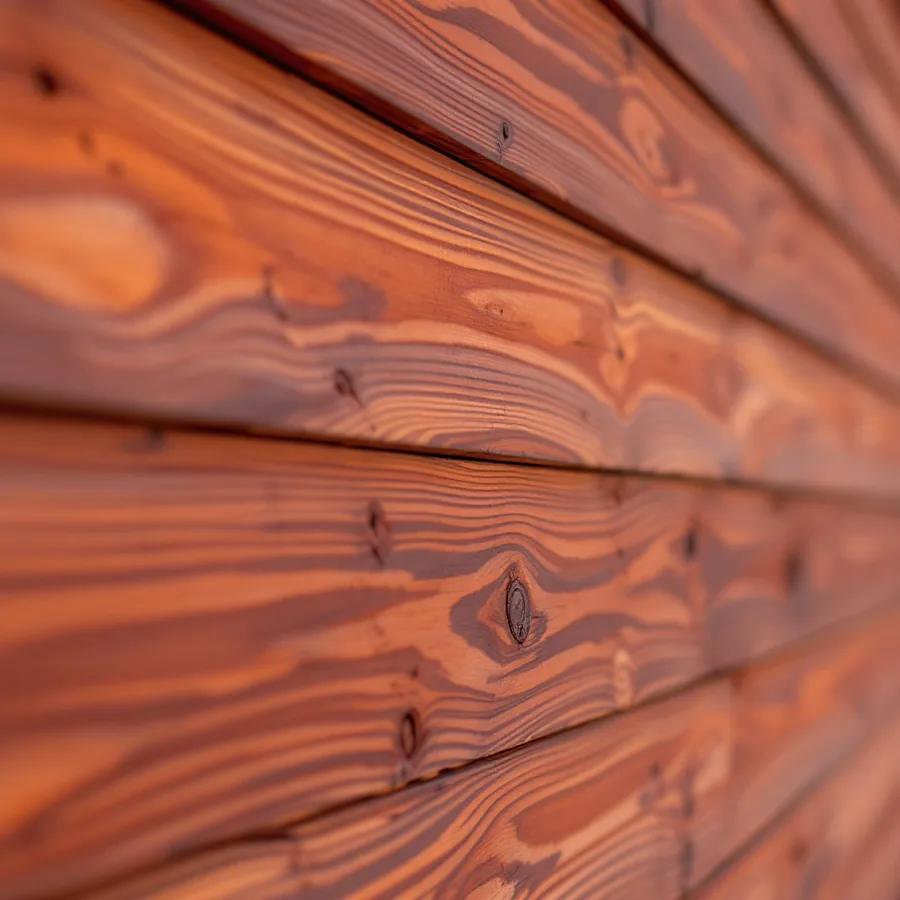
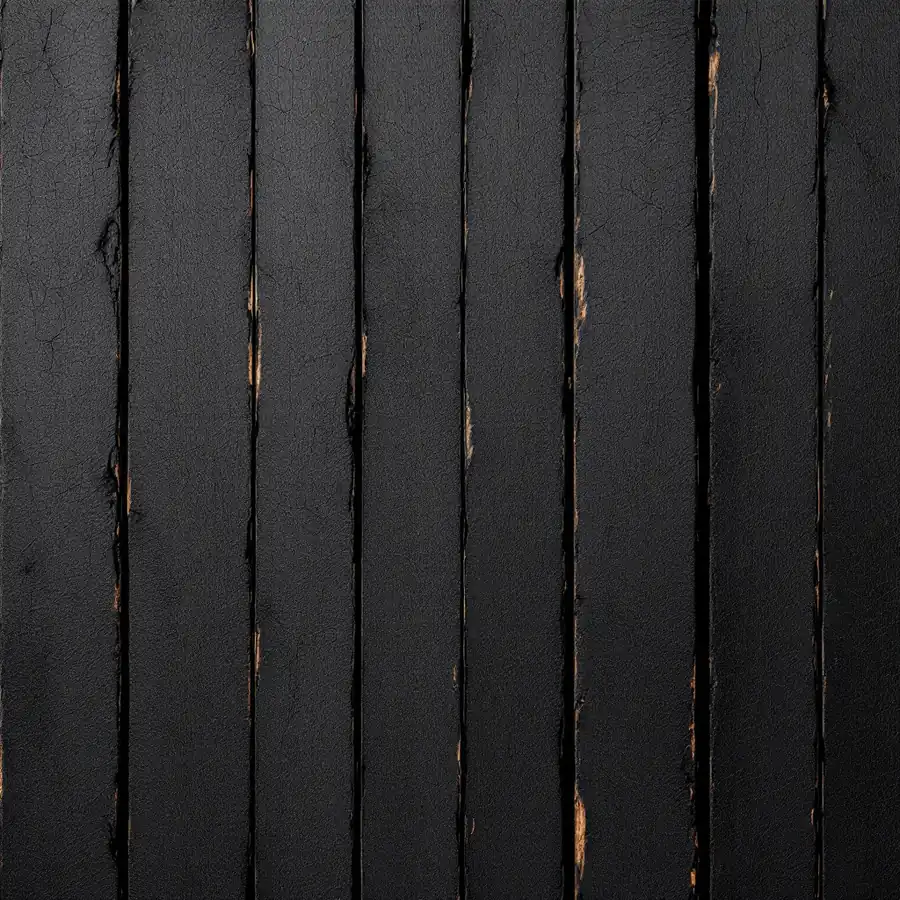
Charred wood siding has its face burnt black, brushed and usually oiled. The technique is Japanese in origin, so it is also sold as Japanese burnt or Japanese charred wood siding. Designers use it on modern houses for its matte black surface. It is still wood: it moves, it needs re-oiling, and the char is a thin layer that can wear on a wall people brush against. Ask the supplier what maintenance they specify.
Reclaimed and barn wood
Barn wood siding and reclaimed exterior boards are old wood put back to work. Their appeal is the weathered surface that new wood takes decades to reach. Check that reclaimed boards are sound, free of old lead paint, and thick enough to nail, and expect uneven widths. Rustic boards of this kind, and live-edge boards with the bark line left on, are usually accents, not whole houses.
Finish
Finishing wood siding: paint, stain or neither
Wood siding is finished with paint, with penetrating stain, or left to weather, and the finish is chosen with the species and the surface, not after them.
| Finish | Suits | What it asks |
|---|---|---|
| Paint | Smooth, edge-grained boards of a stable species. | Primer and topcoats, backs and ends treated first, repainting when the film fails. |
| Penetrating stain | Rough-sawn boards, flat-grained boards and plywood. | Renewal more often than paint, with far less preparation, because it does not peel. |
| None, or a clear water repellent | Stable, durable species in a suitable climate. | Acceptance of gray weathering, and attention to anywhere water sits. |
How to paint wood siding, in outline
To paint wood siding so the paint holds, start with dry wood, treat the ends and laps with a water-repellent preservative, prime, then apply two topcoats. On exterior wood siding with failing paint the job is mostly preparation, and on a house built before 1978 that preparation is regulated, as covered below.
How to stain wood siding
Staining is simpler: clean, dry boards and a penetrating stain brushed in. The bulletin's words are “Penetrating stains or preservative treatments are preferred for rough-sawn lumber.” Stain soaks in where paint sits on top, so when it wears it fades instead of flaking, and the next coat goes straight on.
Natural wood siding
Natural wood siding is left without paint or stain, or given only a clear finish. The bulletin is specific about which clear finish: any water-repellent preservative can serve as a natural exterior finish by itself, while a plain water repellent, the same product with the preservative left out, is not a good natural finish. Clear varnish looks best at first and fails worst; in severe exposures, the bulletin says, a clear film may last barely a year before it cracks, peels and has to be sanded off. Bare boards weather to gray, and aluminum or stainless steel nails keep them free of rust spots.
Time
How long does wood siding last, and how to look after it
Wood siding lasts as long as it is kept dry and finished. We publish no number of years, because upkeep decides it.
What decides it
Wood kept dry and finished lasts for generations. Wood that sits wet rots: at the bottom course near the ground, under leaking gutters, behind unflashed trim, and at end grain left unsealed. The species and the cut set how hard the finish has to work. For a hot, wet city, our Houston page counts the hail and works out the decay index that decide when those places fail.
How to clean wood siding
Clean wood siding with a soft brush, mild detergent and a garden hose. High pressure drives water behind the boards and tears the surface fibers, which makes the next finish fail sooner.
Patching and replacing
The patch depends on the damage. A small hole with sound wood around it takes a filler made for exterior wood and a coat of finish; a soft or split board is cut out and replaced. Replacing wood siding one board at a time is the material's great advantage: a carpenter can match a profile that has not been milled for fifty years. Our siding repair page covers damage on every siding material, from rot to woodpecker holes.
Woodpeckers
Keeping woodpeckers away from wood siding starts with finding out why they are there: insects in the wood are a reason to have the wall inspected, not only the bird discouraged. Your state wildlife agency or county extension office is the right source for deterrents that are lawful where you live. Our southwest Ohio cedar page gathers what those agencies say about woodpeckers and carpenter bees on cedar.
On The Wall
How wood siding is installed
A sound wood siding job follows the six steps below. They are listed so you can judge a job, not do one.
The sequence
- Dry wood. Boards delivered and stored so they reach the wall near the moisture content they will live at.
- Back and end treatment. Backs primed and cut ends sealed before the boards go up.
- Wrap and flash. House wrap over the sheathing, flashing at every opening and horizontal break.
- Nail to move. Each board fastened so it can swell and shrink without splitting.
- Clear of the ground. The bottom course held up off soil, roofs and decks.
- Finish promptly. Paint or stain on before the weather starts on bare wood.
Wood siding nails
Wood siding nails must not rust. The Forest Service bulletin recommends zinc-coated, aluminum or other noncorrosive nails, and aluminum or stainless steel for siding left to a natural finish, because plain steel nails leave rust spots on most paints, even when they are countersunk and puttied. Their placement matters as much: the bulletin says each pattern of siding has its own nailing practice and the manufacturer's should be followed, and a wide board pinned along both edges will split when it shrinks.
Wood siding and trim
Wood siding and trim are fitted together, with corner boards and window casings going up first and the siding cut between them. The joints against trim are where water gets in, so they are where flashing and sealant belong.
Doing it yourself
Installing wood siding on a small single-story wall is within the reach of a competent amateur. A whole house adds scaffolding, flashing and, on an older house, federal rules about the old paint. A licensed crew is the usual answer.
The Look Without The Wood
Siding that looks like wood
Siding that looks like wood comes in four other materials, and each gives up something different.
| Material | How the wood look is made | What you trade |
|---|---|---|
| Fiber cement | A cedar grain pressed into a cement board, then painted. | Far less movement and no rot; heavy, and the grain repeats. Our fiber cement page has the detail. |
| Metal | A printed wood pattern on steel or aluminum. | Convincing from the street, less so up close; dents instead of rotting. |
| Composite and engineered wood | Wood fiber or strands with resin, embossed and primed. | Looks closest to painted wood; warranty depends on sealed edges and clearances. |
| Vinyl | A grain embossed in a plastic panel. | No painting needed; repainting is possible only within the maker's color limits. See our vinyl siding page. |
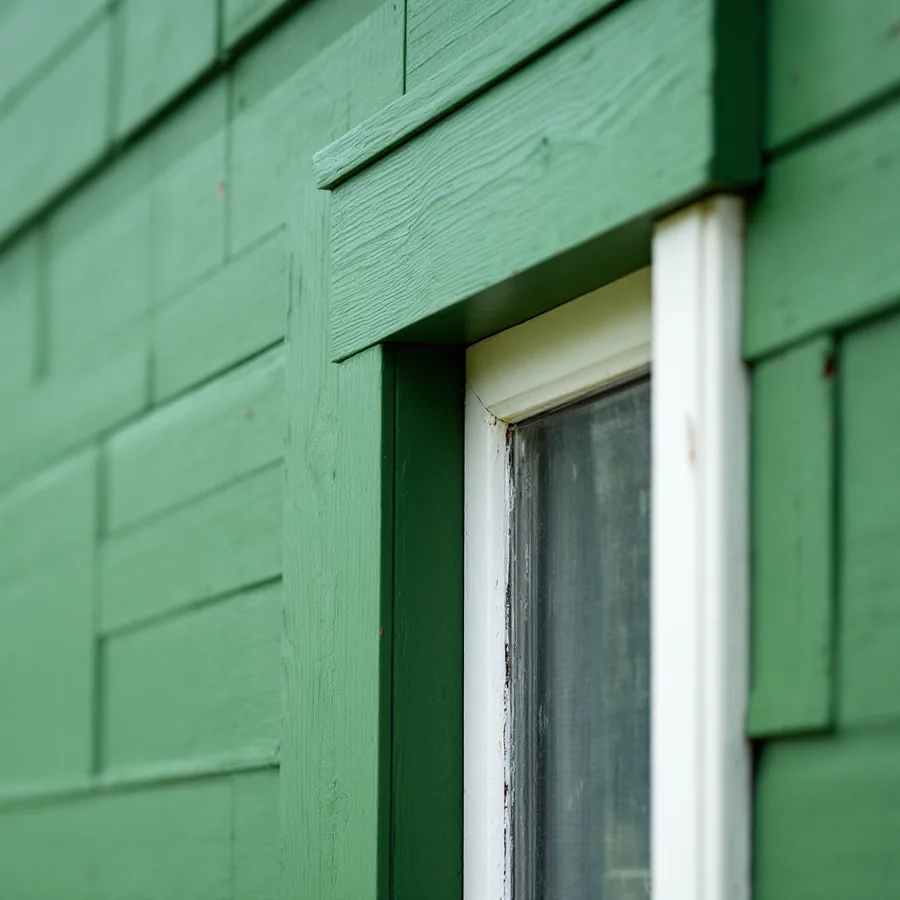
Metal that looks like wood
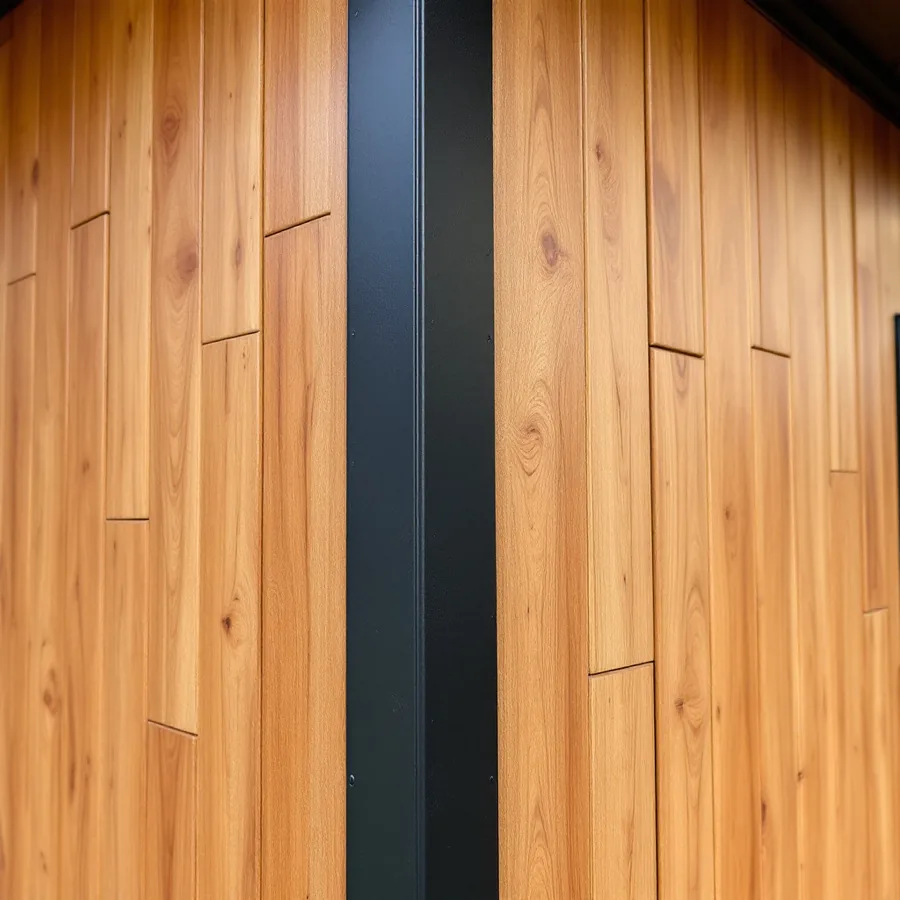
Metal siding that looks like wood is steel or aluminum with a printed finish, in horizontal or vertical profiles. Steel is the heavier option; aluminum is lighter and does not rust.
Composite
Composite is a loose trade name for engineered boards, usually primed for paint or pre-finished. Ask for the product's data sheet; the word covers several different materials.
Faux, fake and synthetic
Faux, fake and synthetic wood siding are other names for all of the above. Siding that looks like wood from the curb is easy to find; a grain that survives a close look is rarer. Among non-wood panels, fiber cement and engineered wood are the two to compare.
Compared
Wood siding vs fiber cement and other materials
Fiber cement, vinyl and engineered wood each offer less upkeep and no rot, in exchange for less warmth up close and no easy repair by a carpenter.
| Against | Wood wins on | Wood loses on |
|---|---|---|
| Fiber cement | Repair, weight, working by hand, appearance up close. | Upkeep, fire, rot. |
| Vinyl | Repair, repainting, appearance. | Upkeep and installed cost. |
| Engineered wood | Authenticity and repair by any carpenter. | Consistency and factory finish. |
How does modern shingle siding compare to wood? Fiber cement and polymer shingle panels copy the pattern well and remove the upkeep; what they cannot do is weather the way cedar does.
A Different Job
Indoors: interior wood siding
Interior wood siding is wall cladding inside a house: shiplap, tongue and groove and reclaimed boards used as paneling. Indoors there is no rain, so the detailing is simpler, though the boards still move with the seasons. That is trim carpentry, and this page is about the outside of the house. Outdoor wood siding takes the rain and sun that paneling never sees, and every choice above, from species to nails to finish, is made for that.
Work It Out
Work out what a wood siding quote should name
Answer three things; the page works it out locally and gives no price. What comes out is what the quote has to name, what the finish asks, which federal rules apply, and the question to ask first.
We are paid the same fixed fee whichever wood and finish you choose, so we gain nothing if you pick the costlier wood or finish.
Before You Sign
6 questions for the carpenter
These six questions separate a carpenter who understands wood from a crew that hangs it like plastic.
| Ask | What it tests | A weak answer |
|---|---|---|
| Which species and grade, and how wide are the boards? | Whether the wood was chosen or merely ordered. | “It’s wood siding.” |
| How is each board nailed? | Whether the boards are free to move. | “Two nails top and bottom.” on a wide board. |
| Are the backs and cut ends treated before they go up? | Whether water has a way into the end grain. | “The painter does all that after.” |
| What finish, how many coats, and who applies it? | Whether the finish is priced or forgotten. | “That’s separate.” with no figure. |
| What kind of nails? | Whether the wall will streak and loosen. | “Whatever is in the gun.” |
| How did you arrive at the quantity of siding? | Whether the walls were measured, gables and all. | “We always allow plenty.” |
The Federal Trade Commission's advice on hiring a contractor applies here as anywhere: “Get multiple estimates,” and “Don't automatically choose the lowest bidder.” For the square count, our calculator works it out from the house's dimensions.
Older Houses
Old paint: houses built before 1978
Old wood siding nearly always carries old paint, and old paint may contain lead.
The Environmental Protection Agency requires that “anyone paid to perform work that disturbs painted surfaces in homes, childcare facilities and preschools built before 1978 be certified.” Scraping, sanding, burning off or removing painted wood siding is exactly that work. On a house of that age the firm's certification and its lead-safe practices belong on the quote, whether the job is repainting or replacement.
Who Is Talking
About us, and the fee we are paid
We are not a contractor, a mill or a retailer. We are a referral service paid a fixed fee for an introduction, the same for pine as for redwood. Ask us for an introduction to an independent siding contractor. Our about page says who pays us, and our editorial standards say how we check facts.
Straight Answers
Wood siding questions, answered
What is the best wood for siding?
The stable ones. In our tabulation of the Forest Service handbook, redwood and the cedars shrink about five percent across the grain, against 7.6 percent for coast Douglas-fir and 9.1 percent for western larch. Less movement means paint and joints last longer. Local availability and the carpenter's experience matter as well, so ask us for an introduction and put the species question to the contractor first.
How much does wood siding move?
By our calculation from the Wood Handbook, an eight-inch flat-sawn board narrows by 0.21 inch to 0.44 inch in drying from green to twelve percent moisture content, depending on species. The seasonal swing on a finished wall is smaller. A board sawn edge-grained moves about half as much as a flat-grained one.
What are the types of wood siding?
Bevel or clapboard, Dutch lap or drop siding, shiplap, tongue and groove, board and batten, and shingles or shakes, plus plywood panels such as T1-11. They are named for the joint between pieces. Horizontal types shed water at every course; vertical types depend on flashing at the ends and breaks.
Should wood siding be painted or stained?
Paint protects most and suits smooth, edge-grained boards of a stable species. Penetrating stain suits rough-sawn and flat-grained boards and plywood, and is easier to renew because it does not peel. The Forest Service's siding bulletin gives the same guidance. Either way, backs and cut ends should be treated before the boards go up.
How long does wood siding last?
As long as it is kept dry and finished, which can be generations. A figure in years would be a guess, so we give none. It fails where water sits: near the ground, under leaking gutters and at unsealed end grain. The advantage of wood is that one board can be replaced without touching the rest of the wall.
Is wood siding high maintenance?
Higher than the other sidings covered on this site. Paint or stain has to be renewed for the life of the wall, and caulk and flashing have to be watched. In return it can be repaired board by board, repainted any color and matched by a mill. Whether that trade suits you is the real question, and fiber cement is the usual alternative.
What is T1-11 siding?
A plywood panel siding with evenly spaced vertical grooves, hung as whole sheets. It goes up quickly and is vulnerable at its bottom edge and at horizontal joints between sheets, which must be flashed and sealed. Penetrating stain is often a better finish for it than paint.
What is charred wood siding?
Boards whose face has been burnt, brushed and usually oiled, giving a matte black surface. The technique comes from Japan. It is still solid wood: it moves with moisture, needs re-oiling as the supplier specifies, and the charred layer is thin. Ask what maintenance the supplier requires.
Can siding look like wood without being wood?
Yes. Fiber cement, engineered wood, printed steel or aluminum and vinyl are all made with a wood grain. Each trades something: fiber cement is heavy, metal dents, engineered wood depends on sealed edges, vinyl can be repainted only within the maker's color limits. From the street most pass; up close real wood is still distinct.
Do you install wood siding?
No. We are a referral service. We connect homeowners with independent siding contractors and are paid a fixed fee for the introduction, the same for any wood. Ask the contractor you meet which species they are quoting and how the boards will be nailed.
Where This Comes From
Sources and method
- Shrinkage by species and the formula for partial drying: USDA Forest Service, Forest Products Laboratory, Wood Handbook (FPL-GTR-282, 2021), chapter 4, Moisture Relations and Physical Properties of Wood. The inches per board are our own calculation from its Table 4-3 and Equation 4-9.
- Siding patterns, grain, paint and stain, nails: USDA Forest Service, Forest Products Laboratory, Wood Siding: Installing, Finishing, Maintaining.
- Share of new houses clad in wood: U.S. Census Bureau, Survey of Construction: Characteristics of New Housing.
- Lead-safe certification for work on homes built before 1978: U.S. Environmental Protection Agency, Renovation, Repair and Painting Program.
- Hiring a contractor: Federal Trade Commission, Consumer Advice: How To Avoid a Home Improvement Scam.
Our editorial standards explain how we source and check what we publish. Each quoted line comes from the source named with it; you will find no price averages here. We are a referral service rather than a contractor. Last updated .
Before you call anyone
The flat-fee match — we are paid for the introduction, not for the size of your job
Most siding advice is written by the company that wants to do the work or the company that makes the product. That is not a failing of the people who read it; it is a defect in who is talking: the measurement, the estimate and the invoice come from one party, and no amount of care on your side fixes that.
We are built the other way round. We do not install, repair or sell anything, so the payment reaches us when you are connected to a licensed, insured siding contractor — the same amount whether you need one panel replaced or four walls re-clad. Nobody here has a reason to talk you into the larger number. You can check that rather than take it on trust: how we make money is written down, and this site keeps telling readers when one wall is enough. Why does not everyone work this way? Because a flat fee leaves money on the table every time the job turns out to be big.
Waiting is the one thing that actually costs money. A wall that is open to the weather does not get better and does not wait for a convenient week; the water that gets behind the siding finds the sheathing, the framing and the drywall inside. A cracked panel over a window lets the next storm in. And if it turns out to be one panel and a quarter-hour, say so when you ask. We will tell you, and that answer earns us nothing.
Not for you if: you want a price over the phone — nobody honest gives one without measuring the house; you need a guarantee of arrival within the hour — we cannot promise that for a company we do not run; the building is commercial; or you would rather do it yourself, in which case the pages on this site are written so that you can.