Vinyl Siding
Vinyl siding: the thickness nobody quotes
Reviewed by the Siding Pros USA editorial team · · 24 min read
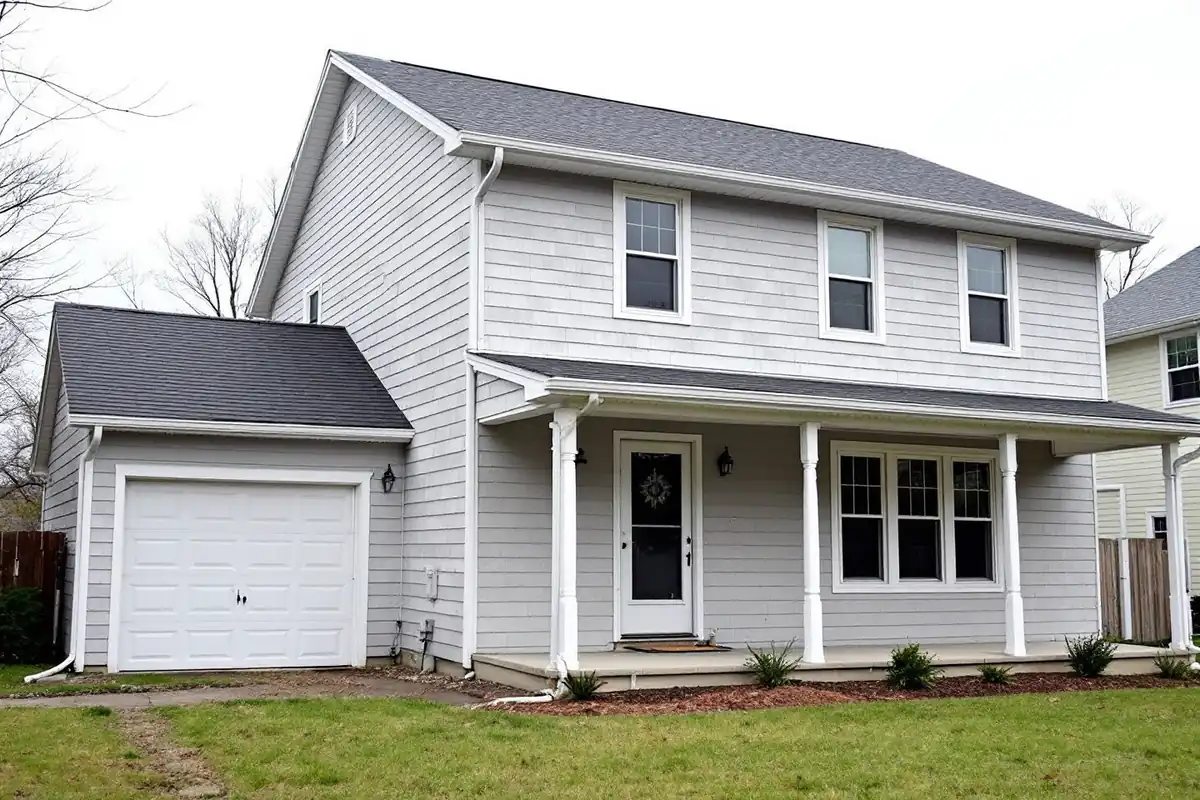
Vinyl siding is a formed plastic panel that hangs on a house and never needs paint. It is chosen by color and by profile, and one thing that sets its price is rarely mentioned: how thick the panel is. We read the published specifications of two manufacturers, line by line. The thickest panel was a fifth thicker than the thinnest, and a photograph of a new wall does not tell them apart.
Vinyl siding is sold by a thickness you are rarely told
- The range. In the specifications we read, panels ran from .040 inch to .048 inch. The thickest is 20 percent thicker than the thinnest.
- The middle. The most common thickness was .044 inch, on six of the sixteen lines.
- The floor. Building codes require vinyl siding to be certified to a standard, and certified products are tested to withstand winds of 110 mph, according to the Vinyl Siding Institute's 2014 guide Siding with Codes.
- The quote. A quote that names a color and a profile and no product line has not told you which thickness you are buying.
This page is about the material itself: what vinyl siding is, the types and colors it comes in, how long it lasts, how it is hung and how it compares. What moves the price is on our siding replacement cost page, and the vertical profile is on our board and batten page. We publish no price averages and recommend no brand.
Our Reading
Our reading: 16 product lines, line by line
Makers publish the panel thickness of each product line, and few buyers read it. We took sixteen product lines from two manufacturers and wrote down the nominal thickness of each.
| Nominal thickness | Lines | Makers and product types |
|---|---|---|
| .040 inch | 2 | Both makers |
| .042 inch | 4 | Both makers |
| .044 inch | 6 | Both makers; includes foam backed |
| .045 inch | 2 | One maker; includes beaded, vertical |
| .046 inch | 1 | One maker; includes insulated |
| .048 inch | 1 | One maker; includes vertical |
What the table shows
Sixteen product lines fall on six steps of thickness, from .040 inch to .048 inch. The step most often used is .044 inch, on six of the sixteen. The three thickest steps are vertical, beaded and insulated products. We list counts, not line names, so the table cannot be read as a ranking. In one maker's brochures the series number sometimes matches the thickness: a 45 series panel is listed at .045 inch. It is not a rule, so read the figure, not the name.
Does vinyl siding thickness matter?
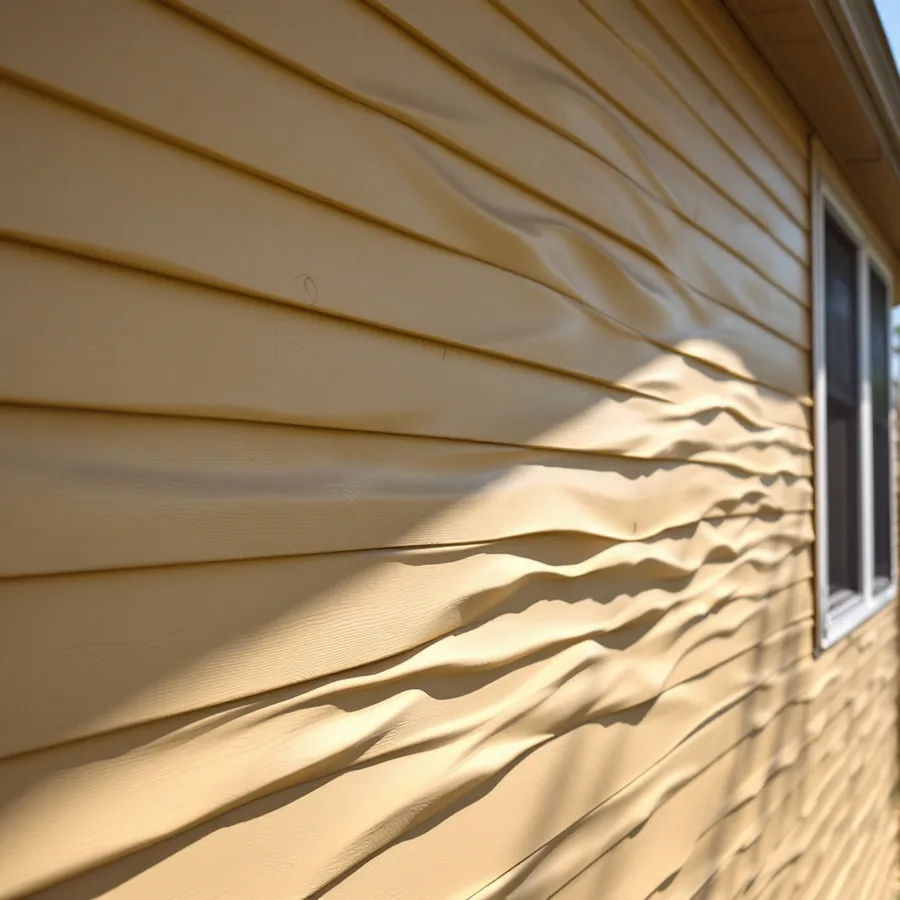
It does, in three ways. A thicker panel is stiffer, so it lies flatter and shows fewer waves along a wall. It resists impact better. And it holds its shape better in heat. That is why a premium line is, more than anything else, a thicker one. For a windy or sunny wall, start with this number and with the certification label, not with a brand.
What an average vinyl siding thickness would hide
An average vinyl siding thickness across our sixteen lines would land near the middle step and tell you nothing about the panel on your quote. Thickness is the main thing separating an economy line from a premium one. Ask for the product line by name and look up its thickness yourself. Makers publish a vinyl siding thickness chart, or the figure on each product page, for exactly this purpose.
Limits of the reading
Two manufacturers and sixteen lines, chosen because they publish the figure in the open; other makers exist. The figures are nominal, meaning as advertised. One of the two specifications carries no edition date. We name the makers because the documents are theirs. That is not a recommendation, and neither pays us.
The Material
What is vinyl siding, and what is it made of
Vinyl siding is a long, thin panel of rigid plastic, shaped to look like one or more courses of painted wood boards, with a strip of slots along the top to hang it by.
What is vinyl siding made of
The standard that governs it, ASTM D3679, is titled for rigid poly(vinyl chloride) siding, which is PVC. The color is part of the material. There is no paint film to peel, which is the product's whole appeal.
How common vinyl siding is now
By 2005, the first year in the Census file we use, vinyl was already the most common siding on new houses. The Census Bureau's survey of new single-family houses found it as the main wall material on 34 percent of houses completed in 2005 and 26 percent in 2025. It is still the majority choice in two regions: 70 percent of new houses in the Northeast and 64 percent in the Midwest. In the West it is on 5 percent. The table for every material is on our home page. We found no primary source for the year vinyl siding first came out, so we give none.
What is behind vinyl siding
Vinyl sheds water; it does not seal the wall. Panels hang loosely and some water gets behind them by design and is meant to drain out again. What keeps the house dry is the layer behind: house wrap and flashing over the sheathing. On an older house there may also be the original siding under the vinyl, and that matters when the vinyl comes off.
Is vinyl siding good?
For a house whose owner wants the least upkeep at the lowest installed cost, yes. Its limits are equally plain. It can crack in hard cold, distort in strong reflected heat, and it can be repainted only with paints and colors the maker approves. Is vinyl siding fire resistant? It is a plastic: it softens and melts in heat, and it does not protect the wall behind it the way a cement or masonry cladding does. Does vinyl siding fade? All color fades in sunlight eventually; certified colors are tested for how well they hold, which is covered under colors below.
The Shapes
Types of vinyl siding
The types of vinyl siding are profiles: the shape pressed into the panel. They differ in the shadow they throw, and each comes in several widths.
| Profile | What it looks like | Where it is used |
|---|---|---|
| Clapboard | Flat courses, each stepping out over the one below. Clapboard vinyl siding is the plainest profile. | Whole houses. |
| Dutch lap | Each course has a concave groove along its top edge, giving a deeper shadow. | Whole houses, where a stronger line is wanted. |
| Beaded | A rounded bead along the bottom of each wide course. | Traditional and coastal houses. |
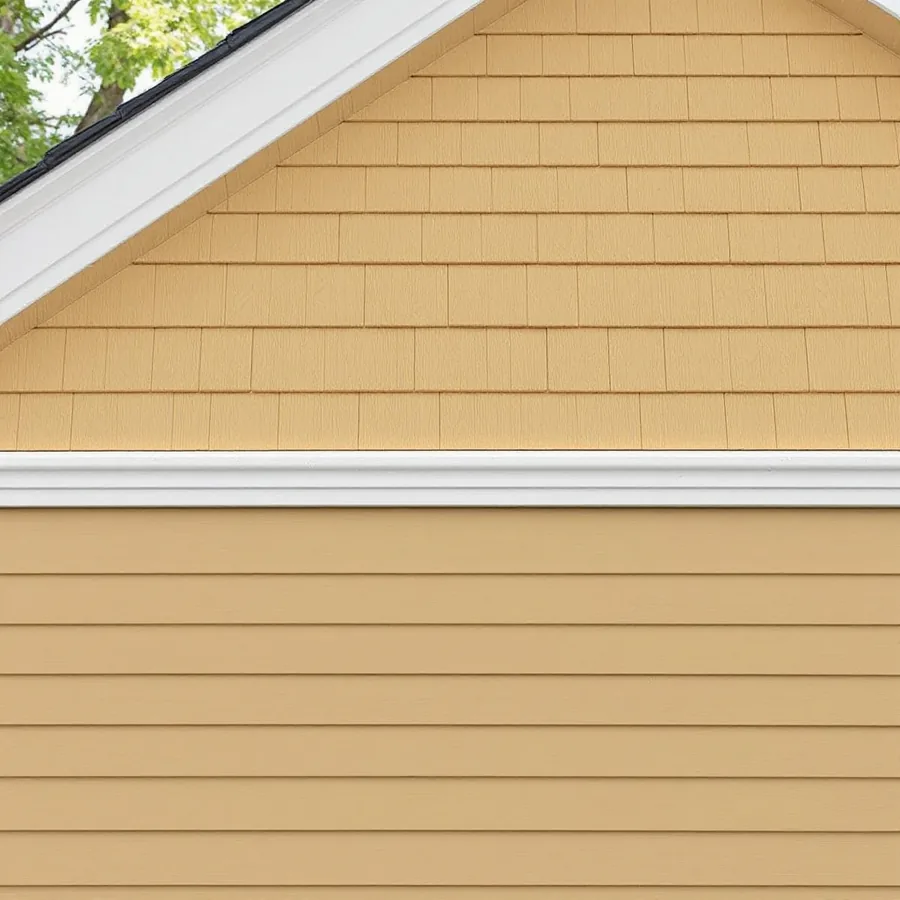
| Shake and shingle | Molded to look like split cedar or sawn shingles. | Gables and upper walls, sometimes whole houses. |
| Vertical | Board and batten panels running up and down. | Gables, entries and farmhouse walls. |
| Log and stone looks | Panels molded as rounded logs or stacked stone. | Cabins, skirting and accents. |
What is Dutch lap vinyl siding
Dutch lap vinyl siding has a curved groove formed along the top of each course, copied from a hand-planed wood board. It reads as more traditional than clapboard and hides small waves in a wall slightly better because of the stronger shadow.
Shake, shingle, log and stone
Vinyl cedar shake siding and vinyl shingle siding are thicker molded panels with real relief. Vinyl log siding imitates a log wall for cabins. Stone vinyl siding is a molded panel used on foundations and as an accent. Several of these are made of a different plastic from ordinary panels and to a different standard, so ask what the product is.
The wood look
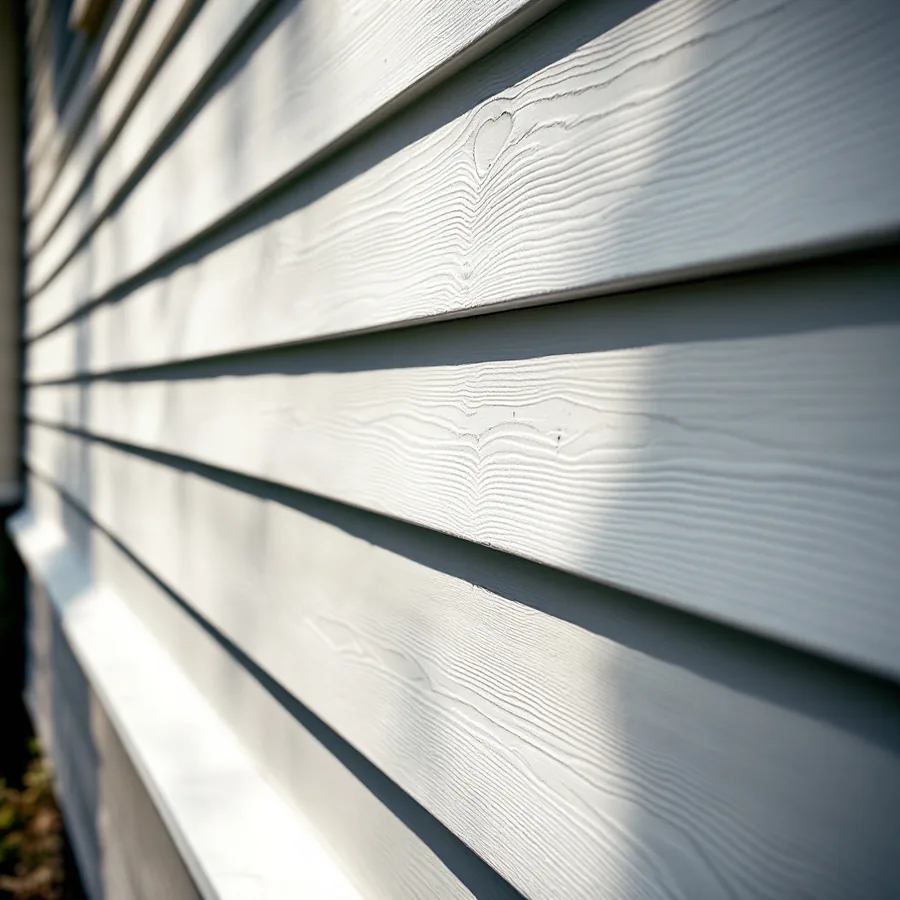
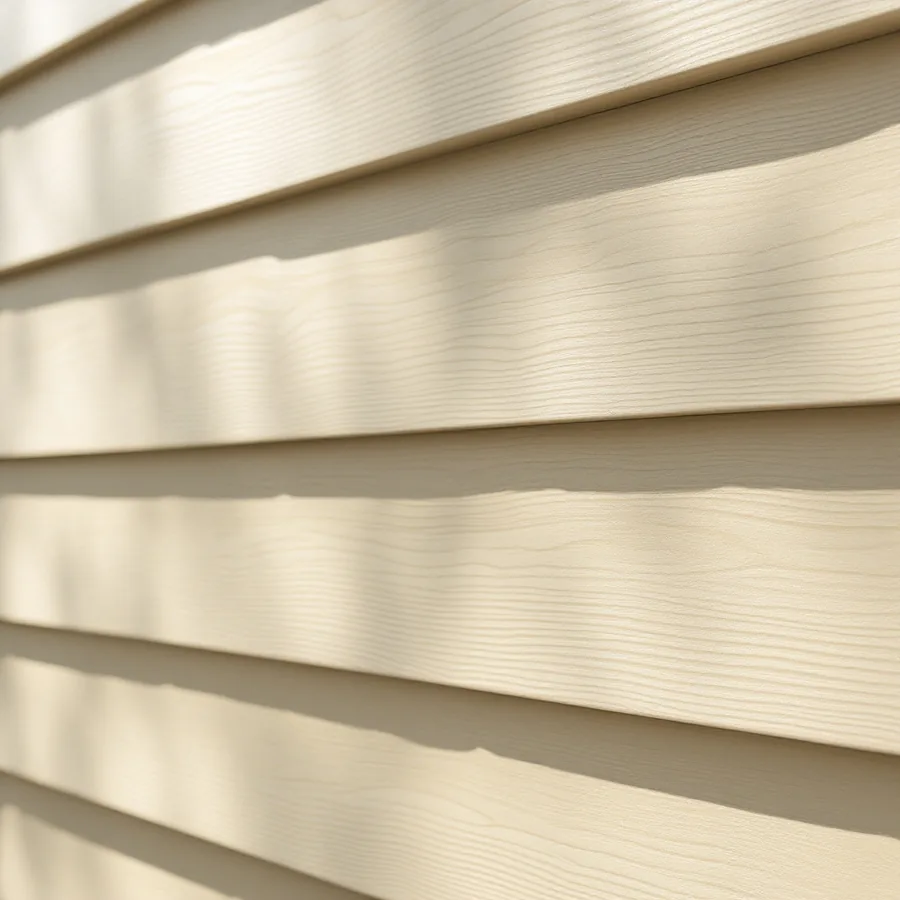
Wood look vinyl siding has a grain embossed in its face. In a matte finish it is convincing at street distance. A smooth face reads as freshly painted boards and shows waves more readily.
Sheets and mobile homes
Vinyl siding is not sold in 4x8 sheets the way plywood is; it comes as long narrow panels in cartons. Mobile home vinyl siding is the same product, often in a vertical profile, hung on lighter framing, which makes the question of what it is fastened to more important.
Choosing among vinyl siding options
Among vinyl siding options the profile is a matter of taste and the thickness is a matter of performance. Pick the profile with your eyes and the line with the table above.
With Foam
Insulated vinyl siding
Insulated vinyl siding is an ordinary panel with rigid foam bonded to its back, shaped to fill the hollow behind the profile.
What the foam does
It makes the panel stiff, so the wall looks flatter and resists impacts. It adds some insulation: the industry's certification requires insulated siding to demonstrate at least R-2.0, a figure from the Vinyl Siding Institute's 2014 guide Siding with Codes. And it quiets the hollow rattle of plain vinyl. Insulated vinyl siding colors are the same charts as the plain lines, usually in the deeper shades.
Is insulated vinyl siding worth it?
That depends on what else is going on the wall. The Department of Energy's review of re-siding projects found that “very few projects added 1-in or more of exterior continuous insulation,” and that “50% added fan-fold,” a thin leveling board that is not really insulation. Insulated siding sits between those two. If the wall is bare anyway, ask for a second price with rigid foam board under ordinary panels and compare what each adds.
Color
Vinyl siding colors
Vinyl siding colors are molded into the panel, so the choice is made once. The colors of vinyl siding on offer depend on the line, and the dark ones depend on the chemistry.
How a vinyl siding color chart works
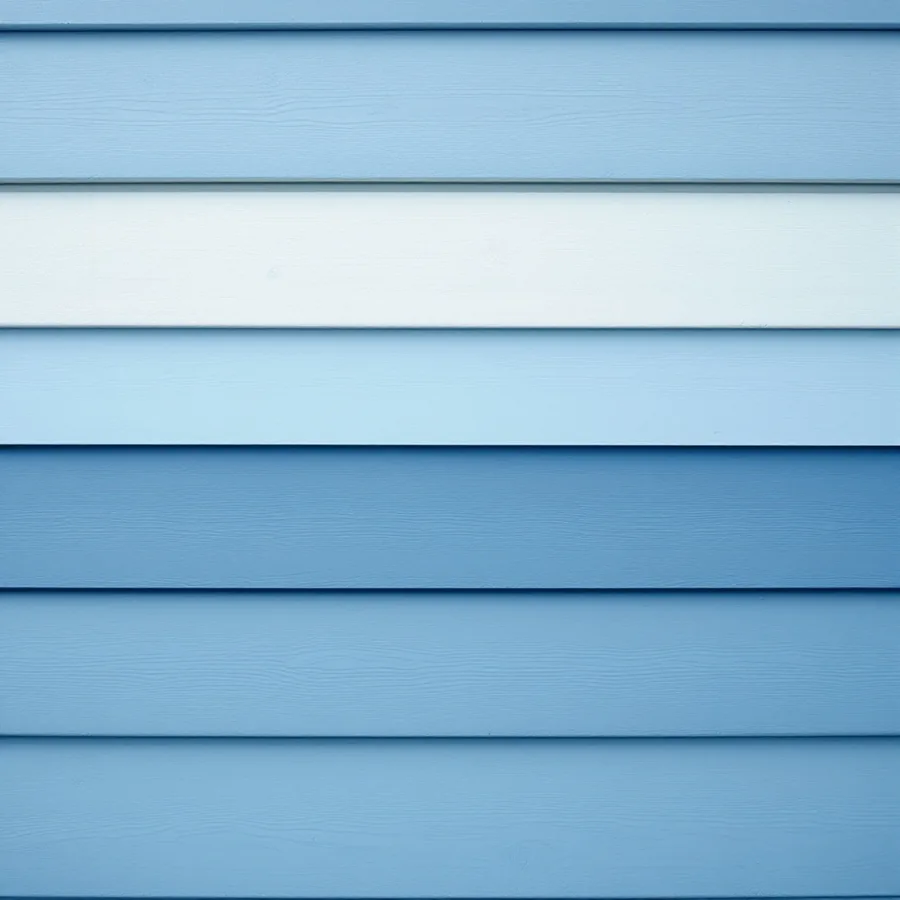
Every maker prints a vinyl siding color chart for each line, and the same name can be a different shade from one maker to the next. On a screen the chart is a rough guide at best. The colors run from whites and creams through grays, blues and greens to near-black. Not every color comes in every profile, so vinyl siding colors and styles have to be chosen together; the line's brochure shows which pairs exist.
What certification says about color
The industry certification program has a separate test for color retention, under ASTM D6864 or D7251, with an outdoor weathering study for each color. Ask whether the color on your quote is on that list. It is the nearest thing to an independent answer on fading.
Dark colors
Dark vinyl siding colors are harder to make than light ones, because dark plastic absorbs more heat. Black vinyl siding and deep blue vinyl siding are now made in formulations meant for it, usually on the thicker lines and at a higher price. If you want a dark wall, ask for a line designed for dark colors.
Blue, green and gray
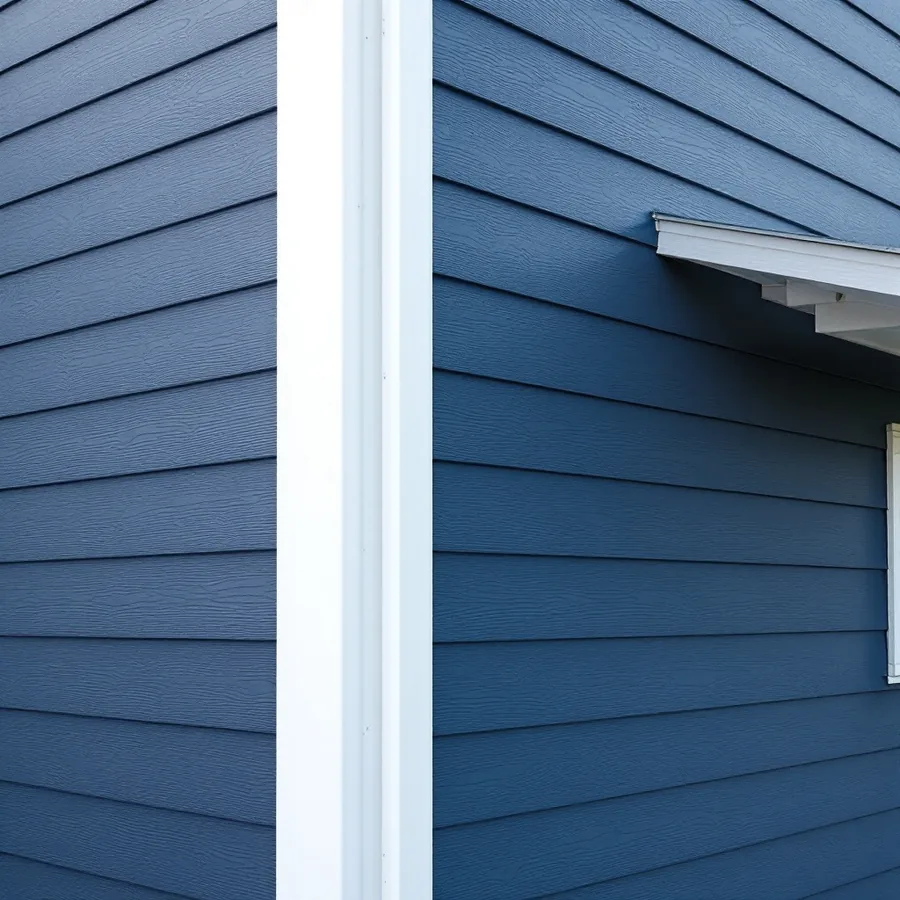
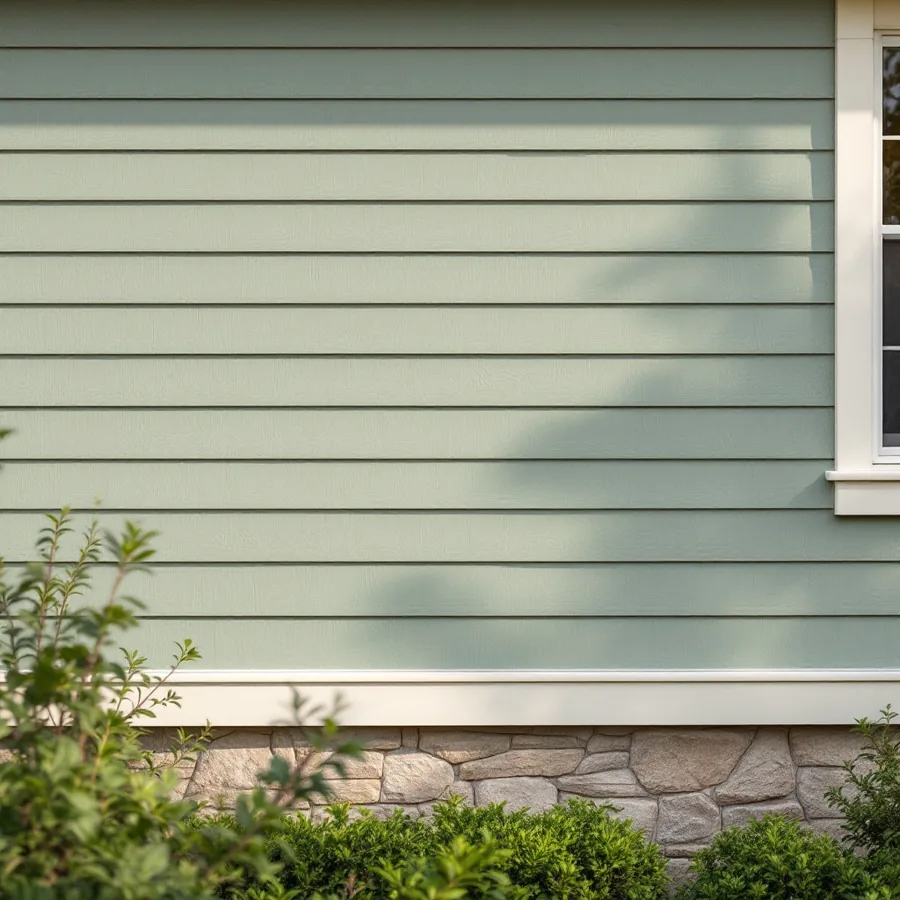
Blues run from pale coastal shades to navy, and the navy end behaves like the other dark colors above. Among greens, the muted tones such as sage vary a great deal between makers, so compare real panels. Grays run from silver to charcoal.
Brown, red, taupe, and colors beside brick
Browns and taupes are the warm neutrals and hide dust well. Reds are among the deeper pigments and behave like the other dark shades. Beside red brick, one common approach is a shade from the cream, taupe or gray-green end of the chart, so the siding recedes and the brick leads. Whatever the color, ask which shades exist in the line and thickness you have chosen; the list is short once those two are fixed.
Wood tones and shake colors
Wood grain vinyl siding colors are browns and cedar tones on an embossed panel. Vinyl cedar shake siding colors often blend two shades in one panel to imitate weathering. On a gable they are usually chosen to contrast with the lap siding below.
Why a list of popular colors matters less than it seems
Lists of popular vinyl siding colors come out every season. The best color for a house you will keep is the one that suits its roof, its trim and its street, because this is the one siding you cannot repaint on a whim. Colors also age differently: light ones hide fading and dust.
Seeing colors on a house
Pictures of vinyl siding colors on houses are a start, and some makers offer a simulator that tries a shade on a photograph of your own house. Use both, then ask for full-size sample panels and look at them outdoors. A real panel in daylight is the answer.
Time
How long does vinyl siding last
Vinyl siding does not rot, so it rarely fails outright; it ages by fading, turning brittle and coming loose. We give no figure in years: the vinyl siding lifespan depends on the panel's thickness, the sun it gets and how it was nailed.
What sets it
The same panel ages faster on a south wall with no shade than on a north wall. Installation counts as much: panels nailed tight buckle in the first hot spell. How long vinyl siding should last is written, with conditions, in the maker's warranty, which is worth reading for what it says about fading and about transfer to a new owner.
How long is vinyl siding good for, in practice
For as long as it stays flat, locked and close to its original color. Those three are what to check on a wall you are thinking of keeping.
When to replace vinyl siding
The signs are panels that crack at a touch in cold weather, widespread warping, color that has gone chalky and uneven, and panels that will not stay locked. Replacing vinyl siding on one wall is possible only if a matching panel still exists, which is why a few spare panels kept from the original job are worth their space in the garage. Our siding repair page reads each kind of damage and walks through replacing one panel.
Measure
Sizes: how long and how wide a panel is, and what comes in a box
Panel length, width and carton count vary by line. The figures below come from one maker's documents, as an example of how to read yours.
| Question | One maker's documents say | How to read it |
|---|---|---|
| How long is a piece of vinyl siding? | 12 feet 6 inches for a double 4 lap panel. | Lengths cluster a little over twelve feet; some lines offer longer panels to reduce seams. |
| How wide is it? | A double 4 panel shows 8 inches of wall: two four-inch courses. | The name gives the courses and their height. Double 5 covers ten inches, triple 4 covers twelve. |
| How many pieces of vinyl siding come in a box? | 30 panels in a carton of one beaded line. | The count changes with the panel's width and length. |
| How many square feet in a box of vinyl siding? | 200 square feet for that carton. | That is two squares. Siding is ordered and priced in squares of a hundred square feet. |
How to measure for vinyl siding
Measuring for vinyl siding is the same arithmetic as for any siding: wall area less openings, plus gables, plus waste, divided by a hundred to give squares. Our calculator counts squares from the house's dimensions. Floor area will not give you the answer.
The Small Parts
Trim, mounting blocks, hooks and clips
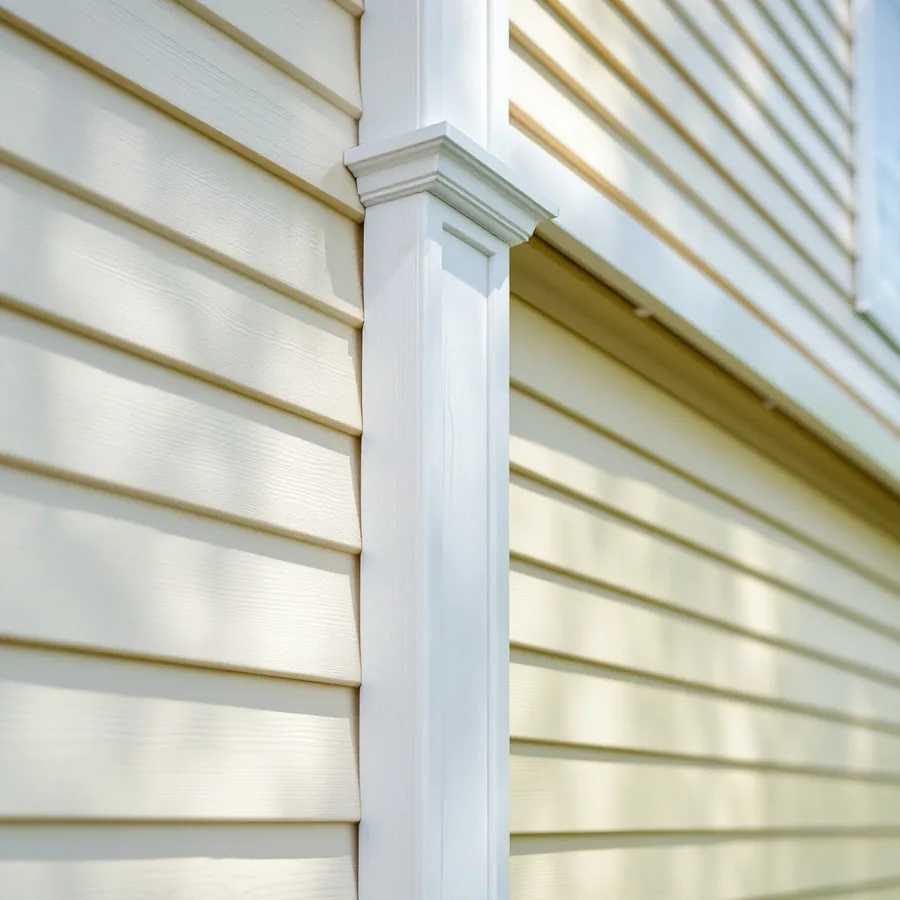
Vinyl siding trim is a system of channels that hide the cut ends of panels and let them move. It is a real share of the material on a quote and most of what makes a job look finished.
Trim and window trim
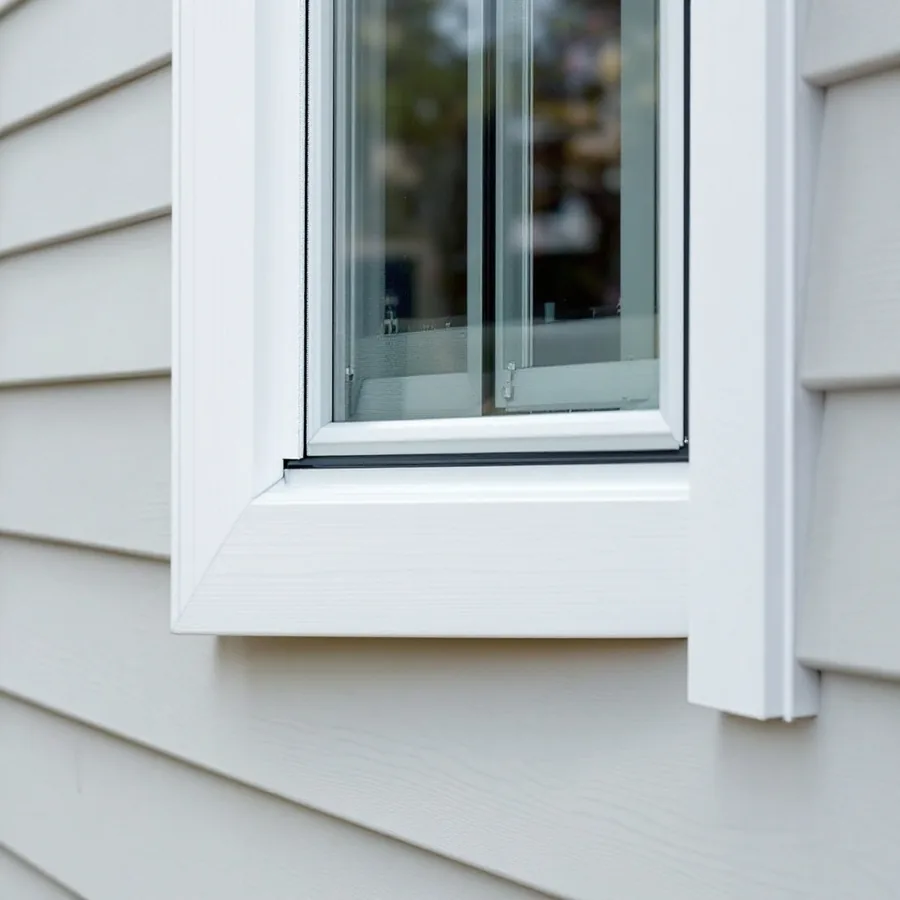
J-channel frames every opening; corner posts finish the corners; a starter strip holds the bottom course; utility trim grips the top course under the eaves. Vinyl siding window trim can be plain J-channel or a wider surround that looks like a painted casing. Wider trim costs more and is the cheapest way to make vinyl look less like vinyl.
Mounting blocks
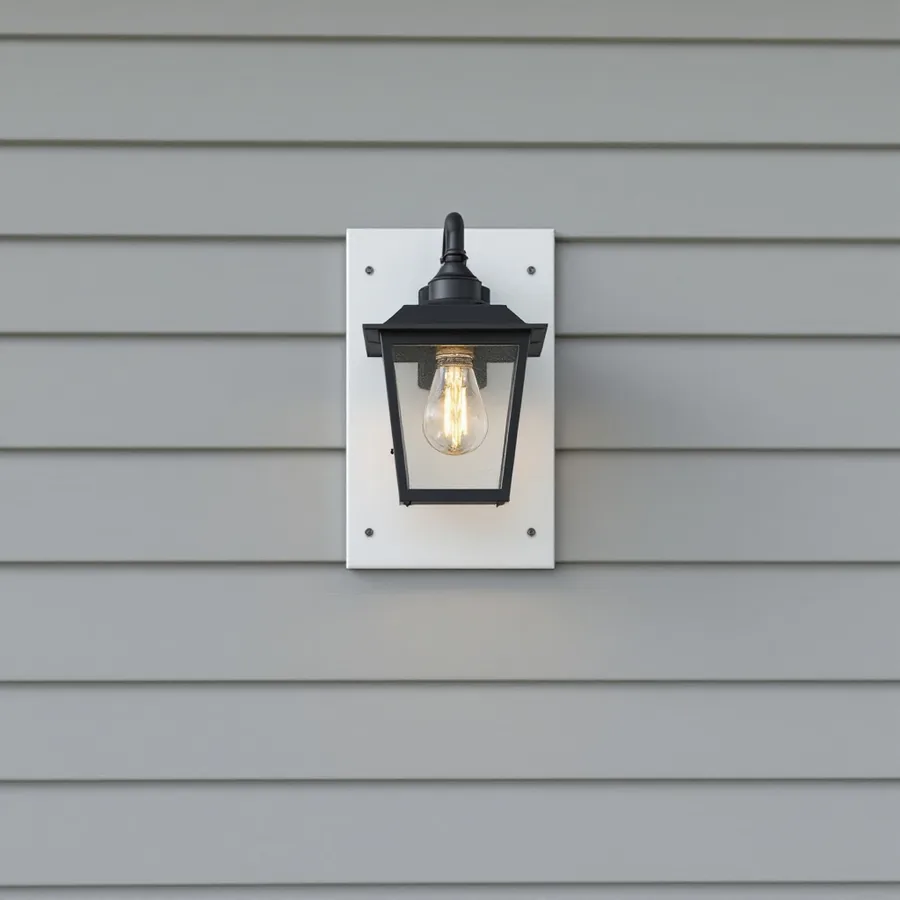
A vinyl siding mounting block is a flat plate with a built-in channel, fastened to the wall before the siding goes on. Lights, faucets, vents and outlets sit on it, so the fixture is fastened to the house and the panels are free to move around it.
Hooks and clips
Vinyl siding hooks and vinyl siding clips slide into the seam between two courses and hang light things without a hole. They are meant for decorations and house numbers, not for anything heavy.
Can you screw into vinyl siding?
You can, with care. Can you drill into vinyl siding for a fixture? Drill a hole a little larger than the screw so the panel can still move, fasten into the framing or sheathing behind and never to the vinyl alone, and do not pull the screw tight. A mounting block is the better answer for anything permanent.
On The Wall
How vinyl siding is hung, and what a crew must not do
Vinyl siding is hung loose, never nailed tight. The outline below shows what a proper job looks like, so you can judge the one on your house; we are not installers, and this is no manual.
The one rule
Vinyl grows and shrinks along its length with temperature. Everything about how to attach vinyl siding follows from that: nails go in the center of the slots and are left a little proud, so each panel hangs and can slide. A panel nailed tight will buckle in summer and may crack in winter.
The sequence
- Prepare the wall. Old siding off or made flat, house wrap on, flashing at every opening.
- Set the starter. A level starter strip goes around the base first, because every course above copies it.
- Posts and channel. Corner posts and J-channel go up before any panel.
- Hang the courses. Each panel locked into the one below and nailed loosely, with a gap at each end inside the channel.
- Stagger the seams. Overlaps are offset from course to course and lapped away from the main view.
- Finish the top. The last course is cut to height and snapped into utility trim.
Cutting, and the zip tool
Cutting vinyl siding is done with snips, a scored line and a snap, or a fine-toothed saw blade. The best way to cut vinyl siding in cold weather is slowly, because cold panels shatter. How do you cut vinyl siding around a window? Measure, score and snip. The zip tool, also sold as a vinyl siding removal tool, is a small hook that unlocks one course from the next. It also reattaches a course that has come unhooked: lift the lower lip back into the lock and press along its length.
Cold weather
Can you install vinyl siding in the winter? Crews do. Cold panels are at their shortest and at their most brittle, and makers' instructions say what gap to leave at the panel ends for the temperature. Ask how the crew allows for it. For one cold city, our Omaha installation calendar sets that rule beside twenty years of storm reports and normal temperatures.
Doing it yourself
Installing vinyl siding yourself on a single-story wall is within reach of a careful amateur. Two stories means scaffolding, and a house built before 1978 means a federal rule about old paint. A licensed crew is the usual answer for a home.
Old Walls
Vinyl siding over wood siding, brick and old walls
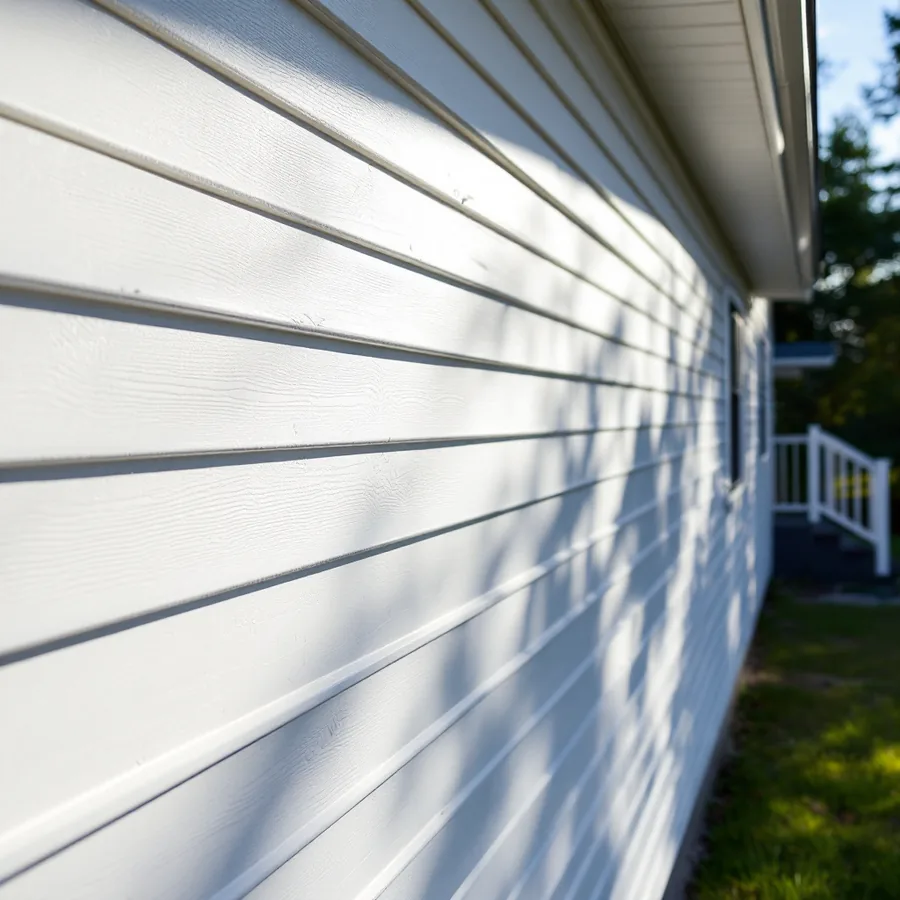
Vinyl siding can go over old wood siding and, on furring strips, over brick. Whether it should on your house depends on what the old wall is hiding.
Over wood
Going over sound wood siding saves the tear-off and avoids disturbing old paint. It also buries any rot, makes the wall thicker so windows and doors sit deeper, and needs a flat surface, usually a thin leveling board. The honest version of this job includes probing the old wall first and replacing what is soft.
Over brick
Can you put vinyl siding over brick? Only on a framework of furring strips fastened to the masonry, which gives the nails something to hold and the wall a way to drain. It is uncommon, and it changes every window and door surround.
Compared
Vinyl siding vs fiber cement, aluminum and wood
Vinyl asks less upkeep than fiber cement, aluminum or wood, and gives something up to each in hardness, repair or looks. Stucco, brick and the other walls are compared on our page on the types of siding, and steel and aluminum in depth on our metal siding page.
| Comparison | The practical difference |
|---|---|
| Fiber cement siding vs vinyl | Fiber cement is harder, noncombustible and repaintable; vinyl is lighter, faster to hang and needs no paint. Our fiber cement page sets the two side by side. |
| Aluminum vs vinyl siding | Aluminum dents and its paint chalks, and it can be repainted; vinyl cracks instead of denting and cannot be repainted as freely. Is aluminum siding better than vinyl? Where fire matters it has a case. |
| Vinyl vs wood | Is vinyl siding better than wood? For upkeep, yes. Is wood siding better than vinyl? For repair, for changing color and for looks up close, yes, at the price of a finish to renew. Our wood siding page shows how much each species shrinks as it dries. |
Supply
Manufacturers and where vinyl siding is sold
Every maker has to meet the same certified standard, so compare product lines, not brands. We do not rank vinyl siding manufacturers.
What every maker has in common
The Vinyl Siding Institute's 2014 guide, Siding with Codes, says vinyl siding must be “certified and labeled by an approved quality control agency” as conforming to ASTM D3679. Certified products must, among other things, “Meet manufacturers' advertised specifications, including length, width, gloss, thickness and others.” So the label on the carton is the floor, and it is the same floor for everyone.
What differs
- The ladder of lines. Each maker sells several thicknesses; compare line with line, not brand with brand.
- The colors. Which shades exist, and which are certified for color retention.
- The warranty. What it says about fade, hail and transfer to a buyer.
- Local supply. Which brands the distributors near you stock, which decides whether a matching panel can be had in ten years.
Who sells vinyl siding
Home centers sell a few lines over the counter. Most siding goes through building-supply distributors that sell to contractors, which is why the brand you are offered usually depends on who your contractor buys from. That is a fair reason to get two quotes from contractors with different suppliers.
Work It Out
Work out what a vinyl siding quote should name
Make three choices to see what the quote has to name for that job, what the color adds, which federal rules apply, and the question to ask first. It is worked out in your browser, with no price attached.
We are paid the same fixed fee whichever line you choose, so we gain nothing if you choose the thicker one.
Before You Sign
6 questions before you accept a vinyl quote
Put these six questions to every vinyl bidder. The first, on thickness, is the one this page exists for.
| Ask | What it tests | A weak answer |
|---|---|---|
| Which product line is this, and how thick is the panel? | Whether you are comparing like with like. | “It’s our standard vinyl.” |
| Is the product certified, and is this color on the color retention list? | Whether the code requirement and the fade question were checked. | “All vinyl is the same.” |
| Does the old siding come off? | Whether the wall behind will be seen and repaired. | “We just go over it.” with no inspection. |
| What goes under the panels? | House wrap, flashing and any insulation. | “Nothing, vinyl is waterproof.” |
| May I see your wall measurements? | Whether the count came from the house or from a guess. | A number of bedrooms. |
| Will you leave me spare panels? | Whether a future repair can match. | “You can always order more.” |
The Federal Trade Commission's advice on hiring a contractor applies as written: “Get multiple estimates,” and “Don't automatically choose the lowest bidder.” With vinyl, check whether the lowest bid is also the thinnest panel.
Older Houses
If the house predates 1978
Vinyl is often hung on older houses to cover tired paint. A federal rule on lead paint and federal guidance on asbestos decide how the old wall should be handled.
Lead paint
The Environmental Protection Agency requires that “anyone paid to perform work that disturbs painted surfaces in homes, childcare facilities and preschools built before 1978 be certified.” Cutting, sanding or stripping old painted siding and trim is exactly that. The firm's certification belongs on the quote.
Cement shingles
Gray cement shingles on mid-century houses may contain asbestos. The EPA's guidance on asbestos: “Generally, asbestos-containing material that is in good condition and will not be disturbed (by remodeling, for example) will not release asbestos fibers.” That is one reason vinyl is often installed over such shingles and not in place of them. Ask what is there before anyone breaks it.
Who Is Talking
Who is writing this, and who pays
We hang no siding, make none and sell none. We are a referral service paid a fixed fee for an introduction, the same for an economy line and a premium one. That is why this page can tell you to ask for the thickness. We connect homeowners with independent siding contractors. Who pays us is on our about page, and how we check what we publish is in our editorial standards.
Straight Answers
Vinyl siding questions, answered
What is vinyl siding?
A rigid PVC panel shaped like one or more courses of painted boards, hung loosely from a nailing strip so it can move with temperature. The color runs through the material, so it needs no paint. Building codes require it to be certified to ASTM D3679, and the label is printed on the carton.
How thick is vinyl siding?
It depends on the product line. In the sixteen lines whose specifications we read, nominal thickness ran from .040 inch to .048 inch, with .044 inch the most common. The thickest was 20 percent thicker than the thinnest. Ask us for an introduction, then ask the contractor for the line by name and look up its figure.
Does thicker vinyl siding matter?
Yes. A thicker panel is stiffer, so it lies flatter along a wall, resists impact better and keeps its shape better in heat. It is the main difference between an economy line and a premium one, and it cannot be seen in a photograph. A quote should name the line, not only the color.
How long does vinyl siding last?
We do not publish a number of years, because sun exposure, panel thickness and installation change it too much. Vinyl does not rot; it ages by fading, chalking, turning brittle and coming loose. Read the maker's warranty for what it promises on fade and whether it transfers to a new owner.
What are the types of vinyl siding?
Profiles: clapboard, Dutch lap and beaded for horizontal lap panels; shake and shingle panels molded to look like cedar; vertical board and batten; and log or stone looks for accents. Each comes in several widths, named by courses and height, such as double 4 or double 5.
Is insulated vinyl siding worth it?
It makes the panel stiffer and adds some insulation; certified insulated siding must demonstrate at least R-2.0, by the industry institute's 2014 guide. Whether it is worth the extra depends on the wall. Ask for a second price with rigid foam board under ordinary siding and compare the two. Our cost page explains the insulation line of a quote.
Can dark vinyl siding warp?
It can, if the panel was not made for a dark color. Dark colors absorb more heat, which is why makers sell lines formulated for them, usually on thicker panels and at a higher price. Ask for a line designed for dark colors and check that the color is certified for color retention.
Can you put vinyl siding over old wood siding?
Often, yes, over a leveling board, and it avoids disturbing old paint. It also hides any rot and makes the wall thicker at windows and doors. Have the old wall probed and repaired first, and get it in writing whether the quote is for going over or for tearing off.
Can you screw things into vinyl siding?
Yes, if the hole is drilled slightly oversize, the screw goes into the framing or sheathing behind and is not pulled tight. For lights, faucets and anything permanent a mounting block is better. Siding hooks that slide into the seam hold light decorations with no hole at all.
Do you install vinyl siding?
No. We are a referral service. We connect homeowners with independent siding contractors and are paid a fixed fee for the introduction, the same for any product line. Ask the contractor you meet which line they are quoting and how thick it is.
Where This Comes From
Sources and method
- Panel thickness by product line: our own reading of the published specifications of two manufacturers, Georgia-Pacific Vinyl Siding (product pages) and Mitten (Section 074600 specification), on the date below. Sixteen lines; nominal figures as advertised.
- Certification, labeling, wind and color retention: Polymeric Exterior Products Association (formerly the Vinyl Siding Institute), product certification program, and Vinyl Siding Institute, Siding with Codes (2014), the source of the wind and R-value figures and of the two quotations on labeling.
- Share of new houses clad in vinyl: U.S. Census Bureau, Survey of Construction: Characteristics of New Housing.
- Insulation practice when re-siding: U.S. Department of Energy / Pacific Northwest National Laboratory, Adding Insulation when Re-Siding, 2023.
- Lead-safe certification for work on homes built before 1978: U.S. Environmental Protection Agency, Renovation, Repair and Painting Program.
- Asbestos in older cladding: U.S. Environmental Protection Agency, Protect Your Family from Exposures to Asbestos.
- Hiring a contractor: Federal Trade Commission, Consumer Advice: How To Avoid a Home Improvement Scam.
Our editorial standards explain how we source and check what we publish. Quotations here are copied from the documents listed above, and no price averages appear anywhere on the page. We are a referral service rather than a contractor. Last updated .
Before you call anyone
The flat-fee match — we are paid for the introduction, not for the size of your job
Most siding advice is written by the company that wants to do the work or the company that makes the product. That is not a failing of the people who read it; it is a defect in who is talking: the measurement, the estimate and the invoice come from one party, and no amount of care on your side fixes that.
We are built the other way round. We do not install, repair or sell anything, so the payment reaches us when you are connected to a licensed, insured siding contractor — the same amount whether you need one panel replaced or four walls re-clad. Nobody here has a reason to talk you into the larger number. You can check that rather than take it on trust: how we make money is written down, and this site keeps telling readers when one wall is enough. Why does not everyone work this way? Because a flat fee leaves money on the table every time the job turns out to be big.
Waiting is the one thing that actually costs money. A wall that is open to the weather does not get better and does not wait for a convenient week; the water that gets behind the siding finds the sheathing, the framing and the drywall inside. A cracked panel over a window lets the next storm in. And if it turns out to be one panel and a quarter-hour, say so when you ask. We will tell you, and that answer earns us nothing.
Not for you if: you want a price over the phone — nobody honest gives one without measuring the house; you need a guarantee of arrival within the hour — we cannot promise that for a company we do not run; the building is commercial; or you would rather do it yourself, in which case the pages on this site are written so that you can.