Wood Siding · Houston, Texas
Wood siding in Houston: hail in spring, rot in summer
Home › Wood siding › Houston · Reviewed by the Siding Pros USA editorial team · · 18 min read
Wood siding in Houston has two enemies on two calendars. Hail arrives with spring storms, and rot builds through the wet summer. We counted 189 reports of hail an inch or larger in Harris County over twenty years, and by our calculation the city sits in the top band of the Forest Service's decay hazard map.
Wood siding in Houston comes down to two seasons
- Spring is hail. April and May hold 59 percent of the 189 severe hail reports we counted for Harris County from 2006 to 2025. That is when paint gets chipped and boards split.
- Summer is rot. June through September score highest on the decay index we worked out from NOAA climate normals. Water left in a board through those months is what rots it.
- The wall decides. Wood holds up here when the bottom course stays off the soil, the joints are flashed and the paint is kept whole. It fails where water sits.
- The address decides too. In the three Houston Heights historic districts, replacing wood siding wholesale needs city approval. East of State Highway 146 in five Harris County cities, the work needs a windstorm certificate to stay insurable through TWIA.
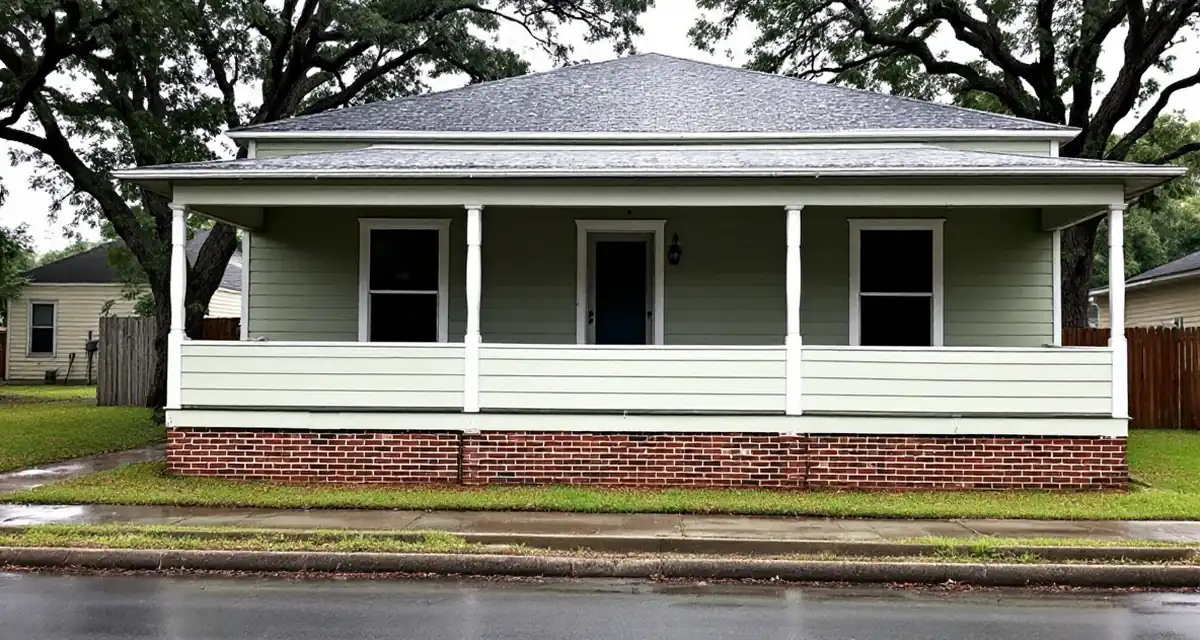
Our Count
Our count: 189 hail reports in Harris County, 2006 to 2025
We read twenty yearly files of the NOAA Storm Events Database and kept every Harris County report of hail an inch across or larger.
| Month | Reports, 1 inch or larger | Share of all |
|---|---|---|
| January | 7 | 4% |
| February | 1 | 1% |
| March | 27 | 14% |
| April | 47 | 25% |
| May | 64 | 34% |
| June | 30 | 16% |
| July | 2 | 1% |
| August | 5 | 3% |
| October | 1 | 1% |
| December | 5 | 3% |

The reports fall on 68 separate days, so a bad storm often brings several at once. Fifty-five of them were 1.75 inches or more, the size the Weather Service calls golf ball. The largest stone reported in the county in those years measured 3.00 inches. The same files hold 22 thunderstorm wind reports of 65 knots or more.
How we counted
NOAA publishes one file per year, and each file carries a revision code. We used the codes on the server in October 2026, listed under Sources. We kept county reports, not forecast zones, and took the Storm Prediction Center's line for severe hail: “Hail 1 inch in diameter or larger.”
What the count does not say
These are reports that reached the National Weather Service, not every stone that fell. A storm over open land with no observer leaves no record. We give no trend by year and no damage totals: the database's damage field is an estimate, not an audited figure.
Our Calculation
Our calculation: Houston's decay index from NOAA normals
By our calculation, Houston scores 80.4 at Bush Intercontinental and 86.1 at Hobby on the index the Forest Service uses for decay above ground. On the laboratory's decay hazard map, the top band is more than 65.
| Month | IAH mean temp | IAH rain days | IAH index points | HOU index points |
|---|---|---|---|---|
| January | 53.8°F | 10.0 | 4.39 | 4.80 |
| February | 57.7°F | 8.8 | 4.39 | 4.68 |
| March | 63.8°F | 8.8 | 5.57 | 5.25 |
| April | 70.0°F | 7.3 | 5.02 | 5.92 |
| May | 77.4°F | 8.6 | 7.91 | 6.67 |
| June | 83.0°F | 10.0 | 11.20 | 11.82 |
| July | 85.1°F | 9.1 | 10.19 | 10.29 |
| August | 85.2°F | 8.5 | 9.20 | 11.02 |
| September | 80.5°F | 8.4 | 8.19 | 10.45 |
| October | 71.8°F | 7.7 | 5.77 | 5.32 |
| November | 62.0°F | 7.6 | 4.14 | 5.09 |
| December | 55.4°F | 9.6 | 4.49 | 4.75 |
| Year | 104.4 | 80.4 | 86.1 |

The formula
The index was proposed by T.C. Scheffer in 1971 and is used by the Forest Products Laboratory. For each month, take the mean temperature minus 35°F and multiply it by the rainy days minus three. Add the twelve months and divide by 30. Warm months with frequent rain push it up.
May through September supply 58 percent of the total at both airports. Intercontinental averages 104 rain days a year and Hobby 107.
Two airports, one answer
The laboratory's own table for 1971 to 2000 gave Houston 77.2. Among its Texas stations only Port Arthur scored higher, at 80.7. Our figures for the newer normals are higher still. The index describes the climate, not your wall: shade, overhangs and drainage decide how much of it a board feels.
Two Seasons
Hail in spring, rot in summer: one calendar for the wall
Put the two counts side by side and the year splits in two. That split tells you when to look at the wall and what to look for.

After the spring storms
Walk the house once the April and May storms pass. Look for split boards, dents in the face of the wood and chips that bare the grain. A chip left open is the way summer water gets in.
At the end of summer
Look again in September or October. Press the bottom course, the sills and the ends of boards near downspouts. Soft wood found then can be cut out and replaced before the next spring.
Damp Air
Is humidity bad for wood?
Humid air alone does not rot siding. Liquid water does.
Does wood absorb humidity? It does: boards swell in damp months and shrink in dry ones, which is why paint cracks along the joints. Our wood siding page tabulates how far thirteen species move. Swelling is not decay, though. The Forest Service's Wood Handbook puts it plainly: “the water vapor in humid air will not wet wood sufficiently to support significant decay, but it will permit development of some mold fungi.”
Serious decay starts only when wood is wetter than its fiber saturation point, which the handbook gives as an average of 30 percent moisture content. Rain, condensation and wet soil get it there. Air-dried wood usually sits at no more than 20 percent, which the handbook calls a reasonable margin of safety.
Mold is not rot
Gray or black spots on a north wall are usually mold or mildew on the surface. They wash off and leave the wood sound. Rot changes the wood itself: it goes soft, stringy or crumbly, and a probe sinks in.
Where It Fails
Why is my wood siding rotting? Where Houston walls fail first
Rot follows standing water, so it starts in the same few places on almost every house.

The bottom course
Wood siding rotting at bottom courses is the most common complaint, and the reason is simple. The lowest boards catch rain splashing off the ground, mulch heaped against the wall and soil that has crept up over the years. Their cut ends drink water like a straw.
Window sills and trim
Water runs off the sill and soaks the boards just below it. Where siding meets corner boards and casings, the end grain is exposed, and a caulk joint that has cracked lets water straight in.
Sprinklers, gutters and beds
A sprinkler that hits the wall every morning gives the boards a rainy day all summer long. An overflowing gutter or a short downspout does the same in a storm. Flower beds kept wet against the house add to it.
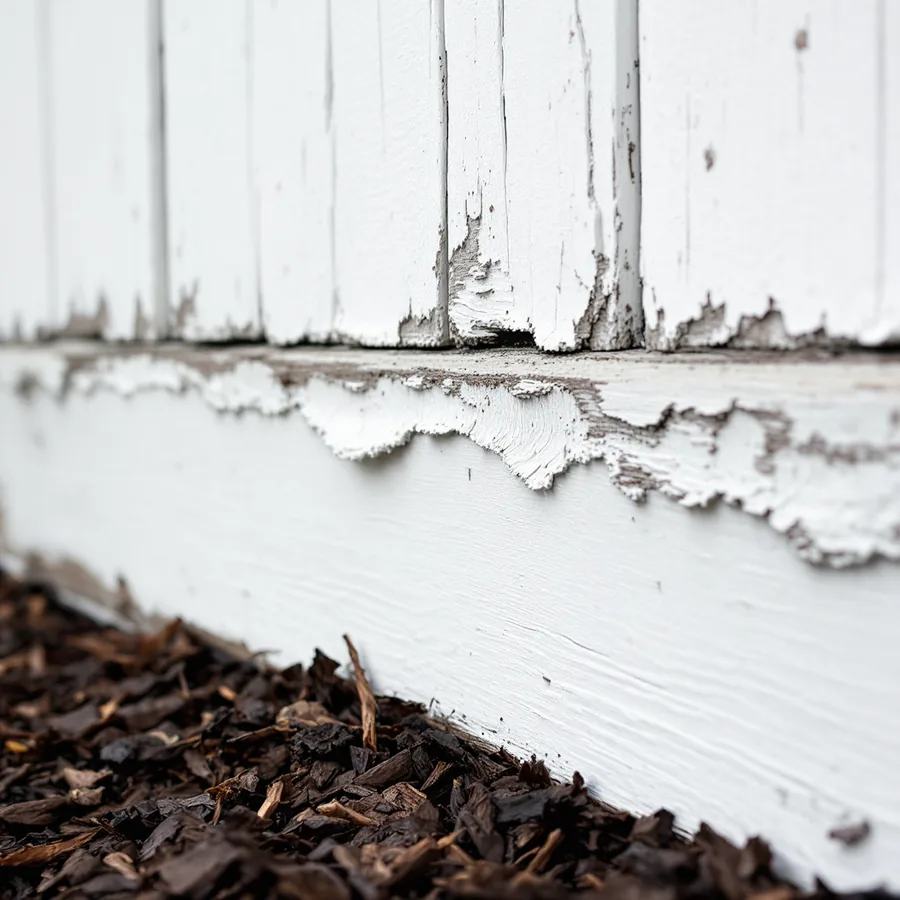
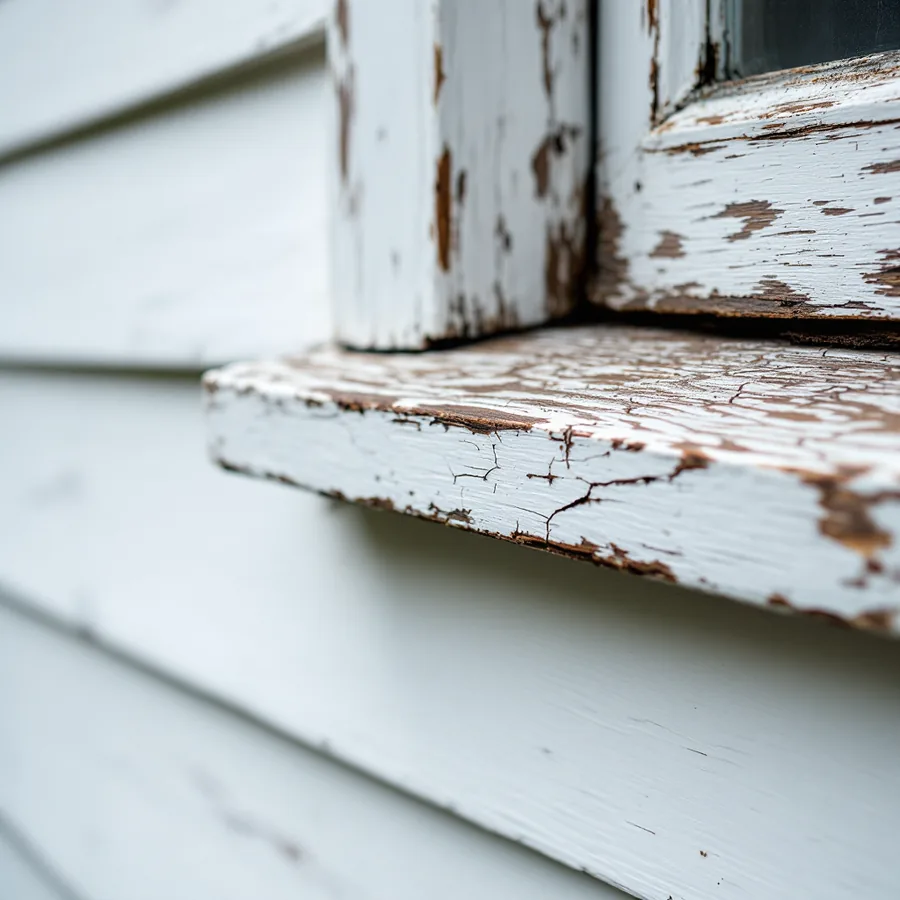
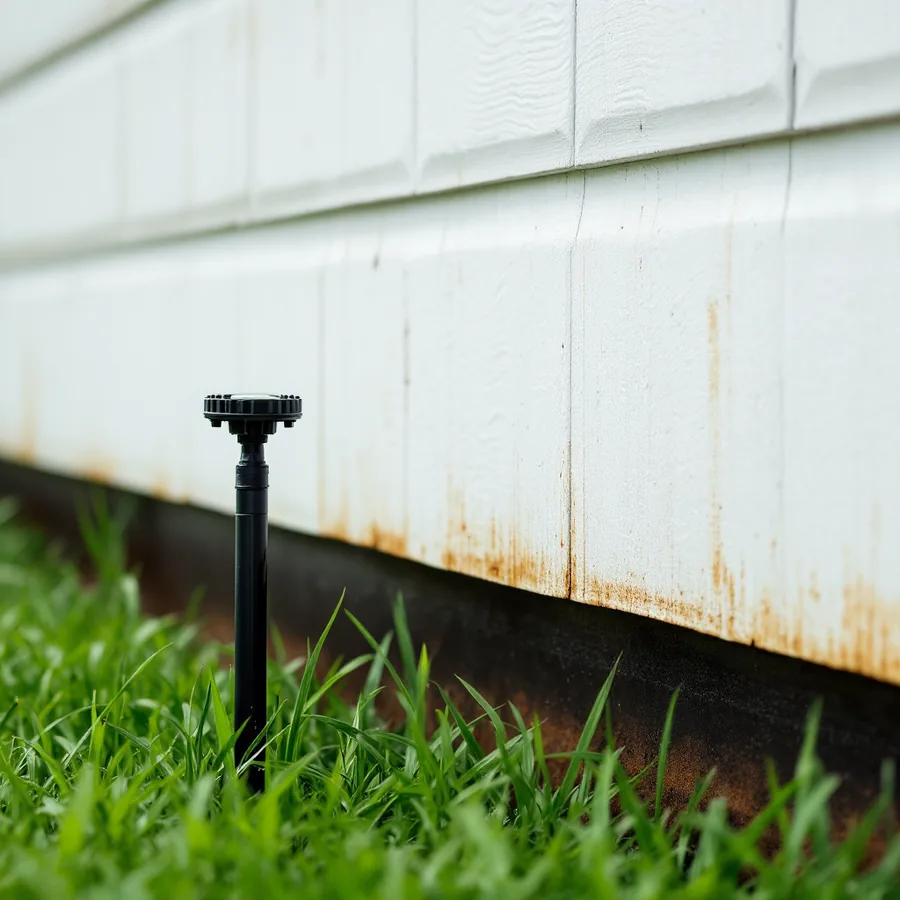
Rot found in one of these spots is a repair job more often than a new wall. Our siding repair guide covers patching and board replacement for every material.
Check It Yourself
How to tell if wood siding is rotted
Four checks with a screwdriver and a flashlight will tell you most of what a contractor will find.
Press. Push a screwdriver tip into the board at the bottom edge. Sound wood resists; rotted wood lets it sink in with little effort.
Tap. Knock along the course with the handle. A dull, soft thud where the rest of the wall rings is a warning.
Look at the paint. Blisters, peeling in strips and dark stains bleeding through mean water is moving inside the board.
Look at the ends. Split, swollen or crumbling end grain beside trim and corners is where decay usually begins.
Wood rot behind siding
Soft boards outside can mean wet sheathing or framing inside. Warning signs are a musty smell in the wall cavity, swollen baseboards on an outside wall, or a board that flexes when pushed. Only removing a few boards shows how far it goes, so ask for that step to be priced separately in the quote.
Insects
Formosan termites arrived through the Houston Ship Channel
Houston has a termite problem that most American cities do not, and it began in Harris County.
According to Texas A&M's urban entomology program, “The first infestations of Formosan termites in Texas were discovered in 1956 around the Houston Ship Channel in Pasadena, Harris County.” They have since been detected in 31 counties in Texas. It calls them one of the most aggressive and economically devastating termite species in the country.
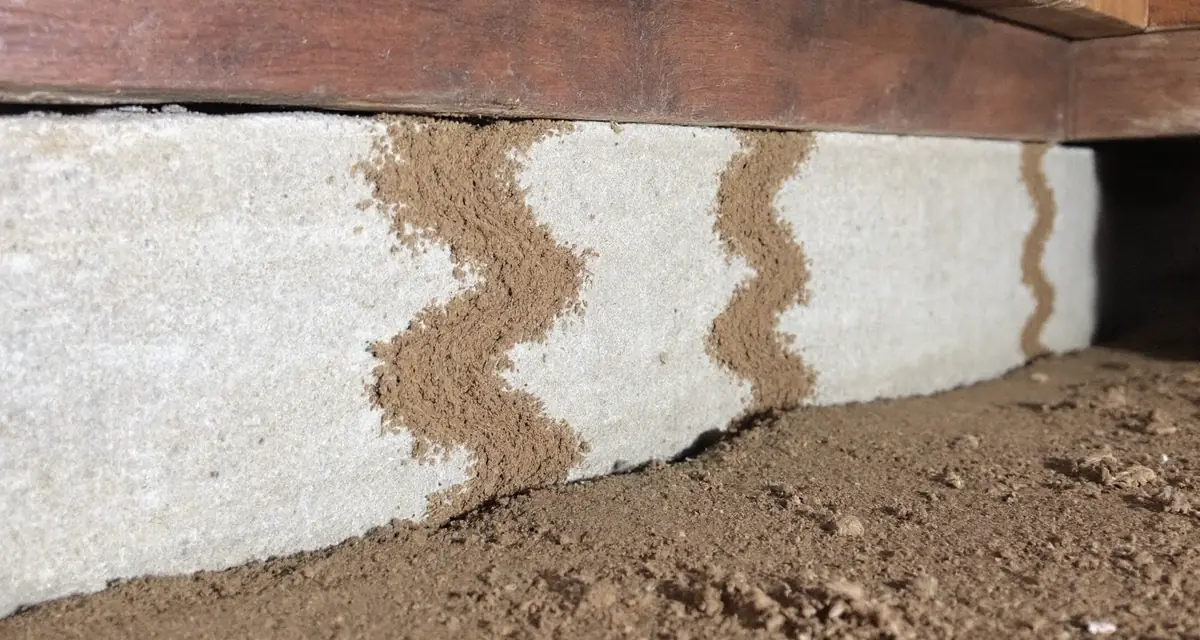
What to look for
Look for pencil-wide mud tubes on piers and foundation walls, and boards that sound hollow. Damp wood near the ground draws termites as surely as it draws rot. Insect damage is a matter for a licensed pest control firm before any carpenter replaces boards.
Which Wood
Rot resistant wood siding: which boards suit Houston
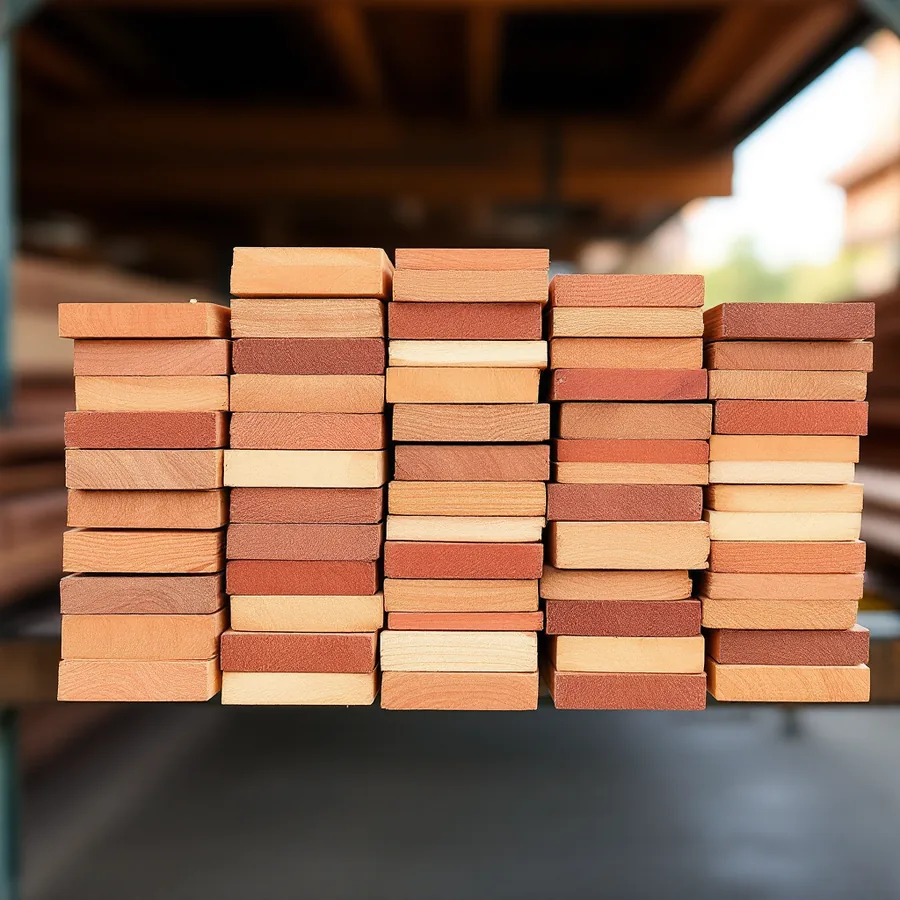
Natural rot resistance lives in the heartwood of a few species. The Wood Handbook ranks them, and adds a warning about warm, humid climates.
| Group in the handbook | Siding woods in it | What the handbook says it needs above ground |
|---|---|---|
| Resistant | Cedars, including western redcedar; baldcypress, old growth; redwood, old growth | Generally satisfactory service aboveground where decay hazard exists. |
| Moderately resistant | Baldcypress, young growth; Douglas-fir; redwood, young growth; old-growth longleaf pine | Usually some form of preservative treatment. |
| Slightly or nonresistant | Firs, hemlocks, spruces, most pines | Usually some form of preservative treatment. |
The handbook's footnote to that table matters in Houston: “Decay resistance may be less for members placed in contact with the ground and/or used in warm, humid climates.” It also notes that untreated sapwood of essentially all species has low resistance to decay. A cedar board with pale sapwood along one edge is only partly cedar in this sense.
Cedar siding in Houston
For cedar siding, Houston buyers are choosing from the resistant group, and old-growth cypress sits there too. Most cypress sold today is young growth, which the handbook places one group lower. Ask the supplier whether the boards are clear heartwood or mixed grade, and get the answer on the quote. Our wood siding page compares how the species move.
Painted pine and fir
Many older Houston houses wear painted pine or fir, which rank low for natural resistance. They last where paint and drainage are kept up. With these woods, the finish and the gap to the soil do the work that heartwood does for cedar.
Prevention
How to keep wood siding from rotting
Every rule here comes down to one idea: let water off the wall and let the boards dry.

The wood siding moisture barrier
Behind the boards goes a water-resistive barrier, usually house wrap or building paper, lapped like shingles and taped into flashing at every window and door. It catches water that gets past the siding. A small air gap between the barrier and the boards, often called a rain screen, lets that water drain and the back of the boards dry. Ask whether the quote includes one.
Paint as the first defense
The city's Heights design guidelines say it in one line: “Keep siding painted or stained to provide a protective coating against the weather.” Prime the backs and cut ends of new boards before they go up, and repaint before the old coat fails.
Gaps, nails and water
- Keep the bottom course clear of soil and mulch, and pull beds back from the wall.
- Turn sprinkler heads away from the house.
- Keep gutters clear and run downspouts away from the foundation.
- Use corrosion-resistant nails. The same guidelines say to “Use stainless steel nails to prevent corrosion and staining from rust.”
Storm Damage
What 1-inch and golf-ball hail do to wood boards
Hail damage to wood is usually small and easy to miss, and that is the trouble with it.
At 1 inch
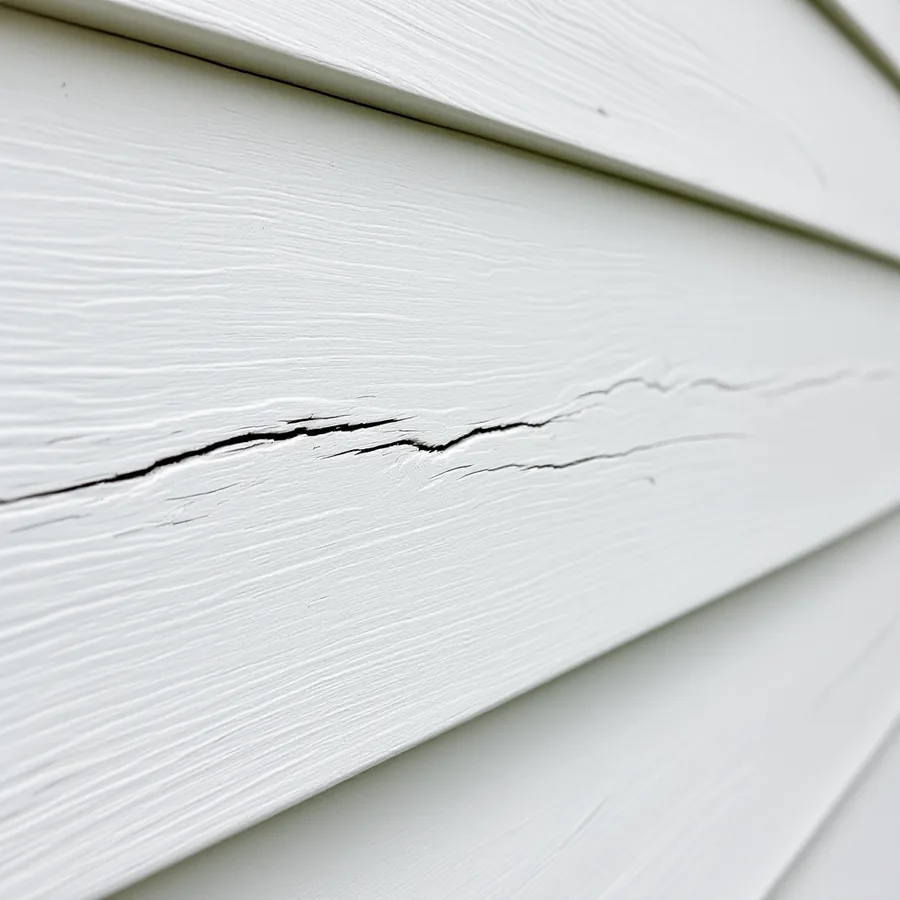
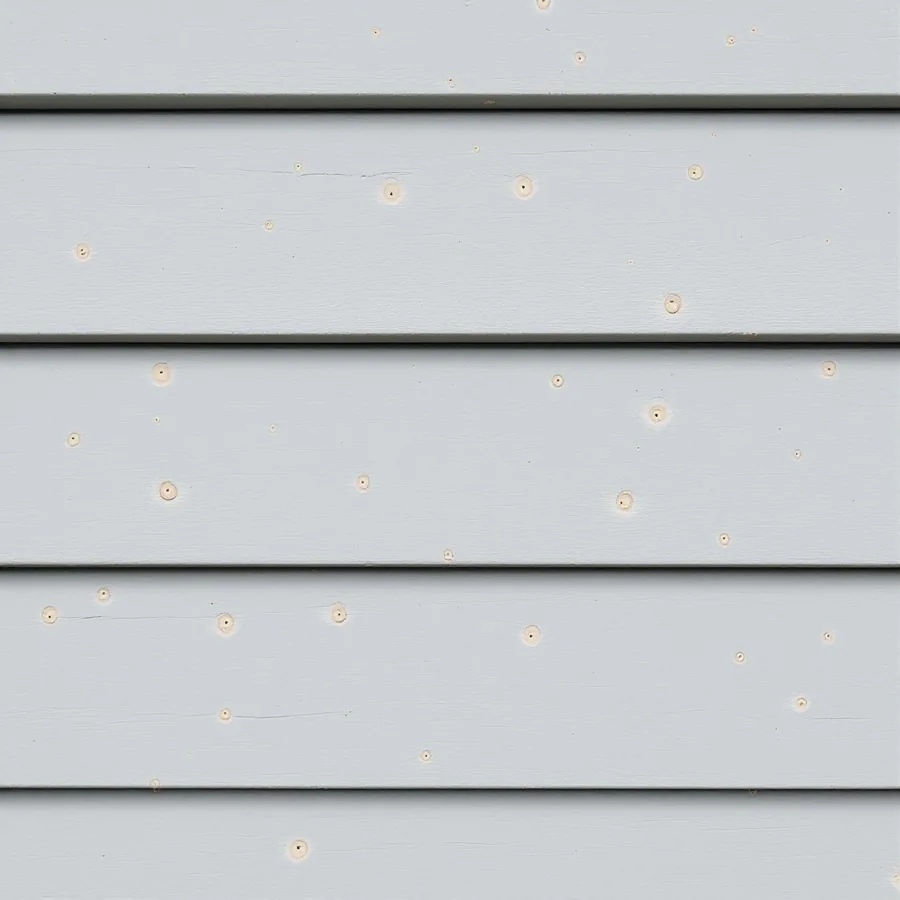
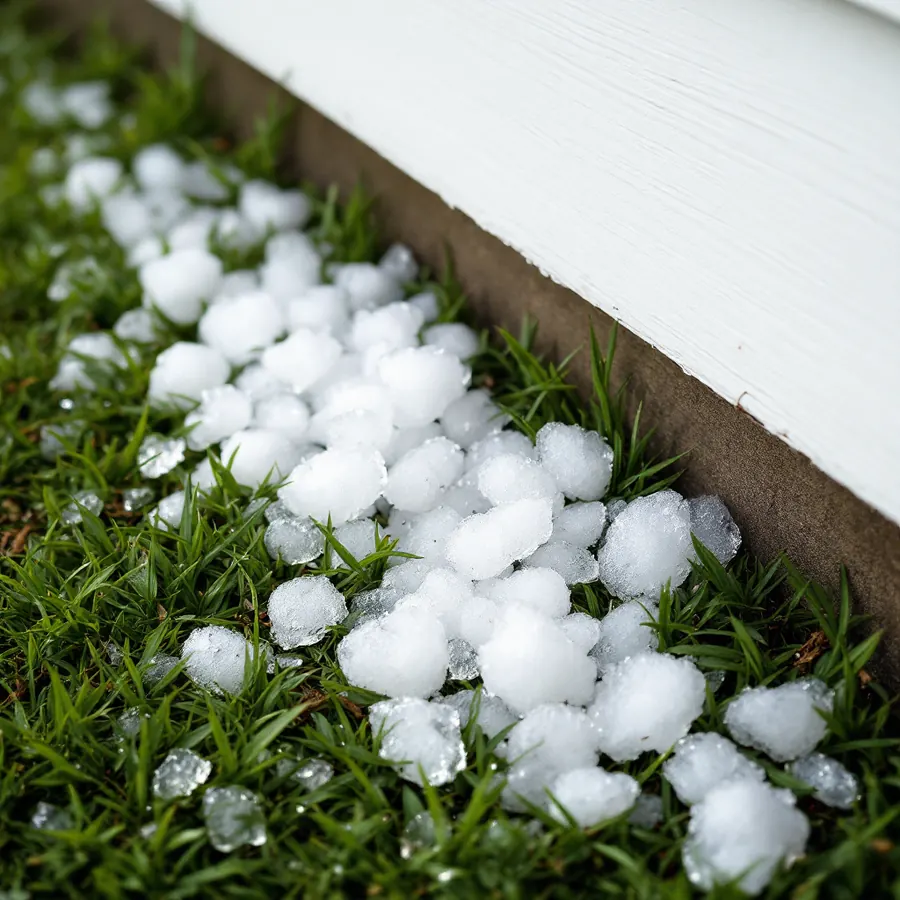
Hail at the Storm Prediction Center's severe threshold can leave round dents in soft wood and knock chips out of old, brittle paint. The board is usually still sound. The bare spot is the problem, because summer rain soaks in through it.
At 1.75 inches and up
Stones this size, 55 reports in our count, can split thin boards along the grain and crack trim. A split lets water into the board and the wall behind it. Photograph every side of the house with a date before any repair, and keep the photos with your insurance papers.
Compared
Wood siding vs Hardie board in a Houston summer
Fiber cement is the usual alternative here, and James Hardie markets a product line for this climate. The choice is about upkeep and the address, not about which is better everywhere.
| Point | Wood | Fiber cement (Hardie) |
|---|---|---|
| Rot | Decays when kept wet; heartwood of resistant species holds out longer (Wood Handbook). | The maker says its HZ10 boards resist “cracking, splitting, rotting and swelling”. |
| Upkeep | Paint or stain renewed for the life of the wall. | Painted; the repaint interval is set by the paint and its warranty. |
| Repairs | One board at a time, matched by a mill. | Board at a time too, to the maker's own profiles. |
| Historic districts | Required for in-kind repair in the Heights. | An alternative material, judged case by case. |
The maker's own words for HZ10: “This siding was engineered for areas with hurricane-force winds, salty sea air of the coast, and the brutal, humid heat of the south.” That is a claim by the seller, so read the warranty for your ZIP code before you rely on it. Our fiber cement page sets out what the material asks for.
Hardie siding Houston owners ask about
Most questions about Hardie siding in Houston come from owners of older wood houses. Hardie plank siding is the maker's lap board, so in Houston the comparison is lap board against lap board. If the house is in a historic district, the answer starts with the city. If it is not, compare the repaint schedule you can keep against the larger job of a new wall. Our guide to the types of siding compares the rest.
Overlay
Can you put Hardie board over wood siding?
The installation instructions decide, and they usually want a flat, sound surface. Rotted boards under new cladding keep rotting.
Covering old boards also hides the very damage this page is about. Any soft wood has to come out first, and the wall behind needs a barrier lapped into the window flashing. In the Heights the question is settled before it starts: the guidelines say “Do not replace or cover undamaged wood.”
Historic Districts
Houston Heights historic districts: the rules for wood siding
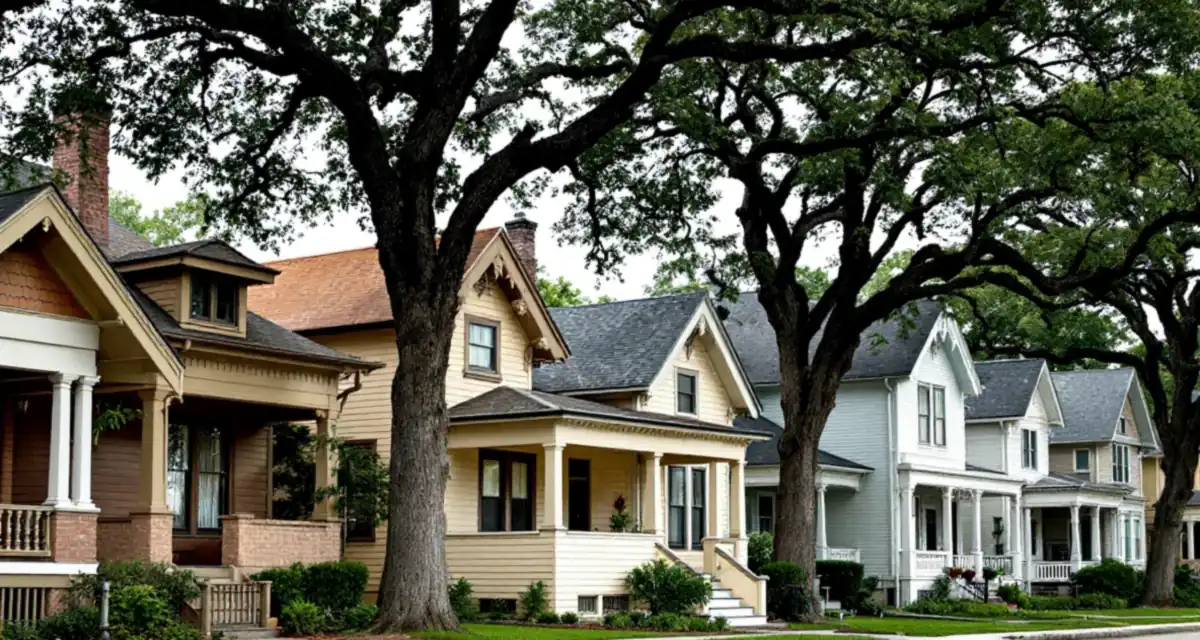
The Heights is where Houston's wood houses are concentrated, and where the city regulates their siding most closely.
The design guidelines cover Houston Heights Historic Districts East, West and South, adopted by City Council in July 2018. They describe the houses as “mostly built with wood siding, on pier-and-beam foundations”. The Houston Archaeological and Historical Commission reviews changes.
What needs a Certificate of Appropriateness
Guideline 4.18 reads “Replace wood siding in kind” and adds “Wholesale replacement is not recommended and requires a COA.” Under 4.19, individual pieces may be replaced in kind. If more than 50 percent of the siding on one wall is damaged beyond repair, it may be replaced, with documentation of that damage.
What is exempt
The Office of Preservation's exemption list includes “Ordinary maintenance & repair”, “Paint colors, paint on previously painted surfaces”, and alterations not seen from the street. Taking off vinyl or aluminum to reveal historic siding is also listed as unregulated.
Synthetic siding in a district
The guidelines list vinyl, aluminum and cementitious fiber siding as alternative materials, considered case by case. “Changing to a synthetic material is not recommended.” In one 2022 staff report, original 117 wood siding had been swapped for textured cementitious siding without a COA, and the application proposed putting the wood back.
Windstorm Area
East of State Highway 146: windstorm certificates
Most of Harris County is outside the state's designated catastrophe area. A strip along Galveston Bay is not.
The Texas Department of Insurance lists five Harris County cities in the area: La Porte, Morgan's Point, Pasadena, Seabrook and Shoreacres. The rule covers “Areas located east of State Highway 146 and inside the city limits” of those cities. There, work must meet a 120 mph, 3-second gust design wind speed to stay eligible for Texas Windstorm Insurance Association coverage.
Who it applies to
For these cities the department says the WPI-8 certificate “must be obtained from the Texas Department of Insurance”. If your house is east of the highway and insured with TWIA, ask the contractor how the siding work will be inspected and certified before it starts. Everywhere else in the county, this line does not apply.
Partial Jobs
Can you replace siding on one side of house?
Yes, and with wood it is often the sensible job. The question is matching.
Wood boards are milled to named profiles, and a mill can match an old one from a sample. The Heights guidelines picture two common Houston patterns, 105 and 117. Bring a short offcut to the supplier rather than a photo. Expect new boards to look different until they are painted with the rest of the wall. In a historic district, the more-than-half rule above applies wall by wall.
Insurance
Does insurance cover rotted wood siding?
Usually not. Rot builds over time, and Texas policies treat that as wear.
The Texas Department of Insurance says “Companies won’t pay for damages that happen over time, like rotted boards, cracking window seals, or worn roofs.” It says the same of damage from rodents and insects.
Hail is a different claim
Sudden storm damage is a separate question that your own policy answers. That is why dated photos after each spring storm help: they separate a split board from slow rot beside it.
Older Houses
Older houses: lead paint on the boards
A wood house built before 1978 almost always carries old paint on its siding, and old paint may contain lead.
The EPA's Renovation, Repair and Painting rule requires that anyone paid to disturb painted surfaces in homes built before 1978 be certified and trained in lead-safe work practices. Scraping, sanding and removing painted boards is that kind of work. Ask for the firm's EPA certification in writing.
Work It Out
Check your wall: the Houston wood siding tool
Pick where the house is, what you see and how much of the wall it covers. The page works out locally what to sort out before anyone quotes. No price comes out.
We are paid the same fixed fee whatever the answer, so a small repair costs us nothing.
Before You Hire
Hiring for siding repair in Houston: what to verify
We connect Houston homeowners with independent siding contractors. We do not do the work, and we publish no prices.
Searches for siding repair Houston contractors return a long list of companies, and after a hailstorm the list grows. The checking falls to you, and it takes an evening.
Before anyone climbs a ladder
The Texas Attorney General advises: “Only do business with licensed or bonded contractors or builders. Get multiple estimates.” Ask each one for proof of insurance and for addresses of wood jobs they finished in Harris County.
Reading the estimate
A Houston siding replacement quote for wood should name the species and grade, the profile, the barrier and flashing, how rotted sheathing will be priced, the nails and the paint schedule. On a house built before 1978 it should name the lead-safe firm. Our calculator works out how many squares of siding a wall takes, so you can check the quantity.
Storm chasers after hail
The same office warns about door-to-door sellers pushing a signature on the spot, and says: “Never pay cash up front to anyone for repairs.” Good Houston siding contractors will still be there next week.
Questions
Questions Houston owners ask about wood siding
Is wood siding a good idea in Houston?
It can be, on a house where water is kept off the wall and the paint is kept up. By our calculation Houston scores 80.4 to 86.1 on the decay index, above the top band of the Forest Service's decay map, which starts at 65, so the wall's details matter more here than in a dry city.
How long should wood siding last?
As long as it stays dry and finished, and Houston has wood houses a century old to show it. We give no figure in years: no source measures one for Houston walls. Walls fail early where boards touch soil or catch runoff.
When is hail season in Houston?
In our count of NOAA reports for Harris County, April and May hold 59 percent of severe hail reports, and March and June follow. Look over the wall once the spring storms have passed.
What wood is best for siding in Houston?
Heartwood of a resistant species, such as the cedars, or old-growth cypress or redwood. The Wood Handbook warns that resistance may be lower in warm, humid climates, so the barrier, the gap to the soil and the paint still matter.
Do I need permission to replace wood siding in the Heights?
Wholesale replacement in the three Houston Heights historic districts requires a Certificate of Appropriateness, and the guidelines favor replacing wood in kind. Ordinary repair and repainting are exempt. Check with the Office of Preservation before any work begins.
Is the black on my siding rot?
Usually not. Dark spots that wash off are mold or mildew on the surface. Rot is wood that has gone soft; press it with a screwdriver to tell the difference.
Do you install wood siding?
No. We are a referral service. We connect homeowners with independent siding contractors and are paid a fixed fee for the introduction, whatever the job turns out to be.
Where This Comes From
Sources and method
- Hail and wind reports, Harris County: NOAA National Centers for Environmental Information, Storm Events Database, bulk files StormEvents_details-ftp_v1.0, 2006 to 2025; revisions c20260323 for 2006-2016, 2018-2021, 2023; c20260519 for 2017; c20260625 for 2022; c20260728 for 2024; c20260819 for 2025. Our count.
- Severe hail and wind thresholds: NOAA Storm Prediction Center, About the SPC.
- Climate normals for the decay index: NOAA U.S. Climate Normals 1991 to 2020, Houston Intercontinental and Houston Hobby. Our calculation.
- Decay index formula and 1971 to 2000 values: Carll, C.G., Decay Hazard (Scheffer) Index Values Calculated From 1971–2000 Climate Normal Data, USDA Forest Products Laboratory, FPL-GTR-179, 2009.
- Moisture, decay and species resistance: USDA Forest Products Laboratory, Wood Handbook (FPL-GTR-282, 2021), chapter 14, Biodeterioration of Wood.
- Formosan termites in Texas: Texas A&M University, Urban and Structural Entomology Program.
- Heights rules: City of Houston, Houston Heights Historic Districts Design Guidelines and What's exempt from regulation.
- Windstorm area and insurance: Texas Department of Insurance, Harris County and Five things your home policy won't cover.
- Hiring: Office of the Texas Attorney General, consumer alert on repair scams. Lead: U.S. EPA, Renovation, Repair and Painting Program. HZ10: James Hardie, Hardie Zone System (manufacturer's statement).
Our editorial standards explain how we source and check what we publish. Both calculations are ours, from the public files named above, and are repeatable. We are a referral service rather than a contractor. Last updated .
Before you call anyone
The flat-fee match — we are paid for the introduction, not for the size of your job
Most siding advice is written by the company that wants to do the work or the company that makes the product. That is not a failing of the people who read it; it is a defect in who is talking: the measurement, the estimate and the invoice come from one party, and no amount of care on your side fixes that.
We are built the other way round. We do not install, repair or sell anything, so the payment reaches us when you are connected to a licensed, insured siding contractor — the same amount whether you need one panel replaced or four walls re-clad. Nobody here has a reason to talk you into the larger number. You can check that rather than take it on trust: how we make money is written down, and this site keeps telling readers when one wall is enough. Why does not everyone work this way? Because a flat fee leaves money on the table every time the job turns out to be big.
Waiting is the one thing that actually costs money. A wall that is open to the weather does not get better and does not wait for a convenient week; the water that gets behind the siding finds the sheathing, the framing and the drywall inside. A cracked panel over a window lets the next storm in. And if it turns out to be one panel and a quarter-hour, say so when you ask. We will tell you, and that answer earns us nothing.
Not for you if: you want a price over the phone — nobody honest gives one without measuring the house; you need a guarantee of arrival within the hour — we cannot promise that for a company we do not run; the building is commercial; or you would rather do it yourself, in which case the pages on this site are written so that you can.