Siding Contractors · Denver, Colorado
Siding contractors in Denver: licenses, permits and the hail calendar
Home › Siding replacement › Denver · Reviewed by the Siding Pros USA editorial team · · 20 min read
Hiring for siding in Denver means checking three things the city controls: the contractor's Class D siding certificate, the permit and, in a historic district, Landmark approval. Then time the job around hail. By our count, May and June hold 76 percent of Denver's severe hail reports.
Hiring siding help in Denver: five checks first
- A Denver license, not a suburb's. Denver siding work runs under a Class D siding certificate; licenses from elsewhere are not accepted.
- The permit in the contractor's name. Re-siding is a quick permit, and the city warns against a contractor who wants it in your name.
- Landmark review first in a historic district. The city's map layer holds 84 mapped historic areas, and siding there needs approval before the permit.
- Hail sets the calendar. Six metro counties logged 1,081 severe hail reports from 2006 to 2025, and 68 percent came in May and June.
- Insurance repairs damage, not looks. Colorado's insurance regulator says no law makes an insurer match siding on walls that were not damaged.

Our Count
Our count: 1,081 severe hail reports in six Denver metro counties
We read twenty yearly files of the NOAA Storm Events Database and kept every county report of hail one inch across or larger.
| County | Cities in it | Reports, 1 inch or larger | Days with such reports | 1.75 inches or larger | Largest |
|---|---|---|---|---|---|
| Denver (city and county) | Denver | 148 | 38 | 22 | 2.75 in |
| Arapahoe | Centennial, Englewood, Greenwood Village, parts of Aurora and Littleton | 278 | 94 | 70 | 4.25 in |
| Douglas | Highlands Ranch, Parker, Castle Rock, Lone Tree, parts of Aurora and Littleton | 216 | 95 | 23 | 2.50 in |
| Jefferson | Lakewood, Wheat Ridge, Golden, parts of Arvada, Westminster and Littleton | 215 | 64 | 36 | 2.75 in |
| Adams | Commerce City, parts of Thornton, Westminster, Arvada and Aurora | 208 | 69 | 55 | 4.50 in |
| Broomfield | Broomfield | 16 | 9 | 0 | 1.50 in |
| Six counties | All of the above | 1,081 | 214 | 206 | 4.50 in |

City and County of Denver
Denver logged 148 reports on 38 separate days; 22 were 1.75 inches or larger, and the largest measured 2.75 inches. May (61) and June (52) make 76 percent. In three of the twenty years the city logged none.
Arapahoe and Douglas, the southern suburbs
Arapahoe County, with Centennial, Englewood and part of Aurora, has the most reports of the six: 278, with 70 at 1.75 inches or more and a largest stone of 4.25 inches. Douglas County logged 216. Both peak in June: 134 and 109 reports.
Jefferson and Adams
Jefferson County, with Lakewood, Wheat Ridge and Golden, logged 215 reports. Its reports are the most spread out of the six: only 57 percent fall in May and June. Adams County logged 208, and its largest stone, 4.50 inches, is the biggest anywhere in our count.
Broomfield
Broomfield logged only 16 reports and went fourteen of the twenty years without one. A small county catches fewer storms by area alone; that is size, not safety.
Storm days that cross county lines
Across the six counties the reports fall on 214 different days. On 89 of them hail that size was logged in two counties or more, and on 43 in three or more. Three days reached five counties: July 4, 2010, July 4, 2019 and May 30, 2024.
Wind of 65 knots or more
The Storm Prediction Center treats “wind speeds of 75 mph (65 knots) or greater” as the strongest class of severe wind. Denver logged five such reports and Arapahoe ten. Loose panels after a windstorm are worth a photo even with no hail.
How we counted
We used the yearly NOAA files on the server in October 2026 (revisions under Sources) and kept county rows only. The cutoff is the Storm Prediction Center's: “Hail 1 inch in diameter or larger.” Our Denver totals match an earlier count from the same files.
What the count leaves out
These are reports that reached the National Weather Service, so a storm nobody saw leaves no line. We show no trend by year and skip the damage estimates.
Timing
When to book a siding estimate around Denver
Metro hail days bunch into four months. The table counts days, not reports: one storm day sends every crew to the same kind of job.
| Month | Metro hail days | Denver reports | What it means for the job |
|---|---|---|---|
| January | 0 | 0 | Collect bids, check licenses |
| February | 0 | 0 | Collect bids, check licenses |
| March | 0 | 0 | Settle product and start date |
| April | 8 | 4 | Season opens |
| May | 37 | 61 | Peak: photograph after each storm |
| June | 74 | 52 | Busiest month for hail days |
| July | 47 | 29 | Still active |
| August | 43 | 2 | Still active, mostly suburbs |
| September | 5 | 0 | Tail of the season |
| October | 0 | 0 | No severe hail days counted |
| November | 0 | 0 | No severe hail days counted |
| December | 0 | 0 | No severe hail days counted |
| Year | 214 | 148 |

January to April
No severe hail day in our count fell before April, and April had 8. For a planned siding replacement, Denver's quiet months are the time to collect bids and check licenses. Ask how the crew handles caulk and paint in the cold.
May and June
These two months hold 111 of the metro's 214 hail days. A wall finished in late April can be hit weeks later. Photograph old damage before the season, so new and old do not blur.
July and August
Hail does not stop after June here. July had 47 metro hail days and August 43, with most of the reports in Jefferson, Douglas and Arapahoe. Ask whether the contract says who pays if a storm hits mid-job.
September to December
Our count has five hail days in September and none after. Work done in fall misses the hail months. It is a fair time to sign, as long as the start date is in writing.
The License
Denver's Class D siding certificate: the license to ask for
Denver licenses siding as its own trade. Before you hire a siding contractor, Denver, CO sets the rule in one line of its certificate list.
| Check | What the city says | Where to look |
|---|---|---|
| Supervisor certificate | Class D Siding: siding, gutters and downspouts, under on-site supervision of the holder | Specialty Class D certificates page |
| Company license | A two-step process: certificate first, then the license | Contractor licenses page |
| Current status | The city asks you to verify a current Denver license | Verify a contractor's license |
| Out-of-town licenses | Not accepted from other counties or states | Contractor licensing page |
What the certificate covers
The city's Specialty Class D list includes one called Siding. Its scope reads: “Installation of siding, gutters and downspouts. All work to be done under the on-site supervision of a Class D Siding Supervisor Certificate holder.” The holder needs “Two (2) years of field experience in the respective trade,” shown by notarized letters, and the page says “No test required.”
Supervisor first, then the company license
“Contractor licensing in Denver is a two-step process,” the city writes: a person earns the certificate, then the company licenses through that person. Ask for both names, the company and the certificate holder on site.
How to check a license
Denver keeps a public license search, linked from its Verify a Contractor's License page. Search the company name on the contract. Crews and siding installers: Denver expects on-site supervision by the certificate holder, so ask who that is on a subcontracted crew.
A license from a suburb does not carry over
The city states it plainly: “Denver does not accept or reciprocate contractor licenses and/or certificates from other counties or states.” A firm from Aurora can work in Denver, but with a Denver license.
Many roofers are also contractors that do siding. The certificate list treats roofing and siding as separate Class D trades, so ask a roofer for the siding certificate too.
The Permit
Denver siding permit: what the city asks for
The Denver siding permit is usually a quick permit, issued without plan review and checked in the field. The questions are whose name it carries and when the inspection happens.

What a quick permit covers
Denver's quick permits page lists “Exterior wall coverings” and “Soffit/fascia work” under roofing and siding. For a siding installation, Denver files it under that list. The same page says structural repair cannot go on a quick permit, so a job that turns up rotten studs may need more than the quick form.
Whose name goes on the permit
The contractor's. Denver's hiring tips say to avoid contractors who want you to secure permits in your name, because “The permit holder is legally responsible for the completion of the job to building code standards.” A firm that asks you to pull it is asking you to carry its responsibility.
Pulling the permit yourself
Owners can do their own siding. “No exam is needed for general construction or roofing/siding,” the homeowner page says, but “You must occupy the home for at least one year after work is complete.” An owner who pulls the permit does the work, or uses a designated worker who cannot be paid. It is not a way to hire a crew without a license.
Inspections before the last payment
A quick permit is inspected in the field. The city's advice is direct: “Don't make final payment until building inspections have been approved.” Put the inspection, not the last nail, in the contract as the trigger for the final check. For siding replacement, Denver's rules on this page apply inside the city line; outside it, ask which city issues the permit.
Historic Districts
Historic districts: Landmark review comes before the permit
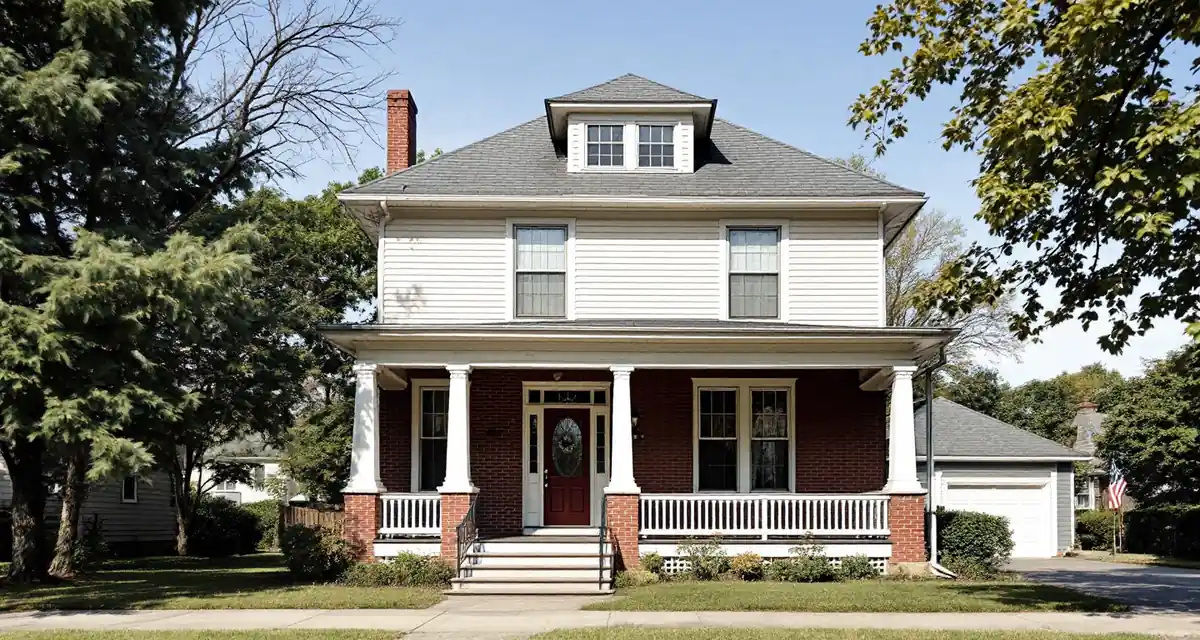
Denver's quick permits page is blunt: “All roofing/siding work on individual landmarks or buildings within a historic district must be first approved by Landmark Preservation.”
84 mapped areas on the city's layer
We counted the city's own Historic Landmark Districts map layer, last edited July 9, 2026. It holds 84 mapped areas under 83 names. Some are sections of one district, such as Curtis Park's eight; Montclair, Potter Highlands and Country Club are on it too. If the house is in one, tell every bidder before they quote.
How long staff review takes
For eligible projects, Landmark staff will issue an approval “within a few business days” once an application is complete and meets the design guidelines. Administrative review starts with an evaluation “generally within 10 business days.” Harder cases go to the Landmark Preservation Commission. Build that time into the start date.
Lower Downtown has its own commission
Properties in the Lower Downtown Historic District go to the Lower Downtown Design Review Commission instead. Either way, the Certificate of Appropriateness and the approved application travel with the permit request, and the Landmark inspector checks the finished wall against them.
After A Storm
After a hailstorm in Denver: the order of things
Colorado's Division of Insurance says “Damage caused by windstorms or hail storms is usually covered.” The order of the next steps decides how cleanly the claim and the siding job fit together.

Photograph every wall with the date
Before anyone touches the house, photograph each wall from the street and up close, with a coin for scale. Dented gutters, torn window screens and cracked panels help show stone size. Note the storm date; with 89 multi-county hail days in our count, an adjuster will ask which storm did it.
Read the policy, then call the insurer
The policy, not the contractor, says what is covered and what the deductible is. Call the insurer or agent to open the claim. A contractor can tell you what the wall needs; only the insurer decides what it pays for.
Be home when the adjuster comes
Walk the walls with the adjuster and point at the photographs. Write down the claim number and ask for the estimate in writing.
Matching: what Colorado law does not require
This is where siding claims in Colorado disappoint. The Division of Insurance answers the one-side question directly: there are no laws that require an insurer to match siding or paint on walls that were not damaged. “The company is only required to repair or replace the actual damages caused by the covered event.” Your policy may say more, so read it.
Get the estimate in writing
A written estimate from the contractor should list each wall, the product, the trim and the removal. Compare its quantity with the adjuster's. Our calculator counts the squares of siding a wall takes, so you can check both numbers against the house.

At The Door
Door knockers and the three-day notice
“After major hail storm events, contractors will flock to Colorado,” the Division of Insurance warns. Some knock on doors the next morning. Federal law gives you a way back out of a contract signed on the porch.
The federal cooling-off rule
The FTC's rule covers a sale at your home with a purchase price of “$25 or more if the sale is made at the buyer's residence.” The seller must hand you a notice saying you may cancel “within THREE BUSINESS DAYS” of the sale. A siding contract signed at the kitchen table after a knock on the door falls in it.
The emergency waiver
There is one exception to watch. If you call the seller for a “bona fide immediate personal emergency,” you can waive the three days, but only with a separate, dated statement in your own handwriting. A pre-printed waiver is a reason to slow down.
Colorado's roofing law stops at the roof
Colorado has a statute for residential roofing contracts, C.R.S. 6-22, with rules on written contracts and insurance deductibles. It defines roofing work as “the construction, reconstruction, alteration, maintenance, or repair of a roof”, so a siding-only job sits outside it. When one firm does roof and walls, ask for the same terms in writing for both.
What to say at the door
Take a card, not a contract. Say you will check the license, call your insurer and get other bids first.
Before You Sign
Twelve checks from Denver's hiring list
Denver's planning department publishes tips for hiring a contractor: seven things to do and five to avoid. Here they are in the city's words, read for a siding company, Denver-based or not.
Three written bids
“Get three bids in writing from different contractors.” Written bids show whether each firm counted the same walls and trim.
References you can visit
“Ask for references.” Siding is outside, so ask for addresses of older jobs and drive by.
The Better Business Bureau listing
The city says to check the firm's Better Business Bureau listing. Read how complaints were answered, not only how many there are.
Current insurance
“Make sure the contractor's insurance policy is current.” Ask for the certificate from the insurer, with dates, rather than a photo of a card.
A current Denver license
The city's list says to verify a current Denver contractor's license. For a siding job, that means the Class D siding certificate behind it, as above.
A real address and phone number
“Check that addresses and phone numbers are legitimate on business cards.” After big storms, the Division of Insurance notes, contractors flock to Colorado.
Scope, schedule, dates and termination
The city's last item to consider is the contract itself: “the written scope of work, payment schedule, estimated start and finish dates, and termination clause.” The section below covers what a siding contract adds to that.
Never pay cash
“Never pay cash.” Pay by check or card, to the company named on the contract and license.
Hold the last payment until inspections pass
“Don't make final payment until building inspections have been approved.” On a quick permit that inspection is in the field, so ask when it will be booked.
No full payment up front
“Avoid contractors demanding full payment before doing any work.” A deposit is a different thing; the whole price before work starts is the warning sign the city names.
No work without a written contract
“Avoid contractors who will work without a written contract.” A handshake job leaves nothing to check the wall against.
The permit in the contractor's name
“Avoid contractors who want you to secure permits in your name rather than the contractor’s name.” This one closes the list because it undoes the rest: the permit holder answers for the work.
In Writing
What a Denver siding contract should spell out
Beyond the city's scope, schedule and termination clause, five lines decide whether two siding contracts describe the same job.
Product line, profile and color
Name the maker, product line, profile, exposure and color, not just “fiber cement” or “vinyl.” If one wall is being patched, the contract should say how the new piece will be matched; ask how to color match house siding before anyone orders.
The old siding and the house wrap
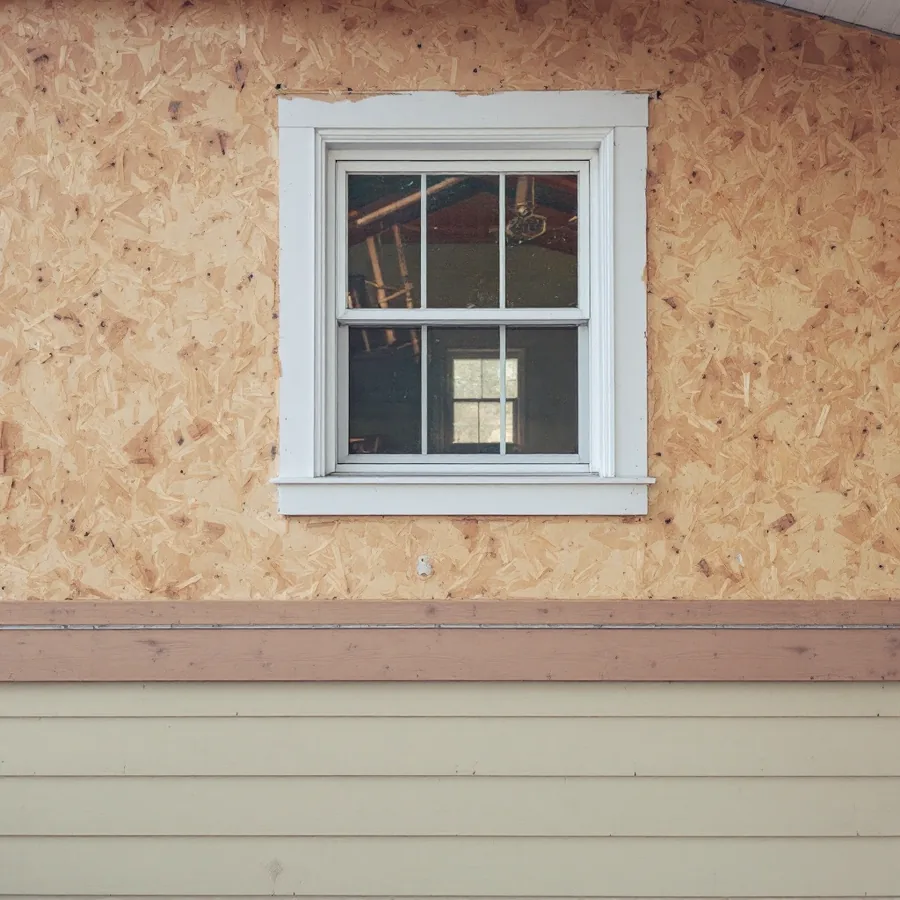
Say whether the old siding comes off and what happens to it. Should you replace house wrap when replacing siding? Once the old siding is off, the wall is open, so ask each bidder to list the wrap as its own line and to describe the flashing at windows and doors.
Trim, soffits, gutters and downspouts
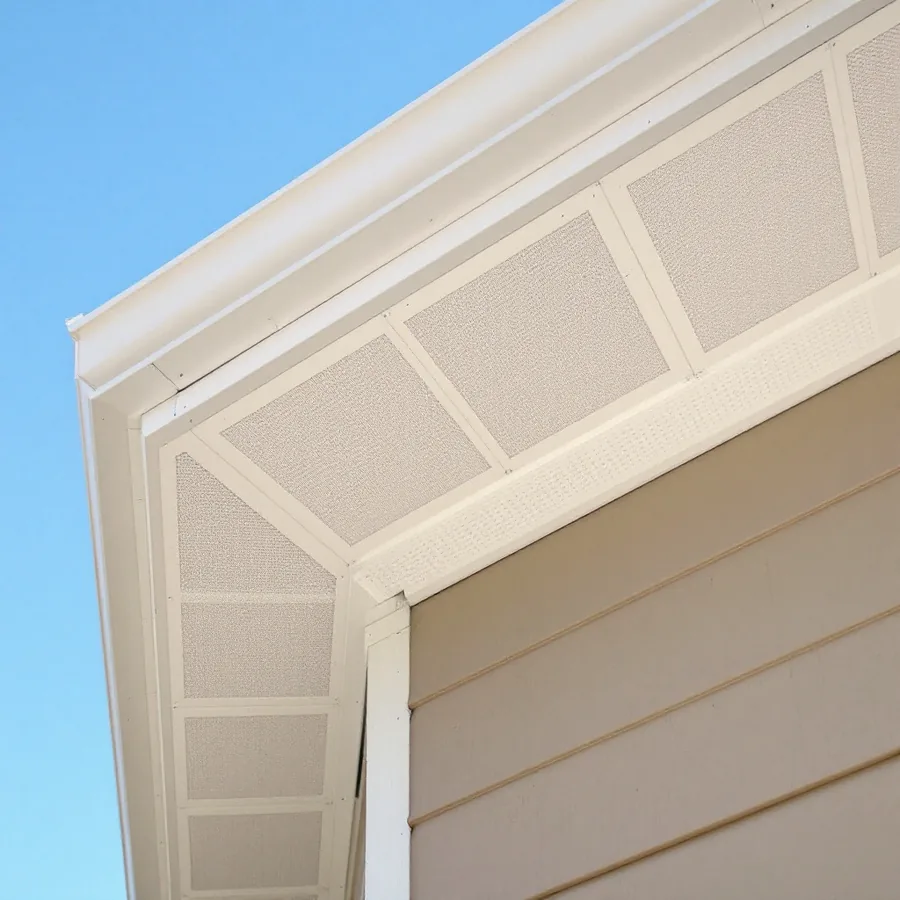
Denver's Class D siding scope includes gutters and downspouts, and its quick permit lists soffit and fascia work. Hail often dents all of them at once. Write down which of these the price includes, and who reinstalls gutters that come off for the siding.
Two warranties, not one
The maker's warranty covers the product under its own terms and installation rules. The contractor's workmanship warranty covers the install. Get the length and exclusions of both on paper.
Cleanup, nails and the dumpster
Old siding comes off with nails. Ask where the dumpster sits and whether a magnet sweep is part of daily cleanup.
Materials
Siding for Denver's hail, sun and freeze
There is no single best siding for Colorado; we found no public test that ranks siding for hail the way roofing is rated. What a Denver wall faces is clear from our count: hail in early summer, and cold winters.
Fiber cement siding
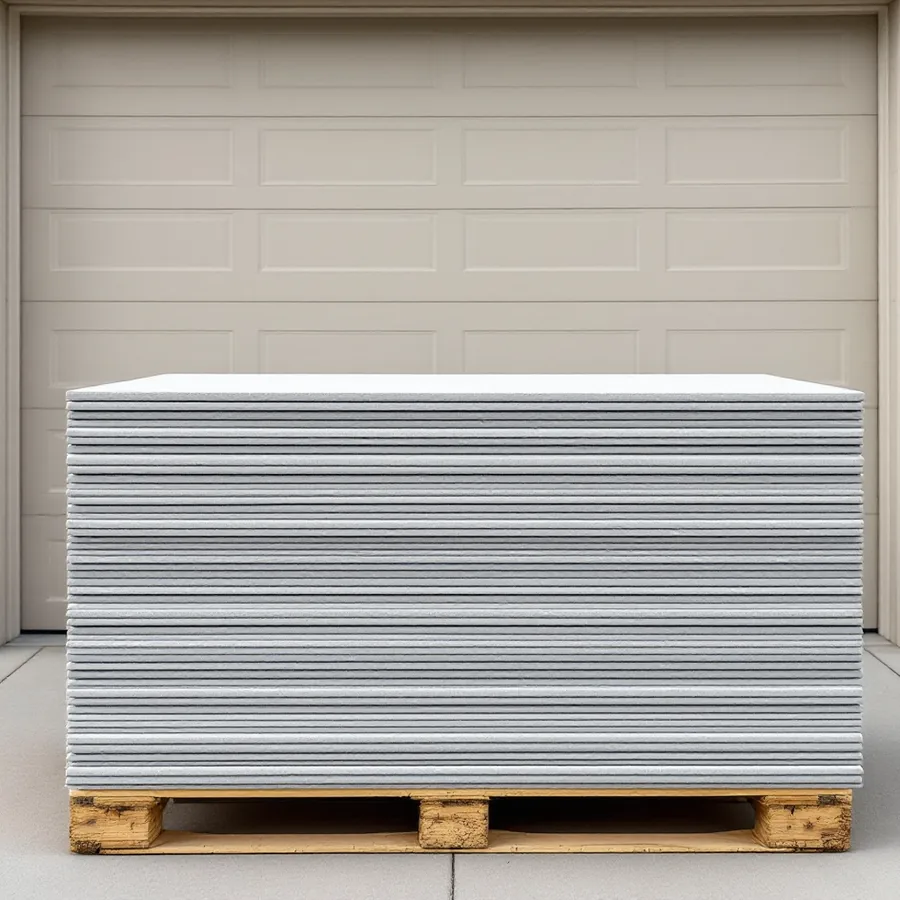
Denver bidders often lead with it. James Hardie sells a line it calls HZ5 for “climates with freezing temperatures, extreme seasonal temperature variations, and snow and ice”, a maker's claim, not a test. After hail, look for chipped paint as well as cracked boards, and ask how touch-ups are handled. For Hardie siding, Denver bids should name the line and the trim. Our fiber cement page covers the material.
Vinyl siding
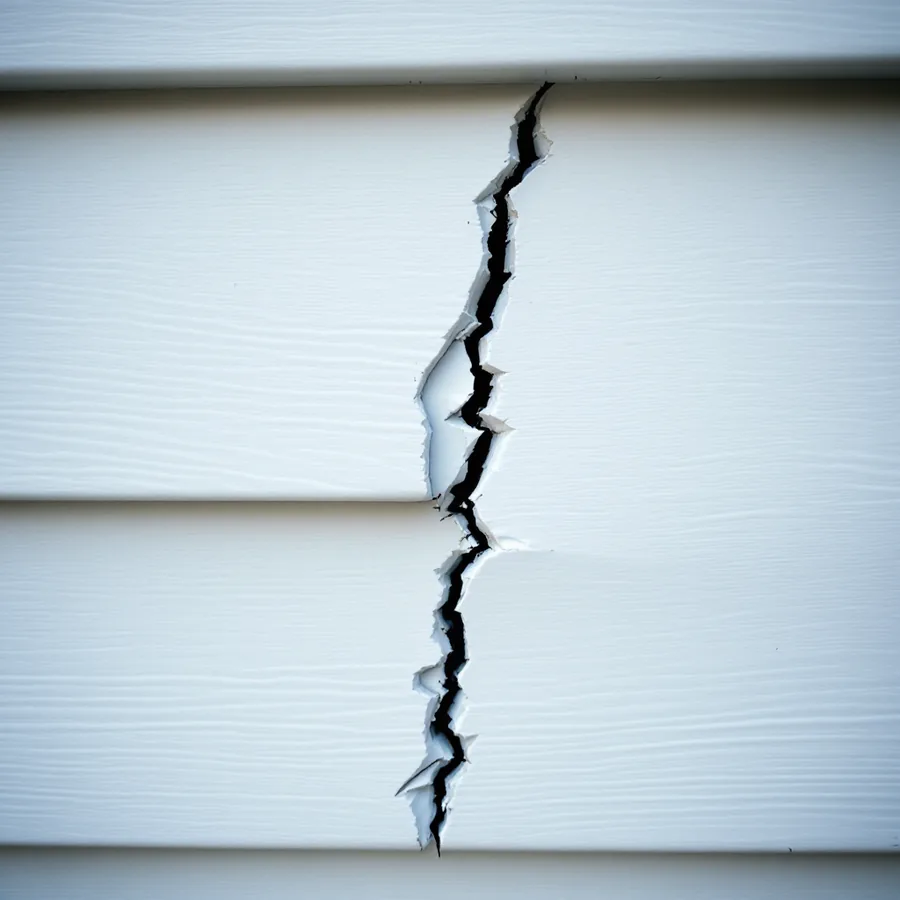
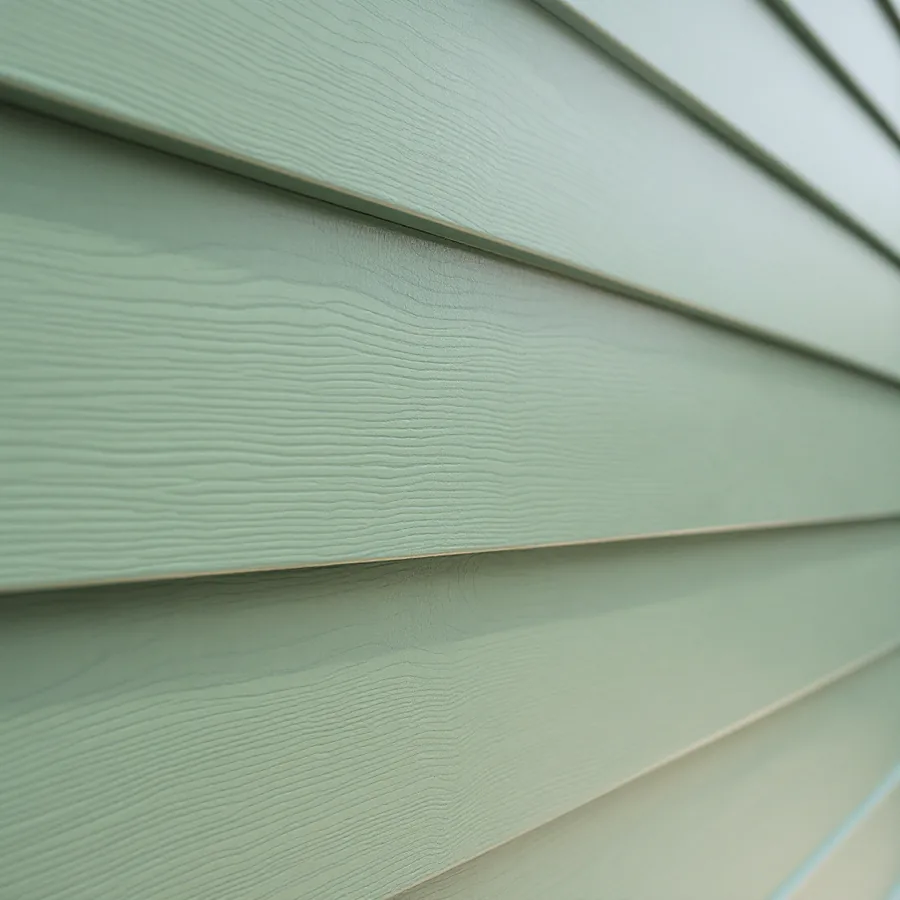
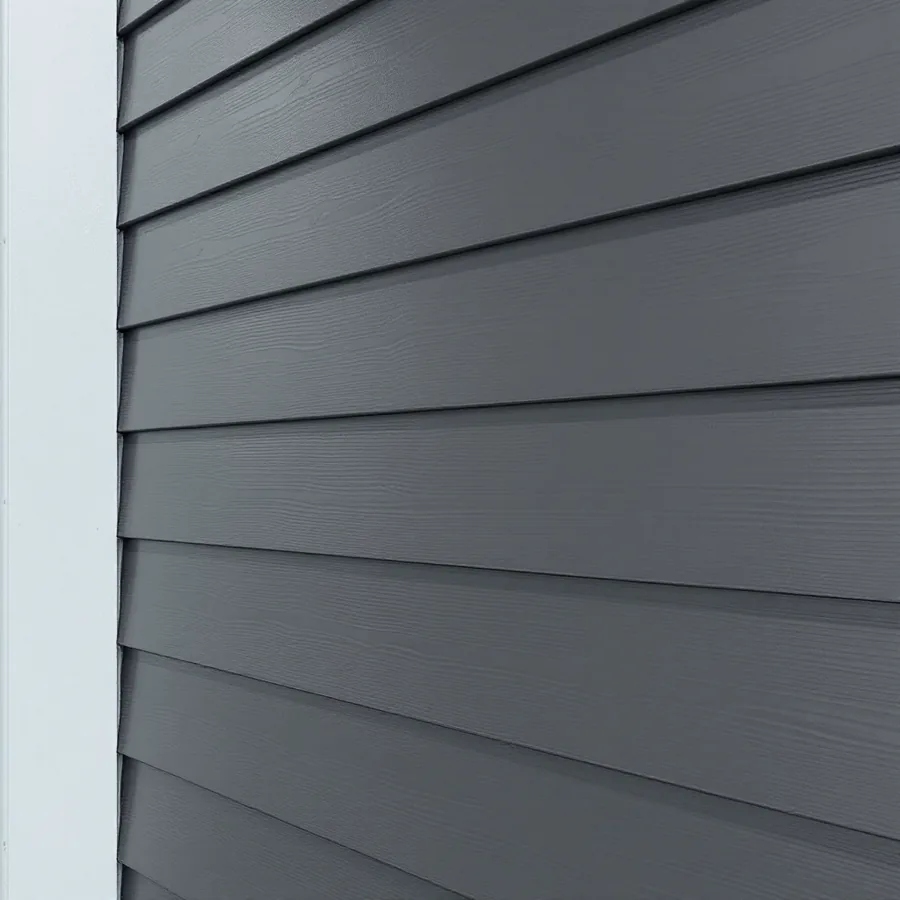
Denver hail of an inch or more can crack or punch through vinyl panels, as in the photo above. Our vinyl page explains thickness and how panels are hung.
Steel siding
Denver homeowners ask about steel because it does not crack. It can dent, and dents stay. Our metal siding page reads eighteen warranties line by line.
Engineered wood and LP siding
Denver bids for engineered wood usually mean LP SmartSide. It is a wood-based board sold with the maker's installation instructions. Ask the bidder for them, and whether the warranty depends on following them.
Wood and cedar siding
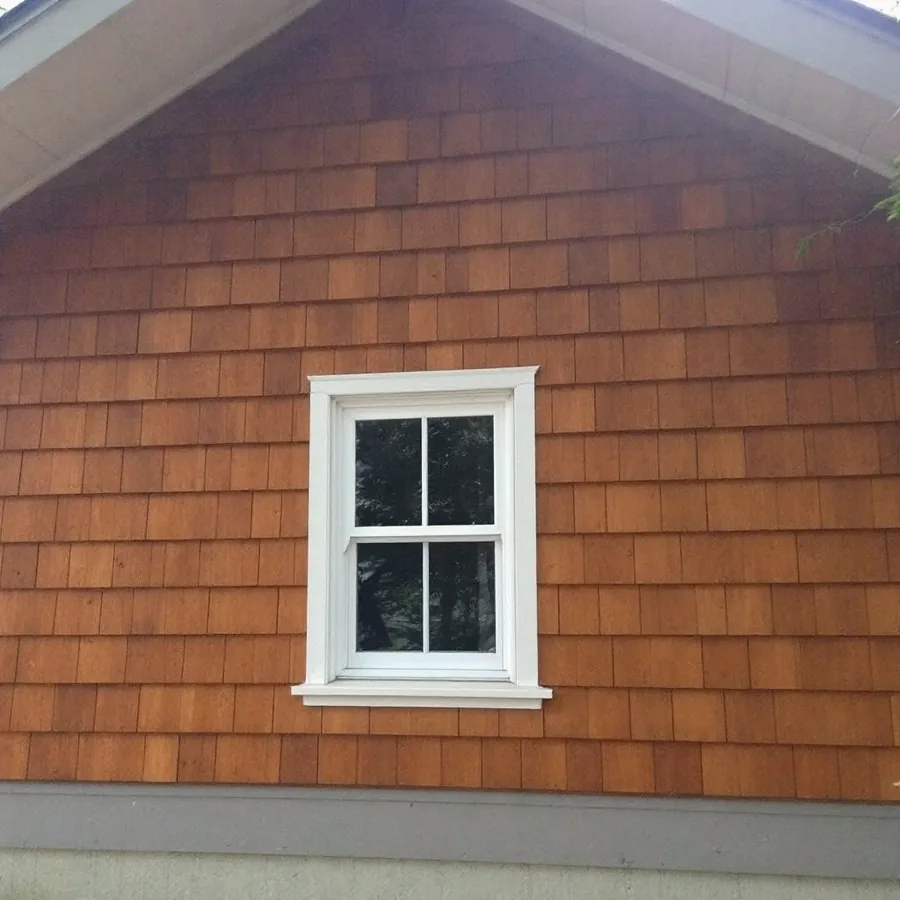
Cedar siding: Denver sun and hail wear the finish before the wood, so expect refinishing on a schedule. Our wood siding page compares species and finishes.
Stucco
Denver walls often combine materials. Where lap siding meets stucco or brick on a gable or an addition, ask how that joint will be flashed and sealed. Our types of siding page covers what else is out there.
Repair Or Replace
Siding repair or replacement in Denver
Siding repair or replacement is usually decided by two things: whether the damage is in a few pieces or on every wall, and whether a match can still be bought.
When a repair is enough
Can siding be repaired? Usually, when the damage sits in a few panels or boards, the product is still made and the sheathing behind is dry. A siding repair, Denver permit rules aside, is then a matter of a careful match. Our siding repair guide covers the steps by material.
When one wall becomes the whole house
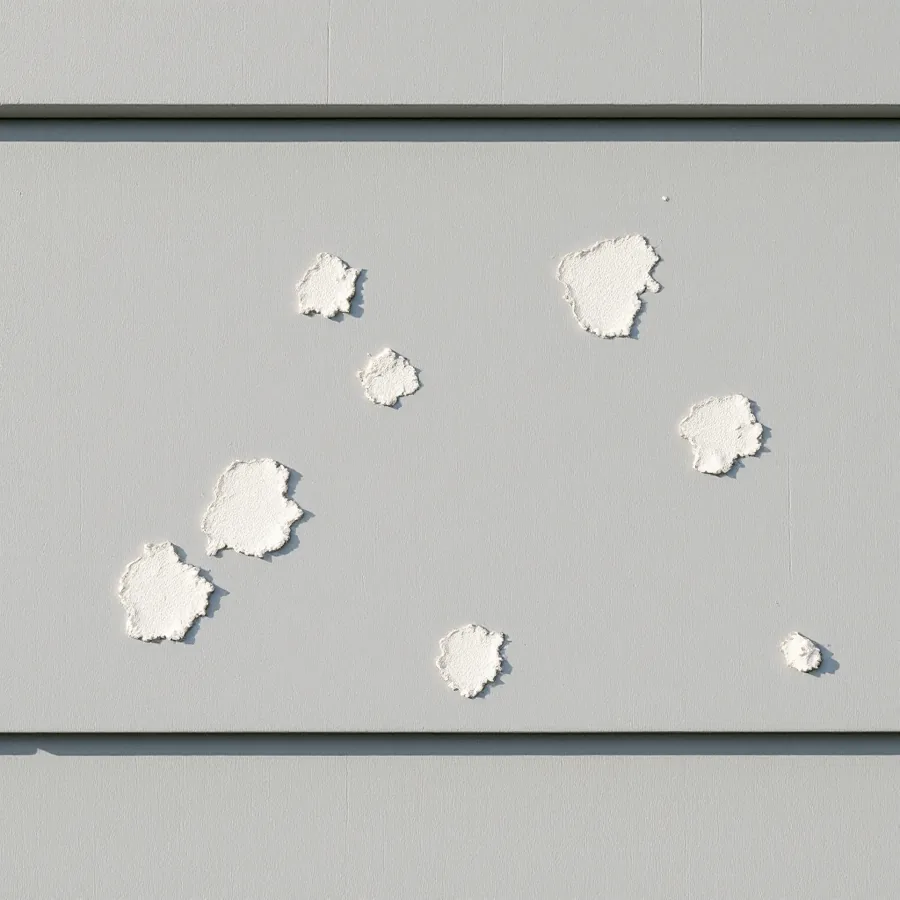
A new panel next to sun-faded ones rarely looks the same. Because Colorado does not require an insurer to match walls that were not damaged, the cost of making the house uniform can land on you. Price both options in writing: the damaged walls only, and the whole house.
Painted siding on a house built before 1978
If the house was built before 1978, painted siding and trim may hold lead paint. The EPA rule requires that “anyone paid to perform work that disturbs painted surfaces in homes, childcare facilities and preschools built before 1978 be certified” in lead-safe work. Ask for the firm's certification before work on painted wood siding or trim.
Reviews
Reading reviews of Denver siding companies
Search siding contractors Denver and the map comes first. Below it sit review sites and lists titled best siding companies Denver. A review tells you how a firm treated someone; the city's records tell you whether it can do the job.
What a review can and cannot tell you
Denver siding company reviews are good at schedule, cleanup and how complaints were answered. They are weak on what is behind the wall, because few reviewers see the flashing.
Put the license record next to the review
Before you shortlist a firm from reviews, look it up in the city's license search and check the Better Business Bureau listing the city points to. A firm with great reviews and no Denver license is not one you can hire for a Denver permit.
Why we publish no ranking
We do not rank house siding, Denver firms or brands: we have not inspected their work, and a list would only repeat the firms' own claims.
Work It Out
Check your Denver siding job
Choose the county, the job, the year the house was built and whether it sits in a historic district. The page lists what to check and in what order. No price comes out.
We are paid the same for any introduction, so a bigger job earns us nothing more.
How We Help
How we match Denver homeowners with siding contractors
We do not install siding and we send no crews. We introduce you to independent firms, and the quote, the work and the warranty are theirs.
What to tell us
Tell us the county, the job and whether there is an open insurance claim. Ask every firm we introduce for its Denver license or the license of the city that issues your permit, and run the twelve checks above on each. How our flat fee works is on the about page.
Questions
Denver siding questions, answered
Do I need a permit to replace siding in Denver?
Yes, a quick permit for exterior wall coverings, pulled in the contractor's name. A historic-district house needs Landmark approval first.
What license does a siding contractor need in Denver?
A Denver contractor's license resting on a Class D siding certificate. Licenses from other counties or states are not accepted.
When is hail season in Denver?
In our count of NOAA reports from 2006 to 2025, May and June hold 76 percent of Denver's severe hail reports. Across the six metro counties, hail days run from April to September, with June the busiest.
Will insurance replace all my siding if only one side was hit?
Not by law. Colorado's Division of Insurance says no law requires an insurer to match undamaged walls; the company must repair or replace the actual damage. Your own policy may go further.
Can a contractor pay my deductible?
Colorado's roofing statute bars roofing contractors from paying or rebating a deductible on a roofing claim. Its definitions cover roofs, not walls. Do not count on any offer to cover your share; read the policy and ask the insurer.
What is the best siding for Colorado homes?
No public test ranks siding for hail. Each material fails differently under hail and sun; choose by how it is repaired and by the warranty.
I live in Littleton. Do these rules apply?
Not directly. For a siding contractor, Littleton, CO is its own city, and the Census places it in Arapahoe, Douglas and Jefferson counties. Denver's license and permit rules apply inside Denver; ask which city issues your permit.
Do you install siding?
No. We introduce Denver homeowners to independent siding firms, and our fee is the same whether the job is one wall or the whole house.
Where This Comes From
Sources and method
- Hail and wind reports, six counties: NOAA National Centers for Environmental Information, Storm Events Database, bulk files StormEvents_details-ftp_v1.0, 2006 to 2025; revisions c20260323 for 2006-2016, 2018-2021, 2023; c20260519 for 2017; c20260625 for 2022; c20260728 for 2024; c20260819 for 2025. Our count.
- What counts as severe: the hail and wind lines on NOAA Storm Prediction Center, About the SPC.
- Licenses: City and County of Denver, Community Planning and Development: Contractor Licensing, Contractor Licenses, Specialty Class D Certificates.
- Permits and hiring: Denver CPD, Quick Permits, Applying for Permits as a Homeowner, Tips for Hiring a Contractor.
- Historic districts: Denver CPD, Apply for Landmark Design Review; City and County of Denver, Historic Landmark Districts map layer. Our count.
- Insurance: Colorado Division of Insurance, After a Hail Storm: Insurance FAQs and My homeowners insurance doesn't cover what?
- Laws: C.R.S. 6-22-101 to 105, Residential Roofing Services (copy published by the Colorado Attorney General); 16 CFR Part 429, the FTC Cooling-Off Rule; EPA lead rule for renovators (RRP).
- Cities and counties: U.S. Census Bureau, 2020 reference file of Colorado places. Fiber cement line for cold climates: James Hardie, Hardie Zone System, a maker's claim.
Our editorial standards explain how we source and check what we publish. The hail count and the count of historic areas are ours, from the public files named above, and anyone can repeat them. We are a referral service rather than a contractor. Last updated .
Before you call anyone
The flat-fee match — we are paid for the introduction, not for the size of your job
Most siding advice is written by the company that wants to do the work or the company that makes the product. That is not a failing of the people who read it; it is a defect in who is talking: the measurement, the estimate and the invoice come from one party, and no amount of care on your side fixes that.
We are built the other way round. We do not install, repair or sell anything, so the payment reaches us when you are connected to a licensed, insured siding contractor — the same amount whether you need one panel replaced or four walls re-clad. Nobody here has a reason to talk you into the larger number. You can check that rather than take it on trust: how we make money is written down, and this site keeps telling readers when one wall is enough. Why does not everyone work this way? Because a flat fee leaves money on the table every time the job turns out to be big.
Waiting is the one thing that actually costs money. A wall that is open to the weather does not get better and does not wait for a convenient week; the water that gets behind the siding finds the sheathing, the framing and the drywall inside. A cracked panel over a window lets the next storm in. And if it turns out to be one panel and a quarter-hour, say so when you ask. We will tell you, and that answer earns us nothing.
Not for you if: you want a price over the phone — nobody honest gives one without measuring the house; you need a guarantee of arrival within the hour — we cannot promise that for a company we do not run; the building is commercial; or you would rather do it yourself, in which case the pages on this site are written so that you can.