Siding Replacement Cost
Siding replacement cost — the number is six line items, and every page you have read priced one of them
Every page that answers “how much does siding cost” answers with a national average, then a table by material, then a sentence admitting it depends on the house. We keep averages off this page as a matter of principle. What we publish instead is the arithmetic and the structure: a calculator that counts your house's squares from its dimensions, because floor area is not wall area and the “2,000 square foot house” in every search is a trap; the six lines every honest quote carries; the wage data the federal government publishes for the trade; the two federal rules that add lines to a quote on a house built before 1978; what the tear-off can find; and the Department of Energy's account of the one thing that never gets easier than the day the wall is bare.
The number every page quotes was averaged across houses that are not yours
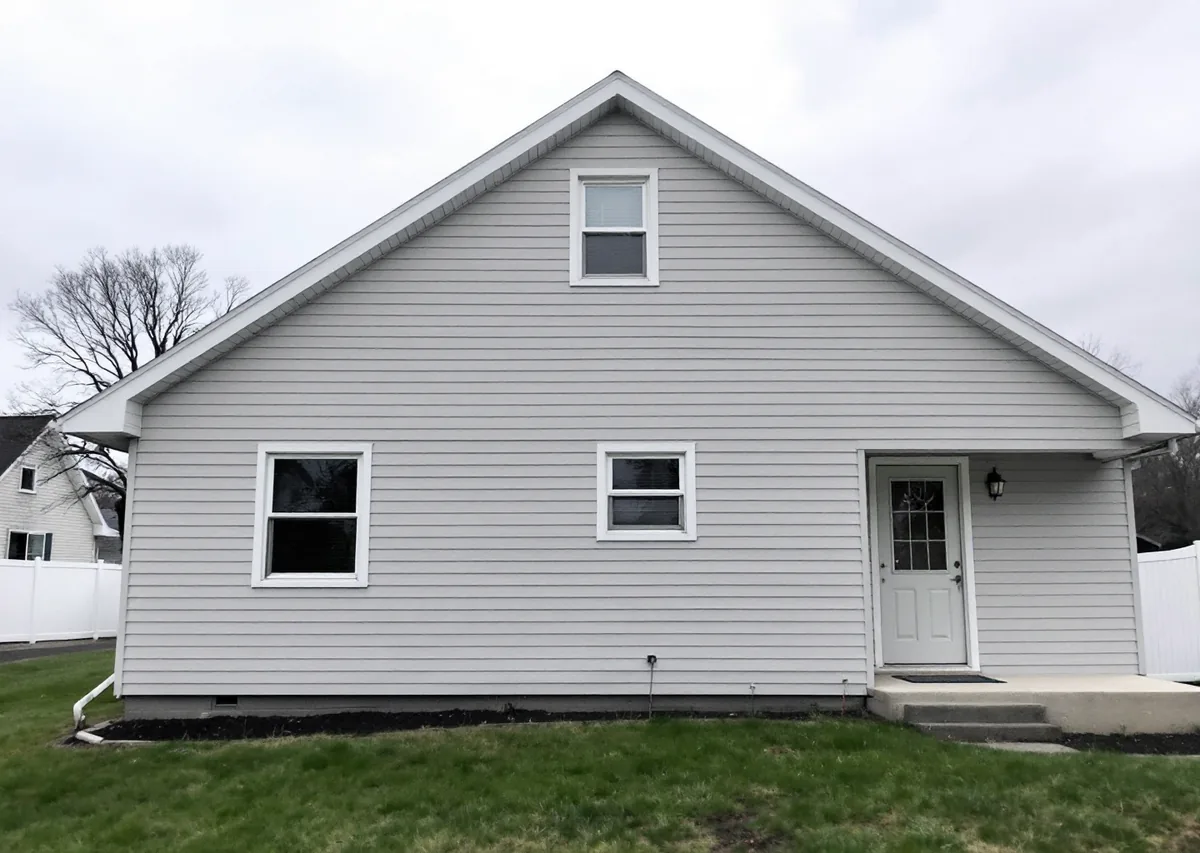
A national average for siding replacement cost is built from a single-story ranch with sound sheathing in a mild climate and a three-story house built in 1960 with lead paint, rot under two windows and cement shingles that nobody wants to touch. The figure that comes out is true of neither. It is also, usefully for the sites that publish it, wide enough that any quote you get will fall inside it and look reasonable. A range that contains every answer is not information.
The honest version of “how much to replace siding on a house” is a count and a list. The count is the number of squares on your walls, which you can produce yourself in ten minutes and which no contractor should be allowed to skip. The list is the six lines a siding quote is made of, each moved by something you can see from the driveway or learn from the year the house was built. This page gives you both, then reads the two most common quotes — vinyl and fiber cement — against them, then the repair case, then the questions.
- Why we do not publish a number. We are paid a fixed fee for an introduction, identical for one panel and a whole house. A national average would help neither you nor us; a square count and a list of what moves each line does both.
- What we do publish. The public wage of the trade from the Bureau of Labor Statistics, the Census Bureau's count of what new houses are clad in, the EPA's rules for houses built before 1978, the Department of Energy's figures on what re-siding projects leave undone, and the FTC's advice on the lowest bidder.
- What to do with it. Count your squares below. Get two quotes written as line items with the square count stated. Compare them with the table near the end of this page.
The Trap
Floor area is not wall area: the 2,000 square foot trap
The most searched version of this question is “how much does siding cost for a 2,000 sq ft house.” Two thousand square feet of what? The answer changes the job by half.
Two houses, one floor area
A single-story house forty feet by fifty feet has two thousand square feet of floor. Its walls run 180 feet around and, at nine feet high, hold about 1,620 square feet before openings and gables. A two-story house twenty-five feet by forty feet also has two thousand square feet of floor. Its walls run 130 feet around, but two stories high they hold about 2,340 square feet, and its gable ends are taller. Same floor area, forty percent more siding. Every table that prices a 1,000, 1,200, 1,500 or 2,500 sq ft house has silently picked one of those shapes and applied it to yours, and the same is true of the cost to redo siding on a 2,000 sq ft house: the floor area is the one number about the house that the siding does not depend on. Searches for a 1000, 1200 or 2500 sq ft house, typed the way people type them, all get the same answer: measure the walls.
What actually sets the count
Perimeter, which you can pace or measure. Height, which is the number of stories times the wall height, plus whatever the gables add. Openings, which come off: every window, every door, the garage door. Waste, which goes back on, because siding is cut to fit and the offcuts around windows and corners are real. The result is squares — a square is a hundred square feet of wall — and squares are the unit siding is sold and priced in. A contractor's quote should state them; the calculator below produces them from your tape measure.
Why the difference matters more than the material
Ten squares of difference between a guessed count and a measured one, at any material's price, is more money than the difference between most vinyl products. It is also the difference that two contractors quoting the same house can disagree on by twenty percent without either of them lying. Ask for the count. Then count.
Work It Out
Count your squares
A siding calculator that counts siding, not dollars. Length and width of the house, stories, gables, openings, waste. Nothing is sent anywhere, and the answer is the number your quote should be stating.
—
This is the count a quote should state. A contractor's measured count within a square or two of it is a contractor who measured; one ten squares away is a contractor who guessed, and the difference is your money at any material's price.
How much siding do I need, in boxes and squares
Vinyl is sold by the square and packed in cartons; how many panels a carton holds and how much wall it covers depends on the panel length and profile, so a carton is not a fixed unit and the count to give a supplier is squares. Fiber cement and wood are sold by the board, and the supplier converts squares to boards by the exposure — the part of each board that shows below the overlap. Either way the number that travels from your tape measure to the order is squares, with waste, and it is the one figure on the quote you can check.
The Structure
The six lines on every honest siding quote
Siding installation cost is not the material's price times the squares. It is that, plus five other things, and the five are where quotes diverge and where a low one grows.
| Line | What it is | What moves it | Who decides |
|---|---|---|---|
| 1. The material | The siding itself, by squares, plus the trim and accessory pieces that go with it. | Material, profile, thickness or grade, factory finish or not, and the square count with waste. | You, within what the house and the region's installers support. |
| 2. Labor | Crew time to strip, prepare, hang and finish. | Squares, stories, access, how many cuts the house's shape demands, the material's fastening schedule. | The house and the material. |
| 3. Tear-off and what is under it | Removing and disposing of the old siding, and repairing the sheathing it was hiding. | How many layers are on the wall, what the old material is, and a written allowance for rot. | What the probe finds; the allowance should be on the quote. |
| 4. The wall between | House wrap, flashing at every opening, and any insulation or backer board. | Whether the old wrap is reusable (it is not), the number of openings, and whether foam goes on while the wall is bare. | The manufacturer's instructions and your decision on insulation. |
| 5. The older-house lines | Lead-safe work on a house built before 1978; trained handling of asbestos-cement shingles. | The year the house was built and what the old cladding is. | Federal law, not the contractor. |
| 6. Permit, trim and the things on the wall | The permit and inspection; soffit, fascia, corners; removing and refitting lights, vents, hose bibs, downspouts, shutters. | Your jurisdiction, and how much is bolted to the wall. | Your city and the count of fixtures. |
The pattern in every disputed siding invoice is the same: a quote that named line one, guessed line two, and left lines three through six to be discovered on the day. A siding installation cost estimate that looks low next to another is usually one that has not yet met the sheathing or the inspector. The rest of this page takes the six lines one at a time.
Line One
Line one, the material: what actually moves it
“How much is vinyl siding” and “how much is fiber cement siding” have shelf answers. The useful question is which of five things is putting a particular product at a particular price per square.
Vinyl: thickness, profile and color
Vinyl siding cost per square foot is set first by thickness: a thin economy panel and a heavy premium panel are the same material at very different prices, and the thick one resists wind, dents and the waviness that shows on a wall in raking light. Then by profile: a plain double-lap is cheapest, a deep shadow-line, board-and-batten or shake profile costs more per square and takes more cuts. Then by color: dark colors cost more because the panel needs a formulation that will not warp in the sun. Insulated vinyl, with foam bonded to the back, is its own price tier and its own line-four decision. Whether vinyl siding is expensive depends entirely on which of those four you are buying; the word covers a fourfold range.
Fiber cement has a page of its own too: fiber cement siding sets out what three makers' code reports share, the clearances a crew must hold, and the dust rule that governs how the boards are cut.
And for the most common material of all: vinyl siding, where we read the thickness of sixteen product lines, the figure that moves this line most.
One profile has a page of its own: board and batten siding is a pattern sold in five materials, and its quote moves with the material and the wall behind it far more than with the look.
Fiber cement: width, texture and finish
Fiber cement siding cost per square foot is higher than vinyl's for the material and higher again for the labor, because the boards are heavy, cut with a shear or a dust-collecting saw, and fastened on a schedule the manufacturer sets. What moves the material line is board width, texture, and above all whether the boards arrive primed for painting on the wall or factory-finished in color. Factory finish costs more per square and saves a painting project; primed costs less and adds one. Fiber cement siding cost against vinyl is usually read as a material comparison, and it is really a labor and finish comparison.
Wood, engineered wood, metal, stone
Wood siding replacement cost is the board, the grade, and a finish system that is a second project and then a maintenance interval for life. Engineered wood sits between vinyl and fiber cement on the material line, with the manufacturer's clearance and edge-sealing rules as conditions of its warranty. Metal is set by gauge, profile and finish, and by the trim system in matching finish that makes or breaks the look. Stone veneer siding installation cost is a masonry job priced by the square foot of a trade that is not siding, usually on a portion of a wall rather than a house.
What new houses are actually clad in
The Census Bureau's survey of new single-family houses puts vinyl at 26 percent of houses completed in 2025, stucco at 26 percent and fiber cement at 23 percent — nationally. By region the picture inverts: vinyl is 70 percent of new houses in the Northeast and fiber cement is 31 percent in the West. That matters for line two more than line one: the material the contractors in your region install every day is the one they install fastest and best, and a quote for the other material is a quote from a crew that does it occasionally. The regional table is on the home page.
Buy Versus Keep
The cheapest siding for a house is two different answers
By the square, on the day, thin vinyl. By the decade, it depends on what each material costs to own, and every page that ranks types of house siding by the first number alone is ranking half the question.
| Material | What sets the price to buy | What it costs to keep | What usually ends it |
|---|---|---|---|
| Vinyl | Thickness, profile, color, insulation backing. | Washing. No paint. | Brittleness with age and sun on thin panels; hail; discontinued profiles that cannot be matched. |
| Fiber cement | Board width, texture, factory finish or primed; a higher labor line. | Repainting on the finish maker’s interval; caulk at joints. | Neglected caulk and paint letting water into the board edges. |
| Wood | Species, grade, profile; a finish system on top. | Paint or stain every few years for life. | Rot at end grain and sills where the finish was let go. |
| Engineered wood | Profile, pre-finish; between vinyl and fiber cement on the material line. | Repainting on interval; sealed cut edges. | Edge swelling where clearances or sealing were skipped. |
| Metal | Gauge, profile, finish, and the matching trim system. | Washing; touch-up of scratches. | Denting from hail; chalking of the finish in sun. |
| Stone veneer | A masonry trade priced by the square foot, usually on part of a wall. | Little, if the flashing behind it was right. | Water behind the veneer where the wrap and weep details were wrong. |
House siding options and their cost, read this way, come out as a pair of numbers per material rather than a ranking. The material that is cheapest on the quote and the material that is cheapest across the years the house stands are rarely the same one, and the choice between them is yours to make with both numbers in view.
Line Two
Line two, labor: the carpenter's wage is public and the crew rate is not
Average labor costs for siding installation are searched every day and have no honest national answer. There is one public figure that bears on the line, and it is not the one on the quote.
What the federal government publishes
Siding is installed by carpenters and by crews classified with them. The Bureau of Labor Statistics reports that “The median annual wage for carpenters was $60,580 in May 2025”, or $29.12 per hour, and that “The lowest 10 percent earned less than $40,410, and the highest 10 percent earned more than $99,910.” It projects that “Employment of carpenters is projected to grow 4 percent from 2025 to 2035, about as fast as the average for all occupations.” That is the wage of the person on the ladder, at the median, nationally. It is the floor of the labor line and it is public. Nothing else on the labor line is.
What the crew rate has to carry
Professional siding installation cost is the crew rate times the job, and the crew rate is not the wage. Between the wage and the rate sit the truck and the trailer, the ladders, scaffolding and lifts, the liability and workers' compensation insurance a licensed company must carry for a trade that works at height, the license, the office that measured and quoted, the days lost to rain, the warranty callbacks done for free, and the margin that keeps the company open. A crew's billed square is a multiple of its paid hour, and the multiple is larger for a small company in a spread-out area than a large one in a dense city.
What multiplies the labor line on your house
- Stories. Everything above the first floor is done from ladders, scaffolding or a lift, and a three-story wall costs more per square to hang than a one-story wall of the same material.
- The cut count. A plain rectangle with few windows is squares of straight runs. A house with bays, dormers, gables on every side and thirty windows is the same squares with three times the cuts, and cuts are time.
- The material. Vinyl hangs fast. Fiber cement is cut with dust control and nailed to a schedule. Wood is primed at every cut. Board-and-batten profiles in any material are slower than lap.
- Access and the season. A wall over a deck, a sloping lot, a hedge against the house. Cold weather slows vinyl, which is cut differently below freezing, and rain stops everything.
- What is bolted to the wall. Every light, vent, hose bib, downspout, shutter and cable is removed and refitted. Count them; the crew will.
Line Three
Line three, what is under the old siding
The line that grows. Nobody can see it until the tear-off, and the difference between an honest quote and a cheap one is whether it carries an allowance for what will be found.
Tear-off and disposal
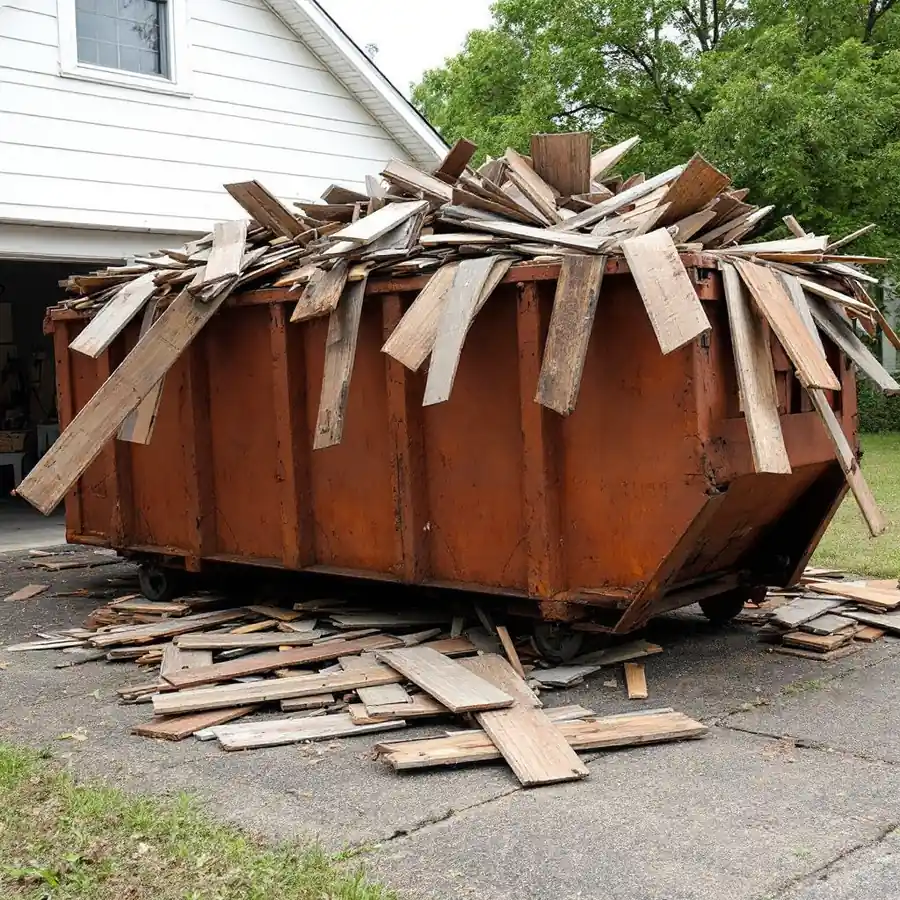
The old siding comes off, and it goes somewhere. One layer of vinyl is a fast strip and a dumpster; two layers, or old wood under vinyl, is a day and a bigger dumpster; cement shingles are a regulated disposal and a separate section of this page. A quote that says “remove existing siding” without saying how many layers has not looked.
The sheathing, and the allowance
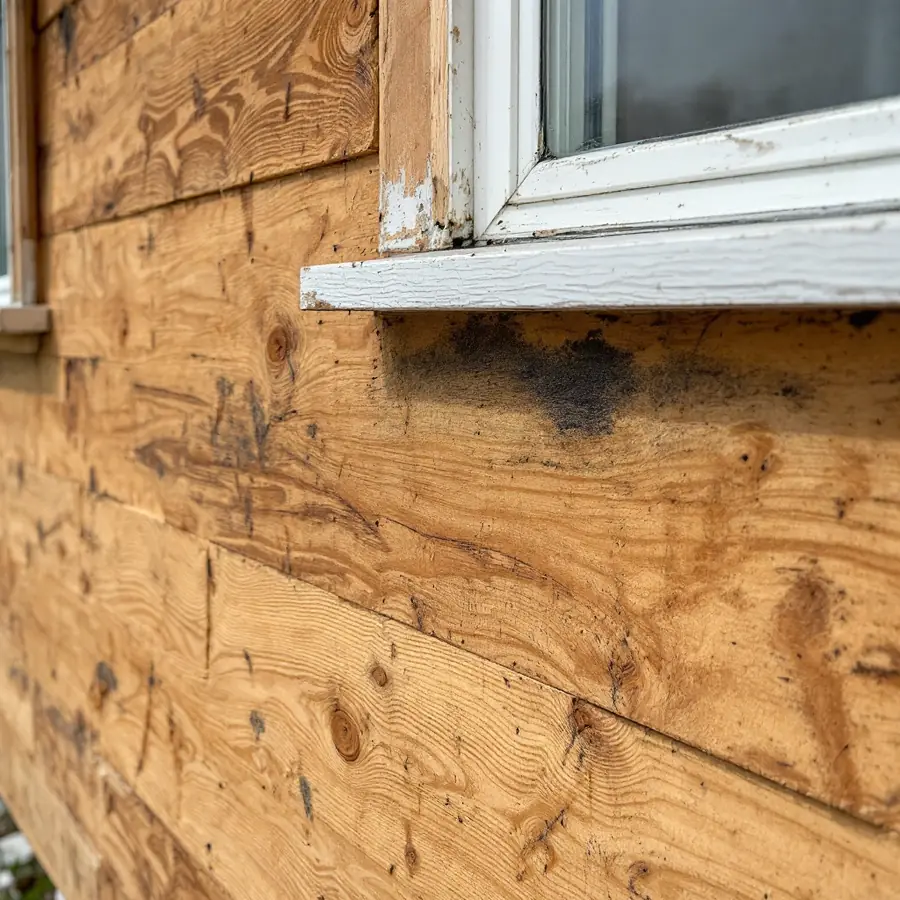
Under the siding is sheathing: plywood, oriented strand board, or on an older house planks or fibreboard. Where the old siding leaked — the corner below a gutter, the wall under a window, the bottom course near the ground — the sheathing is soft, and it is replaced before anything goes over it. A good estimate says so in advance: it carries an allowance for sheathing replacement, priced per sheet, with the corners and window sills probed with a moisture meter before the number is signed. A cheap estimate carries nothing, and the change order arrives with the wall open and no way to say no.
What else the wall reveals
No house wrap at all on a house of a certain age. Flashing that was never installed above windows. A wall where somebody added a second layer of siding over the first to hide rot rather than fix it. Insect damage at the sill. Each is real, each is a line, and each is cheaper to have named on the estimate as a contingency than to meet on the day.
Line Four
Line four, the wall between the sheathing and the siding
House wrap, flashing and whatever goes on for warmth. It is a small line on the quote, and the Department of Energy has counted how often it is the wrong small line.
Wrap and flashing
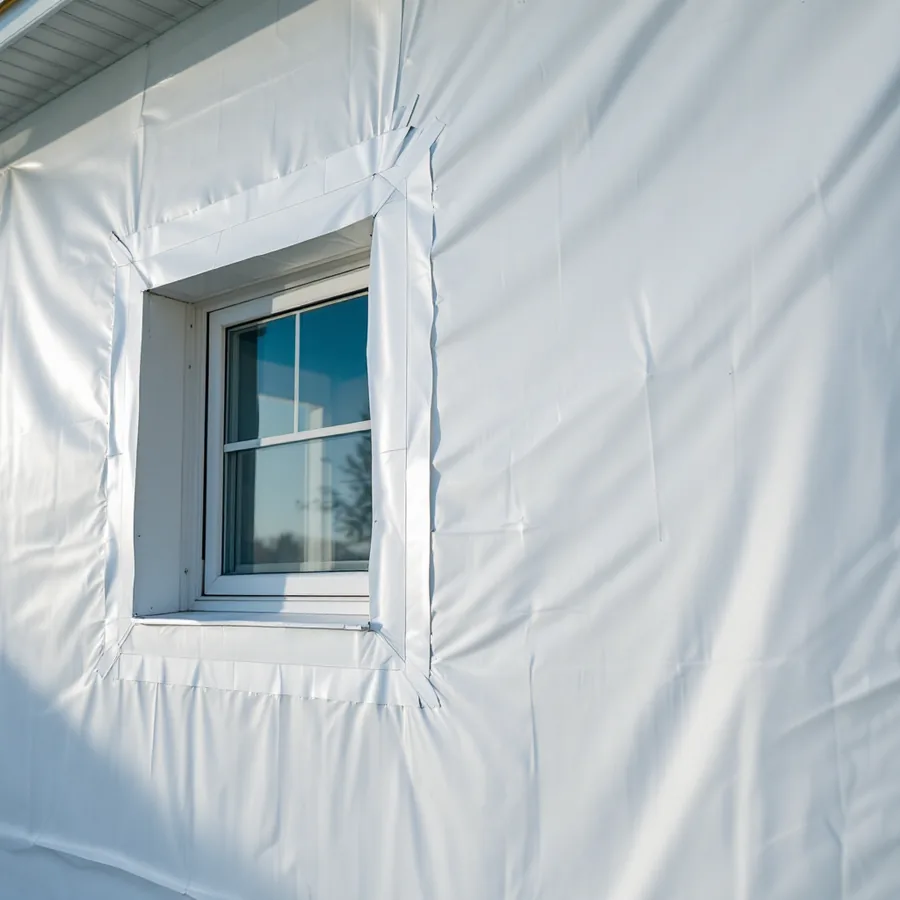
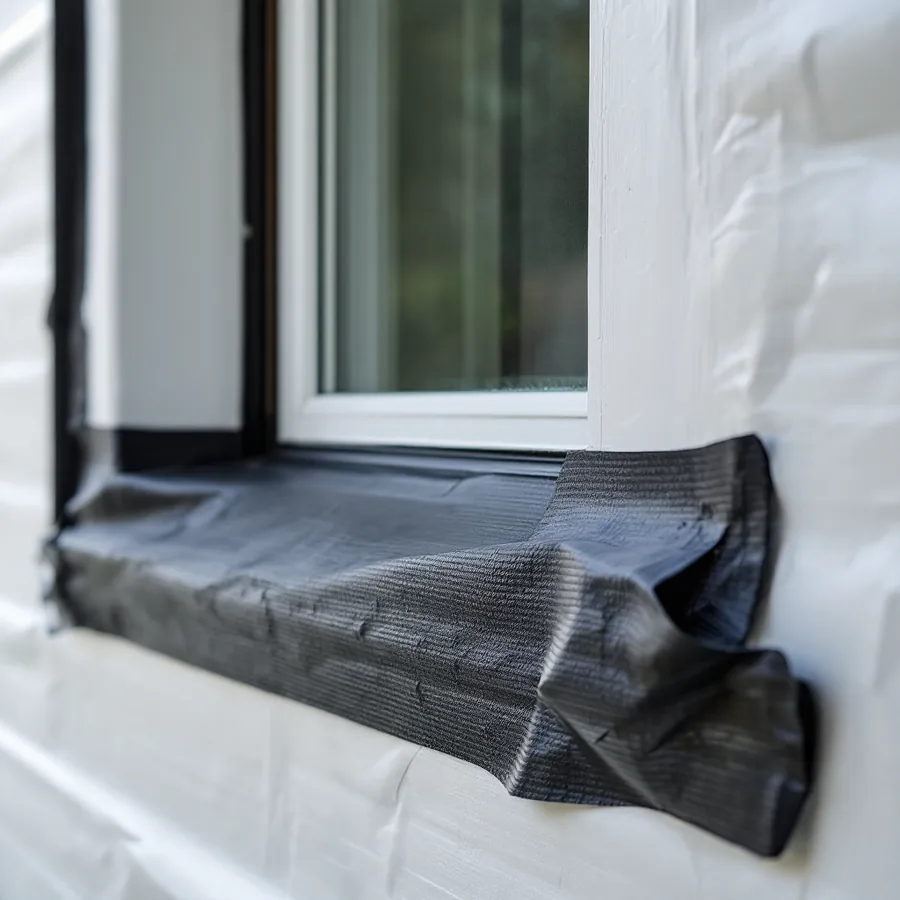
A water-resistive barrier over the sheathing, lapped and taped, with flashing at every window head, door head and corner and integrated with the wrap so that water running down the wall goes out, not in. The old wrap is not reused; the old flashing usually was not there. This is the part of the job that decides whether the new siding keeps the wall dry for its life or looks good over a wall that rots, and it is the cheapest line to do right and the easiest to skip.
The moment that never comes back
A Department of Energy presentation on adding insulation when re-siding reports that in 2021 “~3.5M homeowners spent money on siding projects”, and that “very few projects added 1-in or more of exterior continuous insulation.” Its account of what did go on the wall: “50% added fan-fold”, and “3-5% insulated siding (total market).” Fan-fold is a thin board whose job is to give the siding a flat surface, not to insulate. An inch of rigid foam, taped at the seams, costs the material and an hour on a wall that is already bare, and it is a line most quotes never offer. It is not a reason to buy insulated siding from whoever is quoting; it is a reason to ask what goes between the sheathing and the siding, and whether a foam layer is a line you can add while the wall is open.
What insulation changes on the rest of the quote
Window and door jambs need extending to the new wall thickness, which is trim work and a line. Corner posts and J-channel are sized for the deeper wall. The material line is unchanged; the labor and trim lines grow a little; the wall is warmer for its life. A quote that adds foam and nothing else has not thought about the jambs.
Line Five
Line five, the older house: the two federal rules that add lines
Neither is optional, neither is the contractor's choice, and both are the first things a low quote on a house built before 1978 leaves out.
Lead paint and the certified firm
The EPA's Renovation, Repair and Painting Rule requires that “anyone paid to perform work that disturbs painted surfaces in homes, childcare facilities and preschools built before 1978 be certified and their employees be trained (either as a certified renovator or on-the-job by a certified renovator) in the use of lead-safe work practices.” Old painted wood siding under new siding is a painted surface, and the paint on a house built before 1978 is presumed to contain lead until a test says otherwise. Removing it disturbs it. That means the firm must hold EPA or state certification, the crew must be trained, the work area must be contained and cleaned to the rule, and the job costs what those things cost. A contractor who is not certified cannot lawfully take the job, and a quote on a house that old that mentions none of it is a quote from somebody who has not read the rule or has decided you have not.
Asbestos-cement shingles
The EPA lists “Roofing and siding shingles” among the places asbestos may be found in a home. Gray cement shingles on a house from the middle of the last century are the case. The EPA's guidance on material in place is reassuring: “Generally, asbestos-containing material that is in good condition and will not be disturbed (by remodeling, for example) will not release asbestos fibers.” Its guidance on what changes that is specific: “Asbestos-containing materials may release fibers when they are disturbed, damaged, removed improperly, repaired, cut, torn, sanded, sawed, drilled or scraped.” That produces two honest quotes and one dishonest one. The first leaves the shingles in place, furs the wall flat over them and sides over; the second removes them, by people the EPA describes this way — “Do have removal and major repair done by people trained and qualified in handling asbestos” — with disposal as regulated waste. The third breaks them up with a hammer to save the line, and it is the one to walk away from. How much it costs to remove asbestos siding is therefore not a figure; it is a decision between two different jobs, each with its own lines.
What that does to the comparison
A quote on an older house that carries the lead line and a quote that does not are quotes for two different jobs, and only one of them is legal. Ask for the certification number before the estimate, not after it, and read the asbestos decision as a choice you are making rather than a price you are being given.
Line Six
Line six, the permit, the trim and the things around the wall
The small lines, which together are not small.
The permit and the inspection
Many jurisdictions require a permit for re-siding, some do not, and some require one only when sheathing or structure is touched. The permit is a line where it applies, and an offer to skip a required one is an offer to remove the only independent check on the flashing before it is covered. Ask which applies at your address; the contractor knows. Denver, for one, files re-siding under a quick permit and licenses siding as its own trade; our Denver page walks through both. Dallas sits at the other end: outside protected districts, siding is on the city's no-permit list, as our Dallas page shows in the city's own words. Omaha lists re-siding as its own residential permit type, issued without plans; our Omaha installation page covers it.
Soffit, fascia, corners and channels
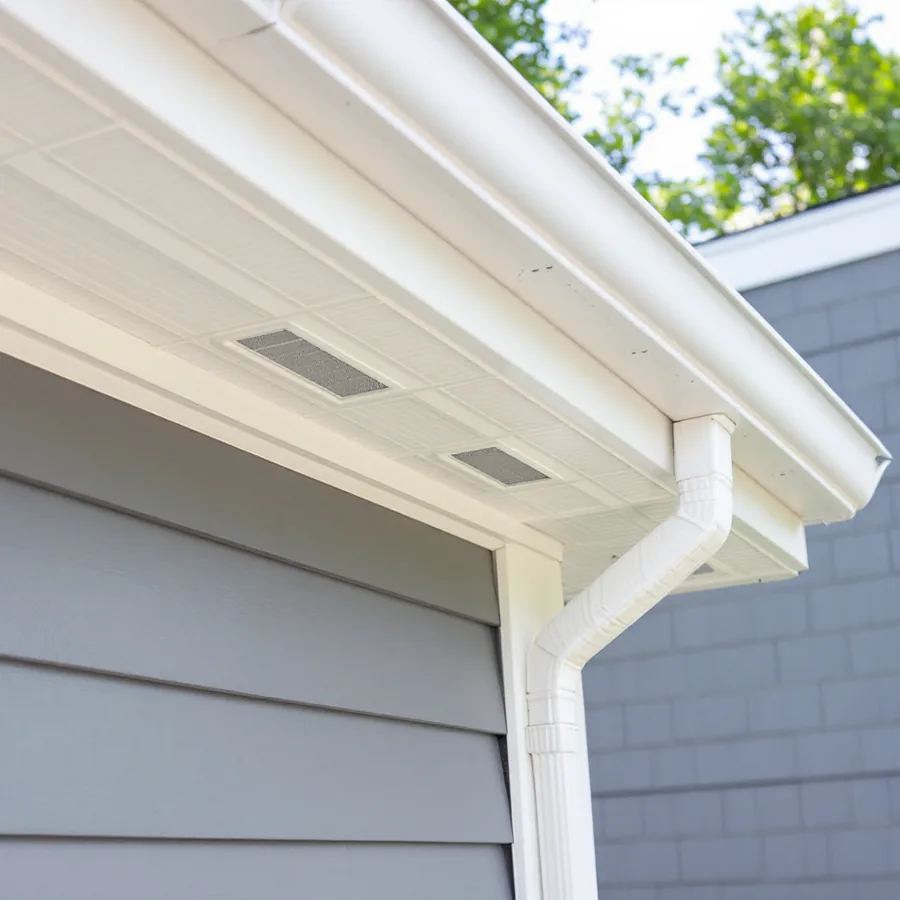
The horizontal underside of the eaves, the board behind the gutter, the vertical corner posts, the channel around every window and door. On vinyl these are accessory pieces priced per length; on fiber cement and wood they are trim boards in matching material. They are a line of their own, they are what makes a job look finished, and a quote that prices siding by the square and forgets the trim has forgotten a tenth of the job.
The things bolted to the wall
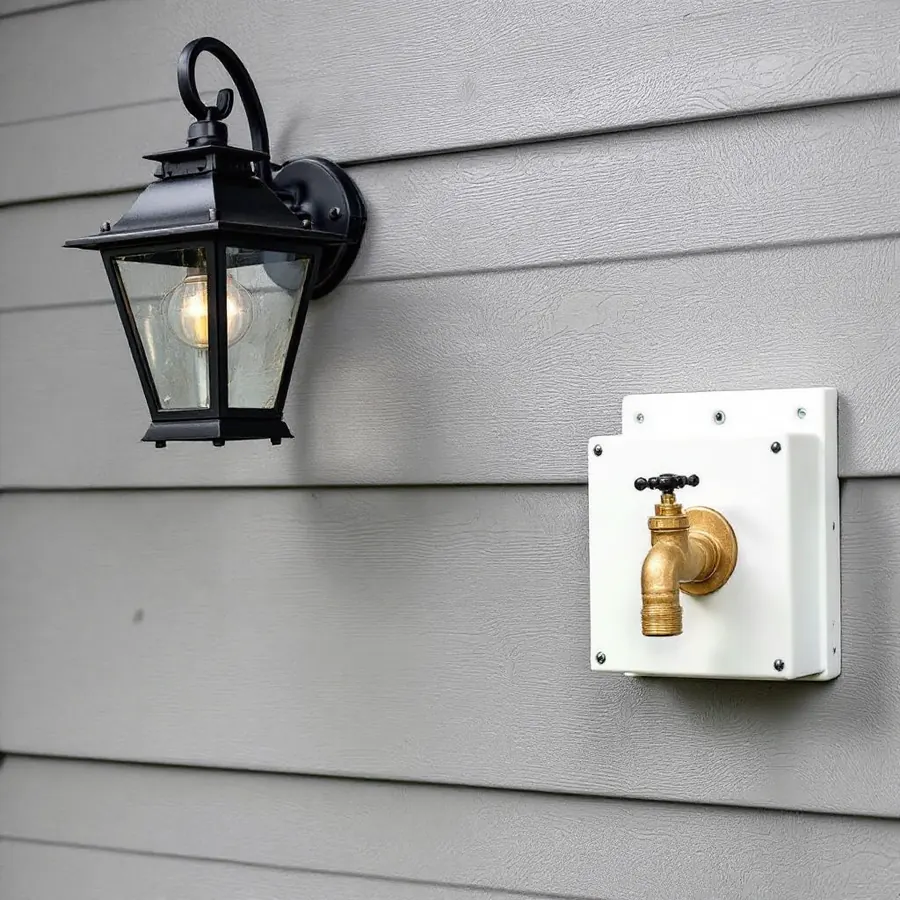
Exterior lights, dryer and bathroom vents, hose bibs, electrical boxes, the cable and the doorbell, downspouts, shutters, house numbers, the meter. Each comes off and goes back on, with a mounting block behind it on the new wall. Count them before the estimate; the crew will count them on the day.
The Most common Quote
Vinyl siding replacement cost: the same six lines, read for vinyl
The cost to replace vinyl siding is the most searched version of the question, and vinyl is the material where the six lines hide most easily inside one number.
Line one, hidden in the panel
Thickness, profile, color and whether the panel is insulated can move the material line by a factor of four on the same house. A quote that says “vinyl siding” without a thickness and a profile cannot be compared with any other quote, and it usually means the thin economy panel.
Line two, and the seams
Vinyl hangs fast, which is why its labor line is the lowest of the materials. What lengthens it is the shape of the house and the panel length: standard panels leave overlapped seams every twelve feet or so along a long wall, longer panels reduce the seams and cost more, and a crew that lays out the wall so the seams fall away from the eye is spending time a cheaper crew does not.
Lines three to six, read for vinyl
Tear-off is fast if the old siding is vinyl and slow if it is wood. The wall between is where insulated panels or a foam layer are decided. On a house built before 1978 with painted wood under the vinyl, the lead line applies exactly as it does for any other material. Trim is accessory pieces by the length. The cost to reside a house with vinyl siding is therefore not a per-square figure; it is the same six-line structure with the material line at the bottom of the range and every other line exactly where it would be for fiber cement.
Color matching, which is not a line until it is
On a whole house it does not exist. On one wall it is the whole problem, because vinyl fades in the sun and profiles are discontinued, and the new wall will not match the old three unless the old panels can be moved from a hidden wall to the visible one. The repair section below is about that.
The Other Common Quote
Fiber cement siding cost against vinyl, line by line
The comparison people search as a material price is really six comparisons, and the material is the one where the two are closest.
| Line | Vinyl | Fiber cement |
|---|---|---|
| Material | Lower per square; thickness and profile move it most. | Higher per square; factory finish versus primed moves it most. |
| Labor | Fastest of the materials; light panels, snap-lock seams. | Heavier boards, dust-controlled cutting, a fastening schedule, caulked joints; a longer day per square. |
| Tear-off and under it | Identical: the wall does not know what is going back on. | Identical. |
| Wrap, flashing, insulation | Identical, with the option of insulated panels. | Identical, with a drainage gap where the manufacturer calls for one. |
| Older-house lines | Identical: the law is about the old paint and the old shingles, not the new material. | Identical. |
| Trim and finish | Accessory pieces by length; no painting. | Trim boards in matching material; painting if primed, as a second project. |
Read across the rows and three of the six lines are the same job. Is fiber cement siding expensive? Against vinyl, the gap is the labor line and the finish, and it narrows on a house whose region installs fiber cement every day and widens on one where the crew does it twice a year. The Census figures above say which is which where you live.
Work It Out
Build the line-item list for your quote
Four questions, nothing sent anywhere, no prices. What comes out is the list of lines a quote for your house has to contain, the extras it is likely to carry, which federal lines apply, and the one question to ask first.
We are paid the same fixed fee for an introduction whether the answer is a few panels or four walls, which is why this tool has a row that says when a whole-house quote is the wrong job.
Smaller Than A House
One wall, one panel: siding repair cost, and when it is not a repair
Siding repair cost is searched by people who have one damaged wall and are being quoted four. Here is what the two smaller sizes of job are made of.
A few panels
One cracked panel, one board split by a ladder, one corner post knocked loose. The job is a visit, the replacement pieces, and the labor to unlock the damaged panels from their neighbors with a zip tool and lock the new ones in. Nothing is torn off, nothing is wrapped, and no permit is pulled. The whole question is matching: vinyl fades and profiles are discontinued, and a contractor who keeps discontinued stock, or who takes a matching panel from behind the garage and puts the new one there, has solved it for the price of an hour. Vinyl siding repair cost is that hour and those pieces, and a quote for a few panels that carries tear-off and a permit is a quote for a different job. What each kind of damage means, and how it is fixed, is on our siding repair page.
One wall
Hail on the side that faced the storm, rot under a failed gutter, a sun-faded south face. The job is that wall's squares, the material matched to the other three, labor for the wall taken to its corners so the join sits at a corner post and not mid-wall, tear-off for that wall, wrap and flashing at that wall's openings. Where the material can be matched, it is a one-wall job; where old vinyl cannot, the honest options are two walls to a corner or accepting a color step, and the choice is yours and not the estimator's.
When one wall is really the house
When all four walls are the same age and the same condition and the damaged one is simply the first to show it. Thin vinyl that has gone brittle everywhere, wood that is failing at every sill, fiber cement that was never caulked. The honest way to know is to ask the contractor to probe the other three walls and say, in writing, what they found.
After A Storm
Storm damage: what counts, in the Weather Service’s words
The most common reason one wall is quoted as four. The federal definition of a severe storm says what damages siding and what does not.
The definition
The Storm Prediction Center’s definition of a severe thunderstorm is any storm that produces a tornado, “58 mph (50 knots) or greater” winds, or “1 inch in diameter or larger.” Hail at and above that size dents aluminum and cracks vinyl on the side that faced it and leaves the other three walls alone; wind at and above that speed unlocks vinyl along its bottom edges and lifts it off in sheets from the corner that took the gust. The damage is directional and dated.
What to do the morning after
Photographs from the ground, every wall, with the date visible, before anyone arrives. They fix which wall faced the storm and what it looked like before a ladder went up. An inspection that arrives on the doorstep unasked is a sales visit, and a proposal to replace four walls for a storm that hit one has stopped describing the storm. The one-wall structure above is the honest quote; the storm did not change the arithmetic, only the wall.
Outside The Six Lines
What it does not include, and what people forget
Things that are not siding and turn up on the same bill, or turn up later.
- Windows and doors. Re-siding is the cheapest moment to replace them, because the trim comes off anyway. It is a separate trade and a separate quote, and a contractor who offers both is bundling two jobs.
- Painting. Primed fiber cement, wood and some engineered wood need a finish after installation. A separate line or a separate contractor, and a separate maintenance interval for the life of the house.
- Gutters, soffit and fascia. Often replaced at the same time because they are in the way. Their own lines.
- Landscaping and the ground. Shrubs against the wall are cut back or damaged; a deck against the wall is a slower wall. Neither is on a siding quote.
- The inside. Nailing new siding shakes a wall. Pictures come down, and a crack in old plaster is not the contractor's fault but is worth photographing before the crew arrives.
- Time. A simple house is days; a complex one is weeks; a house with rot found on the first day is longer. Ask how long, and what happens to the exposed wall if it rains.
Two Quotes
Reading two quotes side by side
Two totals cannot be compared. Two lists can. Ask both contractors for line items with the square count stated, then lay them against this.
| Line | Optional? | A strong quote says | A weak quote says |
|---|---|---|---|
| Square count | No | Measured squares, with the waste allowance stated, matching your own count within a square or two. | No count, or a count ten squares from yours. |
| Material | No | Product, profile, thickness or grade, color, factory finish or primed. | “Vinyl siding.” |
| Labor | No | A crew price for the job as scoped; stories and access acknowledged. | “Installation.” |
| Tear-off and disposal | No | How many layers, where they go, and the dumpster. | “Remove existing.” |
| Sheathing allowance | Only after a probe shows a sound wall | A per-sheet price and a probed estimate of how many. | Absent, then a change order. |
| Wrap and flashing | No | New wrap, taped; flashing at every opening, named. | Silent, or “as needed.” |
| Insulation | Yes, but ask | Offered as a line with jamb extensions included, or declined by you in writing. | Never mentioned. |
| Lead-safe work (pre-1978) | No, where the law applies | Certification number, containment and cleanup on the quote. | Not mentioned on a house that old. |
| Asbestos-cement shingles | No, where present | Side over, or trained removal with regulated disposal, as two priced options. | “We’ll take it down.” |
| Permit | No, where required | Included, with who pulls it. | “We can do it without.” |
| Trim and fixtures | No | Corners, channels, soffit and fascia by length; fixtures counted. | Discovered on the invoice. |
The Federal Trade Commission's advice on hiring any contractor sets the floor for the paper: “Get multiple estimates. A written estimate should include a description of the work to be done, materials, completion date, and the price.” And its two shortest sentences apply here more than anywhere: “Consider only contractors who are licensed and insured”, and “Don't automatically choose the lowest bidder.” The lowest of three siding quotes is very often the one that has not yet met the sheathing, the inspector or the rule about paint.
Before You Sign
What to ask before you sign
Five questions that separate a contractor who measured your house from one who priced a material.
| Ask | What it tests | A weak answer |
|---|---|---|
| How many squares did you count, and how? | Whether the house was measured or eyeballed; whether the count matches yours. | “It’s a standard two-story.” |
| Did you probe the wall, and what is the sheathing allowance? | Whether line three was priced or deferred. | “We’ll see when it’s off.” |
| The house was built in what year, and what does that mean for this quote? | Whether they know the 1978 rule and the asbestos guidance. | “Doesn’t matter for siding.” |
| What goes between the sheathing and the siding, and can I add foam? | Whether the wrap, flashing and insulation moment were thought about. | A product name. |
| What is the warranty on the work, in writing, and does it cover the flashing? | Whether the company expects to be here when the wall is tested by weather. | “Lifetime,” with nothing on paper. |
Who Is Talking
What we do, and what we do not
We are not a contractor and we do not sell siding. We are paid a fixed fee for an introduction — the same for a few panels and a whole house — which is why this page can afford to say that the cheapest quote is usually the one missing a line and that one hail-struck wall is a one-wall job. When you want a contractor to measure the house, we connect you with independent siding contractors. Who pays us and how is on our about page, and the rest of what we publish starts from the home page.
What the introduction is, and is not
It is a contractor in your area who has agreed to measure the house and put the six lines on paper. It is not a price, a promise about the day they arrive, or a guarantee of their work; those are theirs to make and yours to get in writing. Two introductions are better than one, and the table above is for reading the two against each other.
Straight Answers
Siding replacement cost questions, answered
How much does it cost to replace siding on a house?
It is six line items: the material by the square, the labor, the tear-off and what is found under it, the wrap and flashing, the federal lines on a house built before 1978, and the permit and trim. We publish no national average because one describes nobody's house; the calculator above counts your squares, the tool writes out the lines a quote for your house has to contain, and two quotes as line items can then be compared.
How much does siding cost for a 2,000 square foot house?
Two thousand square feet of floor is not a quantity of siding. A single-story house of that size can have forty percent less wall than a two-story house of the same floor area. Measure the perimeter, multiply by the height and stories, subtract the openings, add the gables and waste: that is your square count, and it is what the quote should state. The calculator on this page does the arithmetic.
Is vinyl siding cheaper than fiber cement?
To buy and to hang, usually yes: vinyl's material line is lower and it installs faster. To own, it depends on the thickness of the vinyl, whether the fiber cement arrives factory-finished or needs painting, and the climate. The Census Bureau's survey shows new houses now split between vinyl at 26 percent and fiber cement at 23 percent nationally, with the region deciding more than the price does.
Does one damaged wall mean the whole house?
Usually not. Hail, a failed gutter and a lawn mower each damage one wall, and it is a one-wall job if the material can be matched and the join taken to a corner. Old vinyl that cannot be matched leaves two honest options: two walls to a corner, or a color step you accept. Ask the contractor to probe the other three walls and write down what they found.
What changes on a house built before 1978?
Under the EPA rule, a firm paid to disturb painted surfaces in a home built before 1978 must be certified and must work lead-safe. Old painted siding under new siding is a painted surface. That adds certification, containment and cleanup to the quote, and a contractor who is not certified cannot lawfully take the job. Cement shingles from the same era may contain asbestos and are either sided over or removed by trained people.
What is a square, and how much siding do I need?
One hundred square feet of wall. Your count is gross wall area minus openings plus gables, divided by a hundred, plus a waste allowance of ten to twenty percent depending on the house's shape. That count, with waste, is the number for the order and the number on the quote; the calculator above produces it from your tape measure.
Should I add insulation when re-siding?
The Department of Energy's presentation on the subject reports that very few re-siding projects add an inch or more of exterior continuous insulation and that half add only fan-fold, which is a flat backer rather than insulation. The day the wall is bare is the cheapest day of its life to add a taped foam layer. Ask what goes between the sheathing and the siding and whether foam is a line you can add, with the jamb extensions it needs.
Where This Comes From
Sources
- Carpenters' median wage, the 10th and 90th percentiles and job outlook — U.S. Bureau of Labor Statistics, Occupational Outlook Handbook: Carpenters.
- Lead-safe certification for work on homes built before 1978 — U.S. Environmental Protection Agency, Renovation, Repair and Painting Program.
- Asbestos in siding shingles, and when it is and is not a hazard — U.S. Environmental Protection Agency, Protect Your Family from Exposures to Asbestos and Learn About Asbestos.
- Re-siding practice and the missed insulation opportunity — U.S. Department of Energy / Pacific Northwest National Laboratory, Adding Insulation when Re-Siding (AIRS), 2023 peer review presentation.
- Primary exterior wall material of new single-family houses, by region — U.S. Census Bureau, Survey of Construction: Characteristics of New Housing.
- The definition of a severe thunderstorm — NOAA Storm Prediction Center, SPC Products.
- Hiring a contractor: licensing, written estimates and the lowest bidder — Federal Trade Commission, Consumer Advice: How To Avoid a Home Improvement Scam.
Our editorial standards explain how we source and check what we publish. Every quotation on this page is taken from the federal page or file linked beside it; the calculator counts area, not money; and we publish no price averages. We are a referral service rather than a contractor. Last updated .
Before you call anyone
The flat-fee match — we are paid for the introduction, not for the size of your job
Most siding advice is written by the company that wants to do the work or the company that makes the product. That is not a failing of the people who read it; it is a defect in who is talking: the measurement, the estimate and the invoice come from one party, and no amount of care on your side fixes that.
We are built the other way round. We do not install, repair or sell anything, so the payment reaches us when you are connected to a licensed, insured siding contractor — the same amount whether you need one panel replaced or four walls re-clad. Nobody here has a reason to talk you into the larger number. You can check that rather than take it on trust: how we make money is written down, and this site keeps telling readers when one wall is enough. Why does not everyone work this way? Because a flat fee leaves money on the table every time the job turns out to be big.
Waiting is the one thing that actually costs money. A wall that is open to the weather does not get better and does not wait for a convenient week; the water that gets behind the siding finds the sheathing, the framing and the drywall inside. A cracked panel over a window lets the next storm in. And if it turns out to be one panel and a quarter-hour, say so when you ask. We will tell you, and that answer earns us nothing.
Not for you if: you want a price over the phone — nobody honest gives one without measuring the house; you need a guarantee of arrival within the hour — we cannot promise that for a company we do not run; the building is commercial; or you would rather do it yourself, in which case the pages on this site are written so that you can.