Siding Companies · Pittsburgh, Pennsylvania
Siding companies in Pittsburgh: what Pennsylvania law and the city ask you to check
Home › Pittsburgh siding companies · Researched by the Siding Pros USA editorial team · · 18 min read
Siding companies in Pittsburgh answer to a state law, two city offices and a county health department. Here is how to check a firm's Pennsylvania registration, what its contract must contain, which permit the city issues, and what twenty years of NOAA storm reports say about Allegheny County.
Siding companies in Pittsburgh: the short version
Type “siding companies pittsburgh” or “siding pittsburgh pa” into Google and it opens with a map of two or three firms. This page covers the checks that map leaves out, because the city and the Commonwealth each ask for different things before new siding goes up.
- Registration comes first. A home improvement contractor registers with the Attorney General and prints its PA number on every contract.
- The contract has thirteen required parts. You also get three business days to cancel.
- Deposits have a ceiling. Above $5,000, no more than one-third of the price, plus special-order materials named in writing.
- The city issues siding permits. “Siding/Veneer” is an EZ Permit, except in historic districts and floodplains.
- Old walls change the job. 48.4 percent of city homes predate 1940: plan for lead paint, and test old shingles before removal.
- Wind is the storm to plan for. Allegheny County logged 859 severe wind reports against 187 of severe hail.

Our Count
Allegheny County storm reports, 2006–2025: our NOAA count
Census files place all of Pittsburgh in Allegheny County. We counted its severe hail and wind reports in twenty yearly NOAA Storm Events files, and those of four neighbors.
| County | Hail 1 inch or larger (days) | Hail 1.75 inches or larger | Largest hail | Wind 50 knots or more | Wind 65 knots or more | Strongest wind |
|---|---|---|---|---|---|---|
| Allegheny | 187 (47) | 27 | 2.00 in | 859 | 22 | 80 knots |
| Westmoreland | 104 (37) | 21 | 2.00 in | 627 | 10 | 77 knots |
| Butler | 85 (29) | 8 | 2.50 in | 322 | 13 | 80 knots |
| Washington | 61 (22) | 20 | 3.00 in | 397 | 5 | 71 knots |
| Beaver | 31 (23) | 2 | 1.75 in | 302 | 5 | 70 knots |
187 hail reports, none bigger than two inches
Our hail line is the Storm Prediction Center's: “Hail 1 inch in diameter or larger.” Allegheny County crossed it on 47 days, in 18 of twenty years. Only 27 reports reached 1.75 inches; the largest, 2.00 inches, fell on four dates from 2011 to 2024.
Westmoreland, Butler, Washington and Beaver for comparison
The neighbors logged fewer hail reports, from 104 in Westmoreland down to 31 in Beaver, yet the biggest stones fell there: 3.00 inches in Washington, 2.50 inches in Butler. Allegheny has the most people, and more people send more reports.
Our Count
Wind, more than hail, is what Pittsburgh siding has to survive
The SPC calls “Damaging winds or speeds of 58 mph (50 knots) or greater” severe. Allegheny County logged 859 such reports on 180 days, 4.6 times its count of severe hail. June led with 242, then April with 163.
| Month | Hail reports | Wind reports |
|---|---|---|
| January | 0 | 3 |
| February | 0 | 2 |
| March | 31 | 18 |
| April | 38 | 163 |
| May | 35 | 64 |
| June | 28 | 242 |
| July | 30 | 129 |
| August | 20 | 136 |
| September | 5 | 51 |
| October | 0 | 10 |
| November | 0 | 39 |
| December | 0 | 2 |
| Twenty years | 187 | 859 |

Wind works on loose laps, corners and trim, so ask how the panels will be fastened.
Our Count
August 25, 2023, and the windiest days on record here
The SPC calls “Wind speeds of 75 mph (65 knots) or greater” significant severe. The county logged 22 such reports on 10 days, and 13 came on one evening, August 25, 2023, with estimates up to 78 knots. The strongest gust in the files, 80 knots, is from February 11, 2009: a winter storm.
Our Count
The hail days that filled the reports
A handful of storms produced a large share of the hail reports. April 2, 2025 alone produced 23 reports, with stones to 1.75 inches. March 23, 2011 added 19; July 4, 2012 and May 25, 2024 added 15 each. Those three days alone account for 30 percent of the county's reports.
Any hail damage siding suffers here comes from stones of two inches or less, mostly between March and July. April and May hold 39 percent of reports, and 66 percent began between 2 and 10 p.m. standard time. Reading the marks is a siding repair question.
Method
What a storm-report count can and cannot prove
Each row we counted is a report that reached the National Weather Service, not every storm. One storm may send many reports from a busy county and none from a quiet ridge. We drew no yearly trend and no damage totals.
Housing Stock
Nearly half of Pittsburgh's homes were built before 1940
The Census Bureau's American Community Survey for 2019–2023 counts 159,667 homes in the city. 48.4 percent date from 1939 or earlier, against 28.2 percent across Allegheny County. More than four in five city homes predate 1980.
| Built | City of Pittsburgh | Allegheny County | What it can mean on the wall |
|---|---|---|---|
| 1939 or earlier | 48.4 percent | 28.2 percent | Original wood may sit under later layers |
| 1959 or earlier | 69.0 percent | 54.6 percent | All pre-1978: the EPA lead rule covers paid work |
| 1979 or earlier | 83.4 percent | 77.2 percent | Mostly pre-1978; check each house |
| 2000 or later | 9.0 percent | 10.2 percent | Outside the federal lead rule |

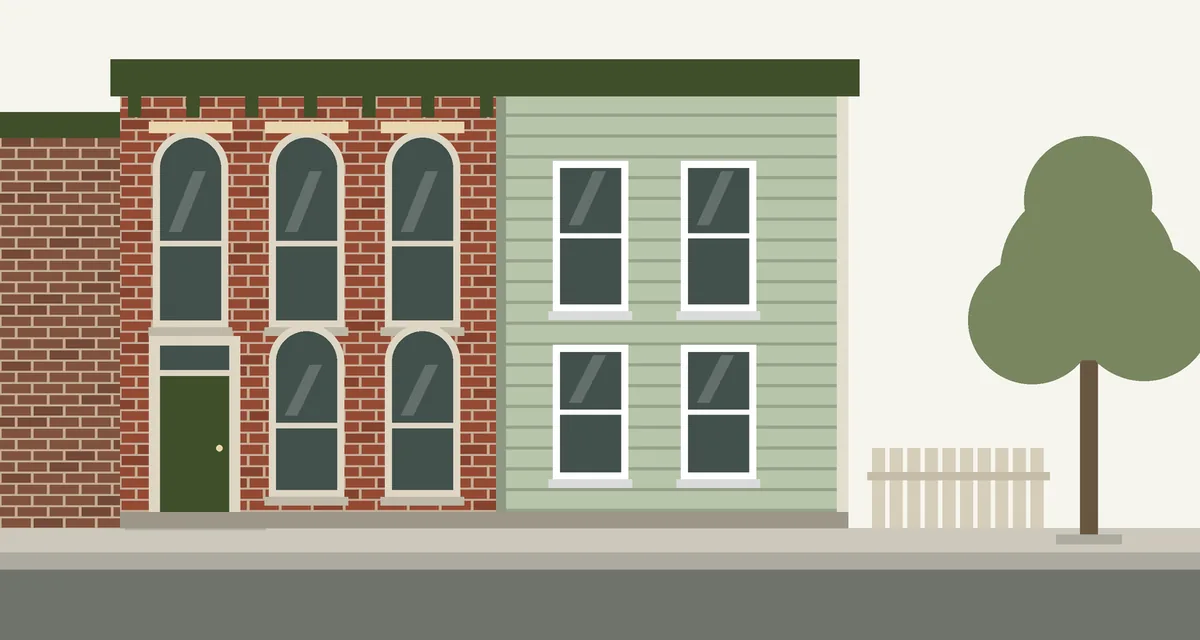
Rowhouses and twins: 14.2 percent of homes share a wall
Census table B25024 puts attached single-family homes, the rowhouses and twins, at 14.2 percent; detached houses at 43.7 percent. On a shared wall, the seam with the neighbor's siding belongs in the contract.
Owners and renters
Owners occupy 47.2 percent of occupied homes. That matters for lead paint: owners working on their own home are outside the EPA rule, but renting out part of it brings the rule back.
State Law
HICPA in plain words: Pennsylvania's home improvement law
The Pennsylvania Home Improvement Consumer Protection Act, Act 132 of 2008 (73 P.S. § 517.1 and after), governs nearly every siding job here. Its list of covered work names “porches, garages, roofs, siding, insulation, solar energy systems”.
It applies to work “for which the total cash price of all work agreed upon between the contractor and owner is more than $500”, a threshold in the law rather than a price. Above that line, every siding job is covered, whoever does it. A breach also counts under the state's consumer protection law of December 17, 1968.
State Law
Registered with the Attorney General is not the same as licensed
Section 3 is blunt: no one shall “perform any home improvement without first registering with the bureau”. A PA home improvement contractor registration lasts two years; subcontractors register too.
Whichever siding company you call should print that number on its estimate. Registration is a filing, not a test: the AG says the insurance details it collects are “not related to contractor performance or quality of work”, and its sample contract line ends “Registration does not imply endorsement.”
Home improvement contractor vs general contractor in Pittsburgh
Since 2009, “Political subdivisions in Pennsylvania cannot separately license or register home improvement contractors”. Pittsburgh still licenses general contractors for commercial work. Its 2022 licensing rules let a firm offer a valid HIC registration “in lieu of obtaining a general contractor license”, and the EZ Permit page accepts a registered HIC on homes.
State Law
Looking up a contractor's PA registration number
The number reads PA plus digits, such as PA123456. Enter the name or number in the Pennsylvania Attorney General's Home Improvement Contractor Search; a web search for a “home improvement contractor license PA lookup” ends at the same database.
When the search comes back empty
An empty result is a reason to ask, not proof. The AG's system was down from August 8, 2025, and its notice says: “Effective April 24, 2026, the online registration system is operational.” New firms and renewals in that window “were able to operate during the outage”, some on paper. Ask for a copy of the filing.
State Law
Who the registration rule does not cover
Very small operators are exempt, and three official texts word it differently. We quote all three:
- The statute: “less than $5,000 during the previous taxable year”.
- The Attorney General's FAQ: “less than $5,000 of work in a calendar year”.
- The Insurance Department guide: register “if they do more than $5,000 of business per year in Pennsylvania”.
Most siding contractors in Pittsburgh work well past that line. Retailers worth more than $50 million are out too, but not their subcontractors.
The Contract
The thirteen things a Pennsylvania siding contract must contain
Under section 517.7(a), no contract “shall be valid or enforceable against an owner unless it” meets thirteen items. Hold any siding contract example a firm sends against this table.
| Item | The law requires | What to look for |
|---|---|---|
| (1) | Written, legible, with the registration number | PA number of the firm doing the work |
| (2) | Signed by owner and contractor | Both signatures, no blank lines |
| (3) | The entire agreement | Nothing promised only aloud |
| (4) | Date of the transaction | The day you sign |
| (5) | Contractor's name, address and phone | A street address, not a post office box |
| (6) | Approximate start and completion dates | Two dates, not “in the fall” |
| (7) | Work, materials and specifications | Brand, line, color, trim |
| (8) | Total sales price | One figure, or time and materials terms |
| (9) | Down payment and special-order money | Listed separately |
| (10) | Known subcontractors | Names, addresses, phone numbers |
| (11) | Liability insurance | Cover in force on the signing date |
| (12) | The AG's toll-free number | The Bureau of Consumer Protection line |
| (13) | Notice of the right to cancel | The written notice, attached |

Written, signed, dated, with the registration number
Item (1) reads: “Is in writing and legible and contains the home improvement contractor registration number of the performing contractor.” Under item (5), “a post office box number alone shall not be considered an address”.
Work, materials and specifications
Item (7) wants specifications “that cannot be changed without a written change order signed by the owner and the contractor”. Name the siding line, profile, color, trim and wrap.
Down payment and special-order materials
Item (9) lists “the amount of any down payment plus any amount advanced for the purchase of special order materials”. Custom colors and trim are typical special orders.
Subcontractors and insurance
Item (10) asks for every subcontractor “known at the date of signing the contract”; item (11), for the insurance in force.
The Contract
Three business days to cancel, wherever you signed
Pennsylvania lets the owner cancel without penalty “regardless of where the contract was signed, within three business days of the date of signing”. The federal rule, 16 CFR 429, covers only sales away from the seller's place of business. Without the written notice, the AG warns, “the entire contract may be voidable even after the three days has passed”.
The Contract
The one-third deposit limit
On a contract above $5,000, section 517.9 caps the deposit at “one-third of the home improvement contract price”, or one-third plus special-order materials designated in the contract. A retailer that posts an irrevocable letter of credit with the bureau is exempt.
The same section lists among banned acts: “Demand or receive any payment for a home improvement before the home improvement contract is signed.” If more than 45 days pass after the contract's start date with no substantial work done, a refund asked for by certified mail is due within ten days.
The Contract
Insurance the contract has to state
Item (11) makes the contractor keep “liability insurance covering personal injury in an amount not less than $50,000”, with the same floor for property damage, and state the cover held at signing. Ask for the certificate and match the insured name to the contract.
The Contract
Clauses that make a contract voidable, and acts the law bans
Under section 517.7(e), the owner may void a contract that contains a hold harmless clause, “A confession of judgment clause”, a waiver of jury trial, a promise of the contractor's attorney fees, or a waiver of rights under the act. An arbitration clause must be in capital letters.
Section 517.9 also forbids a firm to “Deviate from or disregard plans or specifications, in any material respect, without a written change order”. Swapping your chosen siding line mid-job without paper breaks it.
State Law
Filing a complaint about a home improvement contractor
A PA home improvement contractor complaint goes to the Attorney General's Bureau of Consumer Protection through its online complaint form. Attach the contract, payments, photos and letters; the firm's PA number ties the file to its registration.
City Rules
Pittsburgh siding permits: the EZ route through OneStopPGH
The state building code steps back here. 34 Pa. Code § 403.1 excludes “Installation of aluminum or vinyl siding onto an existing residential or an existing commercial building”. Pittsburgh, though, lists “Siding/Veneer” among its residential EZ Building Permits.
Which building permit Pittsburgh issues depends on the address. An EZ Permit covers one scope with no plans: “Eligible applications are issued within one business day after the required application and license information is verified.” For a siding installation, Pittsburgh, PA takes applications only through OneStopPGH.

Who may do the work under the permit
On homes, PLI accepts “The homeowner, if performing work on their primary residence”, a city-licensed contractor, or “A registered Pennsylvania Home Improvement Contractor (HIC)”. “General contractors must also provide RRP certification.”
When the EZ route is closed
The ineligible list starts with “Projects located within a floodplain” and “Projects located within a historic district or on historic properties”. Those, and jobs with several scopes, take a standard application.
City Rules
Pittsburgh building permit search by address
Ask the firm for the permit number before work starts. Permits and inspections live in the OneStopPGH portal, and the PLI Permit Center keeps a page titled “What is the Status of My Permit?” For ownership, PLI itself relies on the Allegheny County Real Estate Portal.
City Rules
16 historic districts and 67 landmarks: the HRC review
For exterior work in a Pittsburgh historic district, the city says “approval by the Historic Review Commission (HRC) is required”. We counted the city's list: 16 districts, 67 individually designated properties and two sites.
| Historic district | Neighborhood |
|---|---|
| Allegheny Commons Park Historic District | Allegheny Center |
| Allegheny West Historic District | Allegheny West |
| Alpha Terrace Historic District | East Liberty |
| Deutschtown Historic District | East Allegheny |
| East Carson Street Historic District | South Side Flats |
| Lemmon Row Historic District | Central Northside |
| Manchester Historic District | Manchester |
| Market Square Historic District | Downtown |
| Mexican War Streets Historic District | Central Northside |
| Mexican War Streets Expansion Historic District | Central Northside |
| Murray Hill Avenue Historic District | Squirrel Hill North |
| Oakland Civic Center Historic District | Central Oakland |
| Oakland Square Historic District | Central Oakland |
| Penn Liberty Historic District | Downtown |
| Roslyn Place Historic District | Shadyside |
| Schenley Farms Historic District | North Oakland |
The city notes that its list is being updated and points readers to its map instead. That Pittsburgh historic district map, on the designations page, settles a doubtful address.
Manchester, the Mexican War Streets and the Certificate of Appropriateness
For the Manchester Historic District, Pittsburgh posts its own map and design guidelines on the list page. The Mexican War Streets guidelines say: “Existing wood siding should be retained and repaired or replaced as needed.” Vinyl or aluminum “may be used on the sides and rear, if they are not very visible”. Staff can approve repairs where “color, size, texture, shape, and composition of building materials remain unchanged”; a material change goes to the Commission.
Older Walls
Insulbrick and asbestos-cement shingles on older walls
Strip a Pittsburgh siding job to the first wall and you may find a layer in between: insulbrick, a sheet siding made to look like brick, or flat cement shingles.
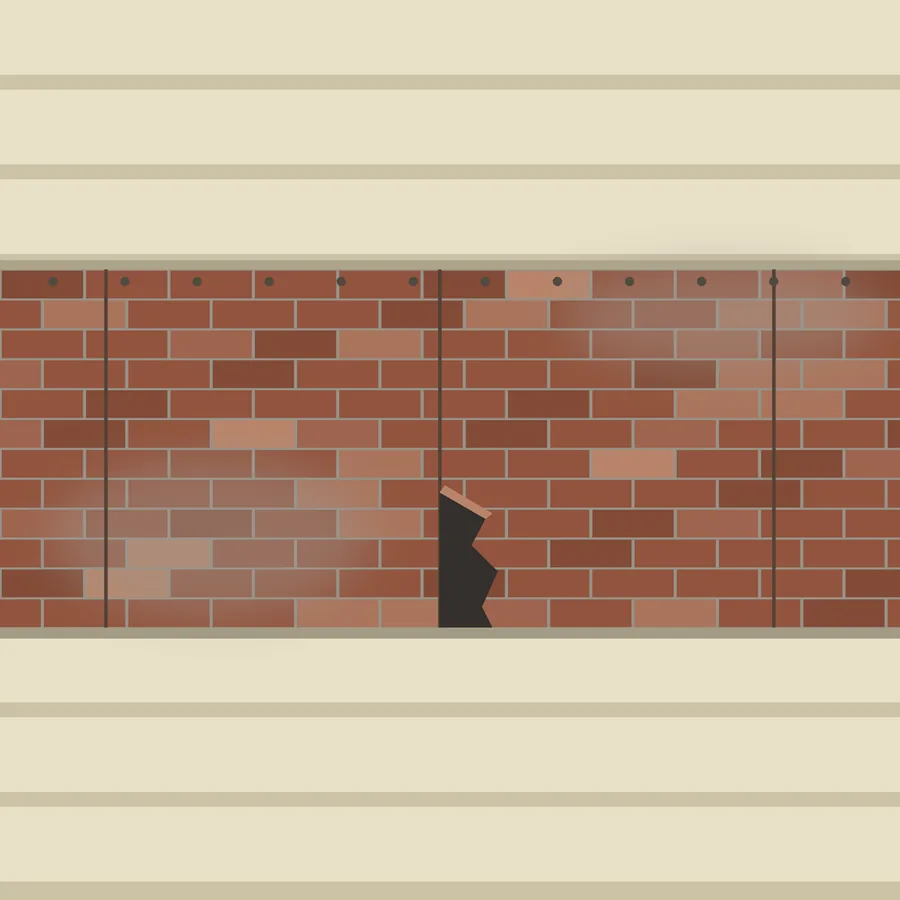
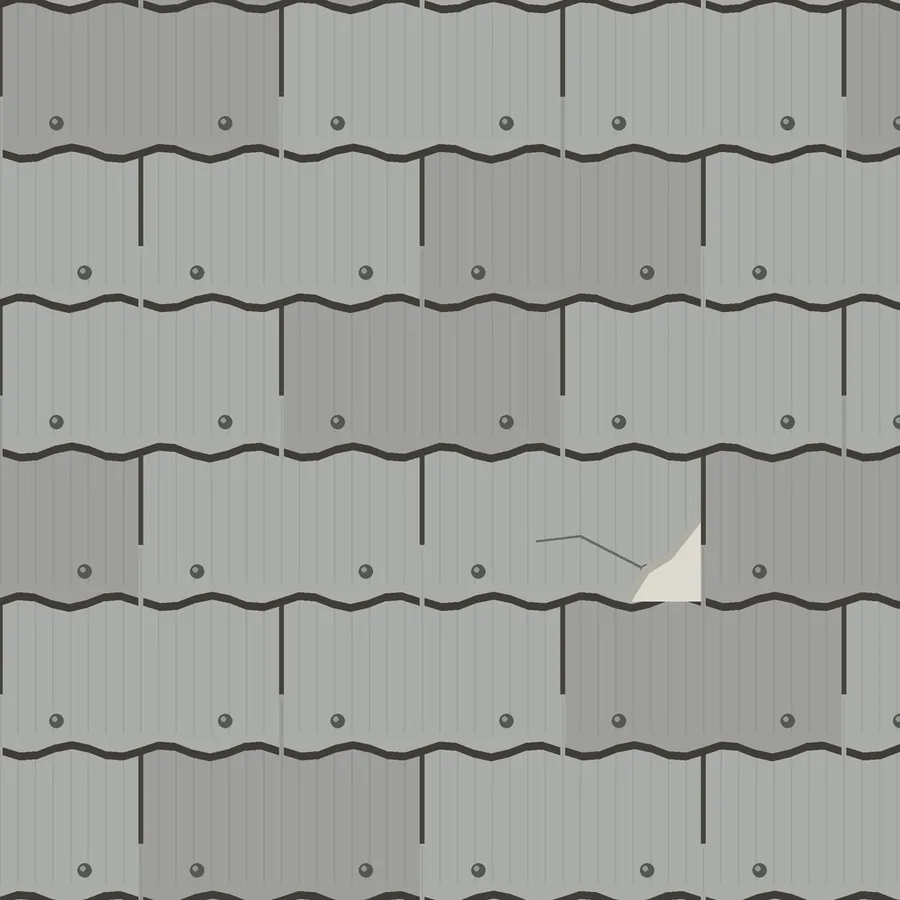

Can you put vinyl siding over insulbrick?
No rule in our sources forbids it. The state code skips vinyl on an existing house, though the city still lists siding among EZ Permits. What to check: the vinyl maker's manual and whether the old layer is sound and dry.
Does insulbrick siding contain asbestos?
No official source we found states what insulbrick is made of, so we claim nothing either way. Asbestos siding identification is a lab job: a sample tested before anyone cuts, sands or tears the old layer.
Insulbrick siding removal under Allegheny County rules
“Allegheny County requires that all asbestos abatement contractors be licensed through the ACHD.” Yet renovation activities “performed for a private home owner of a residential structure with 4 or fewer dwelling units are exempt from the asbestos regulations”, unless part of a larger project, and “Dust control measures and other Article XXI regulations still apply.” Above four units, facility rules apply.
Older Paint
Lead paint under the old siding
The EPA's Renovation, Repair and Painting rule wants “anyone paid to perform work that disturbs painted surfaces in homes, childcare facilities and preschools built before 1978” certified. With 69.0 percent of city homes built by 1959, that means most Pittsburgh houses.
Can you cover lead paint with vinyl siding?
Covering is not removal, but nailing, scraping and trim work disturb paint. The rule's exterior minor-work cutoff is “20 square feet or less of painted surface”, and a full re-siding job is likely to pass it. Ask for the firm's EPA certificate before work begins.
Does aluminum siding have lead paint?
No source we read settles whether a given aluminum finish holds lead. If it was repainted, or the house predates 1978, treat the paint as possible lead paint until tested. The EPA notes: “In 1978, the federal government banned the sale of lead-based paint for use in homes”.
Materials
Which materials Pittsburgh siding companies put up
Our guide to siding types compares materials; the home page shows what builders use by region.
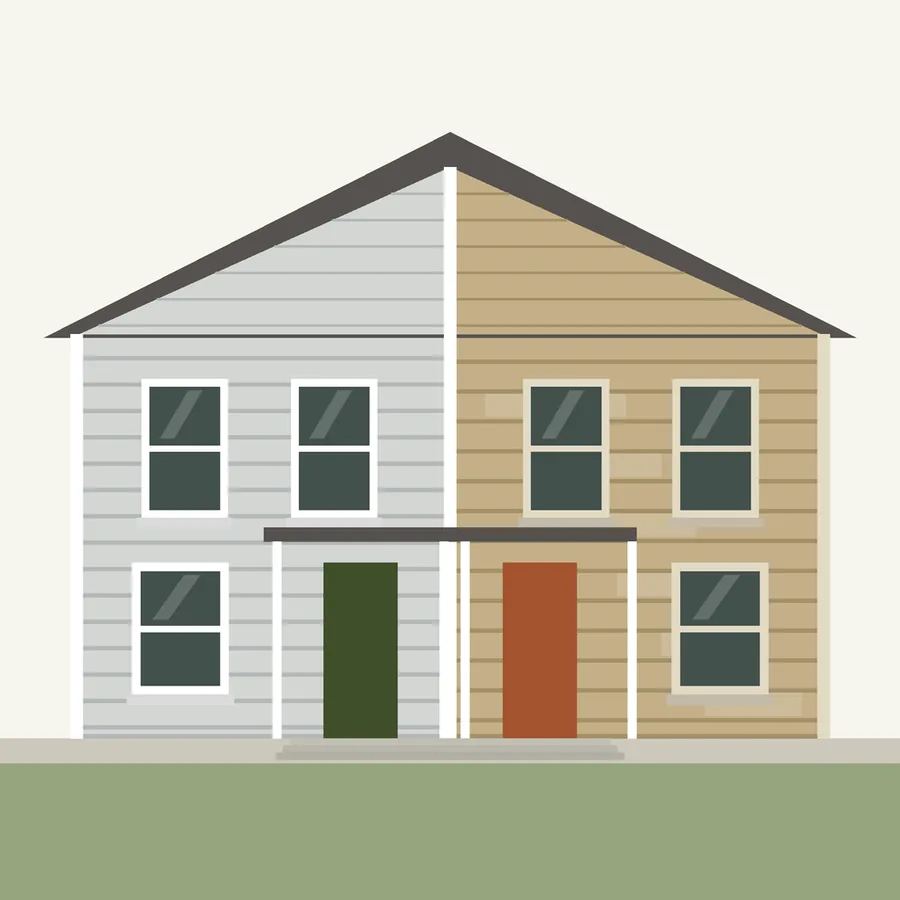
Vinyl and insulated vinyl
Ask the vinyl siding installers on your shortlist whether anyone on the crew holds the “VSI Certified Installer” credential, listed in the institute's online database. The same goes for insulated vinyl siding: Pittsburgh firms that sell it should name the product line. More on vinyl siding.
Fiber cement: what to ask about the Hardie siding Pittsburgh firms offer
James Hardie sells its HZ5 line for climates with “freezing temperatures, extreme seasonal temperature variations, and snow and ice”, in the maker's words. If a bid just says “Hardie plank siding,” Pittsburgh crews should still write in the exact product and line. See fiber cement.
Wood, aluminum and steel
To match one damaged panel of aluminum siding, Pittsburgh owners should ask whether the old profile is still made. Wood: wood siding; steel and aluminum: metal siding.
The Contract
Warranties: the maker's, the installer's and who registers them
The maker covers the product, the installer the work. HICPA item (3) makes the contract the entire agreement, so every promise belongs on paper.
The maker's product warranty
Read the maker's warranty for a registration step before the job ends. If James Hardie siding warranty registration applies, settle in the contract who files it, and keep the confirmation.
The installer's workmanship warranty
A siding workmanship warranty says whatever the firm writes. Ask for its length, what it covers (leaks, loose panels, trim) and whether it passes to a buyer.
Planning
Comparing estimates from two or three companies
A house siding estimate compares only if the scope matches. Before the first visit, measure the walls with our squares calculator so every firm prices the same area.
Then line up the bids: product line, wrap, trim, tear-off, disposal, lead-safe work, start date. On a siding replacement, Pittsburgh, PA permits come into play, so bids should also say who applies.
After a Storm
After a windstorm: insurance claims and door-to-door crews
The Pennsylvania Insurance Department warns: “Be wary of anyone who knocks at your door, including contractors and public adjusters who may try to take advantage of you.” Its advice: “Verify that the contractor is both registered and insured.”
The insurance claim
A public adjuster is state-licensed and works for you. The law makes one disclose any interest, “including ownership of or compensation expected to be received from a construction firm”, and section 5(d) bars the adjuster from contracting to repair the same loss before the claim is paid or decided.
Repair before replacement
A Pittsburgh siding repair of a few panels may not need a new wall. For siding repair, Pittsburgh, PA homeowners can start with our repair guide. Siding cleaning: Pittsburgh, PA crews that offer it after a storm are doing a separate job, so photograph the walls first.
Search Record
Who appeared in the Pittsburgh map results on October 28
On October 28, 2026 we searched “siding companies pittsburgh” from six points: the whole United States, Pittsburgh, Mount Lebanon, Monroeville, Bethel Park, Wexford. A map led every time; Cousins Roofing Siding & Decks and Ideal Siding Pittsburgh were in all six. We also ran “siding company pittsburgh pa” and “siding installers pittsburgh”, and the same two firms led both maps.
The third place changed: McClellands Contracting and Roofing, Oaks Roofing & Siding, Legacy Remodeling, PJ Fitzpatrick, Ideal Siding South Hills, Ideal Siding North Hills. Google also suggests “best siding contractors pittsburgh” as a related search. We record who appeared; we do not rank Pittsburgh siding contractors, and no Pittsburgh siding company paid to be named here.
Before You Sign
Questions to ask a siding contractor before you sign
Working out how to choose a siding contractor? Each question below comes from a rule on this page, and siding contractors in Pittsburgh should answer all of them in writing.
- What is your PA registration number, and does it match the Attorney General's search?
- Who will do the work, and are the subcontractors named in the contract?
- What insurance is in force today, and may we see the certificate?
- Who applies for the city permit: EZ, standard, or historic review first?
- Is your firm EPA lead-safe certified for a house built before 1978?
- If the old layer is cement shingles, who tests it and who removes it?
- How large is the deposit, and which special-order materials does it cover?
Work It Out
Check your Pittsburgh siding job
Seven answers about the house and the deal; the panel lists the rules that reach the job.
Whatever the answers, start with the firm's PA number in the Attorney General's search.
| Situation | Rule | Who enforces it |
|---|---|---|
| Any job over $500 | Written HICPA contract with the PA number | PA Attorney General |
| Contract over $5,000 | Deposit capped at one-third plus special orders | PA Attorney General |
| Re-siding in the city | EZ Permit “Siding/Veneer” or a standard permit | City PLI |
| Historic district or landmark | Certificate of Appropriateness first | Historic Review Commission |
| Paid work, pre-1978 house | EPA-certified firm, lead-safe practices | U.S. EPA |
| Cement shingles, over four units | Licensed abatement, facility rules | Allegheny County Health Department |
| Storm claim | Registered, insured firm; licensed public adjuster | PA Insurance Department |
How We Help
How Siding Pros USA introduces Pittsburgh homeowners to contractors
We are researchers, not a siding firm: we do no siding work and send no crews. On request, we match a Pittsburgh homeowner with independent siding companies; the estimate, contract and warranty stay between you and the firm you pick. Run the checks above on any firm.
Questions
Pittsburgh siding company questions
Does a siding contractor need a license in Pittsburgh?
For a house, a Pennsylvania HIC registration with the Attorney General; Pittsburgh accepts it on residential EZ Permits.
Do I need a permit to replace siding in Pittsburgh?
PLI lists Siding/Veneer among residential EZ Permits, filed through OneStopPGH. Historic districts and floodplains take the standard route.
How much deposit can a siding company ask for in Pennsylvania?
On a contract above $5,000, at most one-third of the price plus special-order materials named in the contract, and nothing before signing.
Can I cancel a siding contract in Pennsylvania?
Yes: within three business days of signing, wherever you signed, without penalty. Cancel in writing.
Is hail or wind the bigger risk for Pittsburgh siding?
In our Allegheny County count for 2006 to 2025, severe wind reports outnumbered severe hail 4.6 times, and no stone topped 2.00 inches.
Do you install siding in Pittsburgh?
No. We introduce homeowners to independent siding companies; we do no siding work.
Where This Comes From
Where every Pittsburgh figure on this page comes from
- Hail and wind: counted by us from the NOAA NCEI Storm Events bulk files, 2006 to 2025, file revisions c20260323 for 2006-2016, 2018-2021, 2023; c20260519 for 2017; c20260625 for 2022; c20260728 for 2024; c20260819 for 2025. Thresholds: NOAA SPC.
- City, county, homes: Census 2020 place file; ACS 2019–2023 tables B25034, B25024, B25003.
- Pennsylvania law: Act 132 of 2008 (HICPA), amended 2011 and 2014; Act 72 of 1983, public adjusters; 34 Pa. Code § 403.1.
- Attorney General: HIC FAQ, registration notice; Insurance Department: natural disaster guide.
- City of Pittsburgh: EZ Permits, work without a permit, contractor licenses, historic review, COA guide, Mexican War Streets guidelines.
- Allegheny County Health Department: asbestos, 2022 fact sheet, Article XXI rules, 2025.
- Federal rules: EPA RRP; 40 CFR 745.83; 16 CFR 429. Makers: Hardie Zone System, VSI Certified Installer.
Read our editorial standards. Our counts can be repeated from the files above. Texas and Colorado rules differ: see Dallas and Denver. Last checked .
Before you call anyone
The flat-fee match — we are paid for the introduction, not for the size of your job
Most siding advice is written by the company that wants to do the work or the company that makes the product. That is not a failing of the people who read it; it is a defect in who is talking: the measurement, the estimate and the invoice come from one party, and no amount of care on your side fixes that.
We are built the other way round. We do not install, repair or sell anything, so the payment reaches us when you are connected to a licensed, insured siding contractor — the same amount whether you need one panel replaced or four walls re-clad. Nobody here has a reason to talk you into the larger number. You can check that rather than take it on trust: how we make money is written down, and this site keeps telling readers when one wall is enough. Why does not everyone work this way? Because a flat fee leaves money on the table every time the job turns out to be big.
Waiting is the one thing that actually costs money. A wall that is open to the weather does not get better and does not wait for a convenient week; the water that gets behind the siding finds the sheathing, the framing and the drywall inside. A cracked panel over a window lets the next storm in. And if it turns out to be one panel and a quarter-hour, say so when you ask. We will tell you, and that answer earns us nothing.
Not for you if: you want a price over the phone — nobody honest gives one without measuring the house; you need a guarantee of arrival within the hour — we cannot promise that for a company we do not run; the building is commercial; or you would rather do it yourself, in which case the pages on this site are written so that you can.