Siding Contractors · San Antonio, Texas
Siding contractors in San Antonio: city permits, registrations and our hail and heat counts
Home › Siding replacement › San Antonio · Reviewed by the Siding Pros USA editorial team · · 19 min read
San Antonio puts siding replacement on its residential repair permit, and the contractor who pulls it has to be registered with the city. Bexar County logged 102 reports of hail 1.75 inches or larger in our NOAA count, and the airport station saw 533 days of 100°F or more.
Before you call a San Antonio siding company
- Ask for the city registration number. Development Services registers Home Improvement and Residential Building contractors, and the repair permit form has a line for that number.
- Expect a permit for a tear-off. Siding replacement is listed on the city's Residential Repair Permit; new siding laid over the old needs none.
- Two walls or more is a bigger review. The form sends jobs that repair or replace two or more exterior walls to plan review.
- Historic districts come first. In the 32 local districts, every exterior repair needs a Certificate of Appropriateness before work starts.
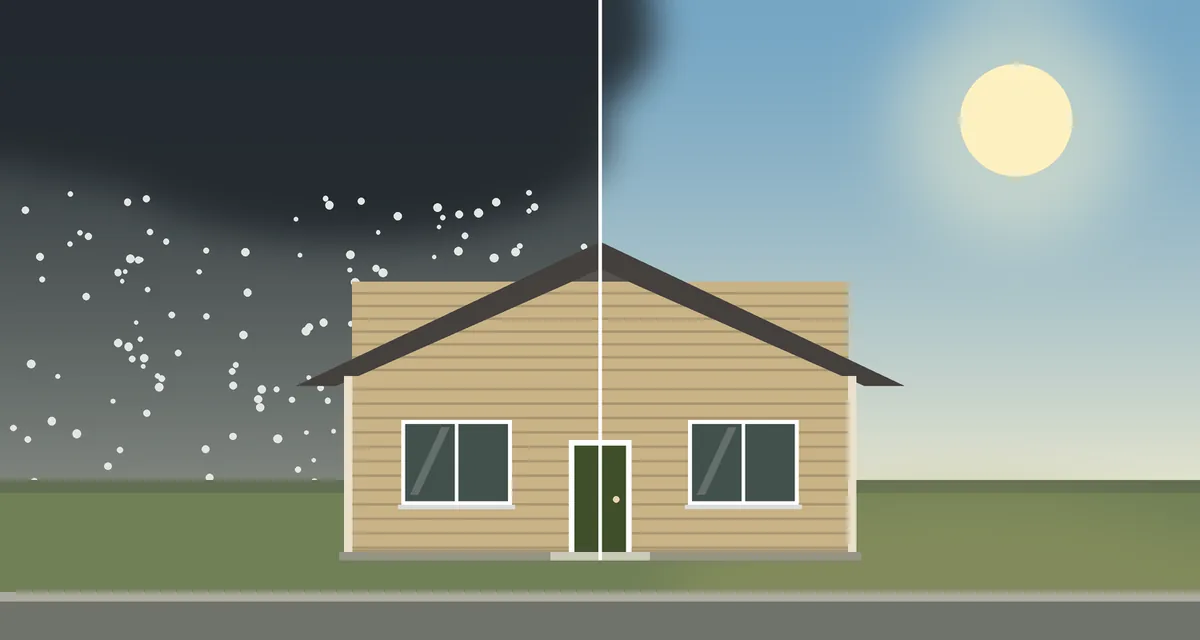
- Match the wall to the weather. Spring brings the hail and summer the heat; in our counts the two seasons barely overlap.
- Keep the claim and the contract apart. Texas bars a contractor from paying your deductible or negotiating your claim.
Our Count
Bexar, Comal and Medina: our NOAA hail tally
The Census Bureau's 2020 place file puts the city of San Antonio in three counties: Bexar, Comal and Medina. We went through twenty yearly NOAA Storm Events files and kept every county report of hail an inch across or more.
| County | Places in it | Hail, 1 inch or larger | Days with such hail | 1.75 inches or larger | Largest | Wind, 65 knots or more |
|---|---|---|---|---|---|---|
| Bexar | Alamo Heights, Converse, Leon Valley; parts of San Antonio and Schertz | 315 | 65 | 102 | 5.50 in | 26 |
| Comal | Parts of San Antonio, New Braunfels and Schertz | 76 | 29 | 20 | 2.75 in | 5 |
| Medina | Part of San Antonio | 72 | 34 | 31 | 6.42 in | 7 |
| Three counties | All of the above | 463 | 95 | 153 | 6.42 in | 38 |

Bexar County: 315 reports on 65 days
Bexar County holds most of the reports in our tally: 315 of hail at least an inch wide, spread over 65 separate days. 102 of them were 1.75 inches or more, and the largest measured 5.50 inches on May 3, 2021. Only one of the twenty years passed without one.
Comal and Medina: the city's northern and western edges
The city limits cross into Comal County on the north side and Medina County on the west. Comal logged 76 reports and Medina 72. Medina holds the biggest stone in our whole tally, 6.42 inches on April 28, 2021; most of that county lies outside the city, so a report there may be far from town.
The biggest hail days in the record
A few storms make up much of Bexar's record. The busiest day was May 3, 2021, with 26 reports; two days in April 2016 each produced 23. After a day like that, crews from out of town arrive, and the siding contractor San Antonio neighbors recommend may have a waiting list.
Five days with hail in all three counties
Across Bexar, Comal and Medina the reports land on 95 dates. Hail of that size fell in two counties or more on 28 of them, and in all three on five. Most storms here hit one county and spare the next.
Timing
April and May carry San Antonio's hail
People ask how often does it hail in San Antonio, and when. In Bexar County, 70 percent of the reports in our count fall in April and May alone, so the San Antonio hail season is short and sharp.
| Month | Bexar hail reports | Hail days, three counties | Days of 100°F or more |
|---|---|---|---|
| January | 1 | 1 | 0 |
| February | 23 | 4 | 0 |
| March | 53 | 13 | 0 |
| April | 139 | 34 | 1 |
| May | 81 | 34 | 12 |
| June | 13 | 5 | 78 |
| July | 0 | 0 | 154 |
| August | 0 | 1 | 256 |
| September | 0 | 0 | 32 |
| October | 0 | 0 | 0 |
| November | 4 | 1 | 0 |
| December | 1 | 2 | 0 |
| Twenty years | 315 | 95 | 533 |

February storms count too
Bexar logged 23 reports in February, on three days, one of them February 10, 2009 with 17 reports. March added 53. A job booked for late winter can still meet a storm before the panels are on.
Late afternoon into night
Of Bexar's 315 reports, 230 (73 percent) began between 4 p.m. and 10 p.m. by the database clock, which runs on standard time. On a spring day the risk comes after the crew has packed up, so the wall should be closed at the end of each shift.
Planning around the season
Collect bids, check registrations and wait on the permit in winter. If the work runs through April and May, the contract should say who covers stored panels and an open wall.
Our Count
One hundred degree days at San Antonio International Airport
Hail is half of the weather story. We also counted the days the airport station reached 100°F, from the daily records NOAA keeps for station USW00012921, over the same twenty years.

How many 100-degree days a year
The station logged 533 days of 100°F or more, an average of 26.6 a year, and days of 95°F or more averaged 78. The years differ a lot: 2023 had 75 such days and 2007 had none. The hottest reading in our window was 109.9°F on August 28, 2011.
July and August do most of it
July and August hold 77 percent of the 100-degree days, and June through September 98 percent. That is a long stretch of full sun on south and west walls, which is where caulk dries out and dark paint fades first.
Hail season and heat season barely overlap
91 percent of Bexar's hail reports come from March to June, while the heat peaks after June. So the siding you choose has to take a hit in spring and then sit in strong sun for months. That pairing is what the best siding for hot climates has to answer here.
Method
Where these weather numbers come from
How we counted
For hail we used the yearly NOAA files on the server in October 2026 (revision codes are under Sources), kept county rows, and set the cutoff at the Storm Prediction Center's “Hail 1 inch in diameter or larger.” Our Bexar figures match a count we ran earlier from the same files. For heat we converted the station's daily maximum, stored in tenths of a degree Celsius, to Fahrenheit.
What the numbers leave out
A hail line is a report that reached the National Weather Service, so open ranchland logs fewer than a suburb. There is no trend by year here and no damage total. The National Weather Service rounds to whole degrees Fahrenheit, so its official count of 100-degree days can differ from ours by a day or two in a year.
Materials
Siding materials for a hot, hail-prone city
No public test ranks siding for hail and heat together. Compare how each material fails, how it is repaired and what the maker's installation rules say.
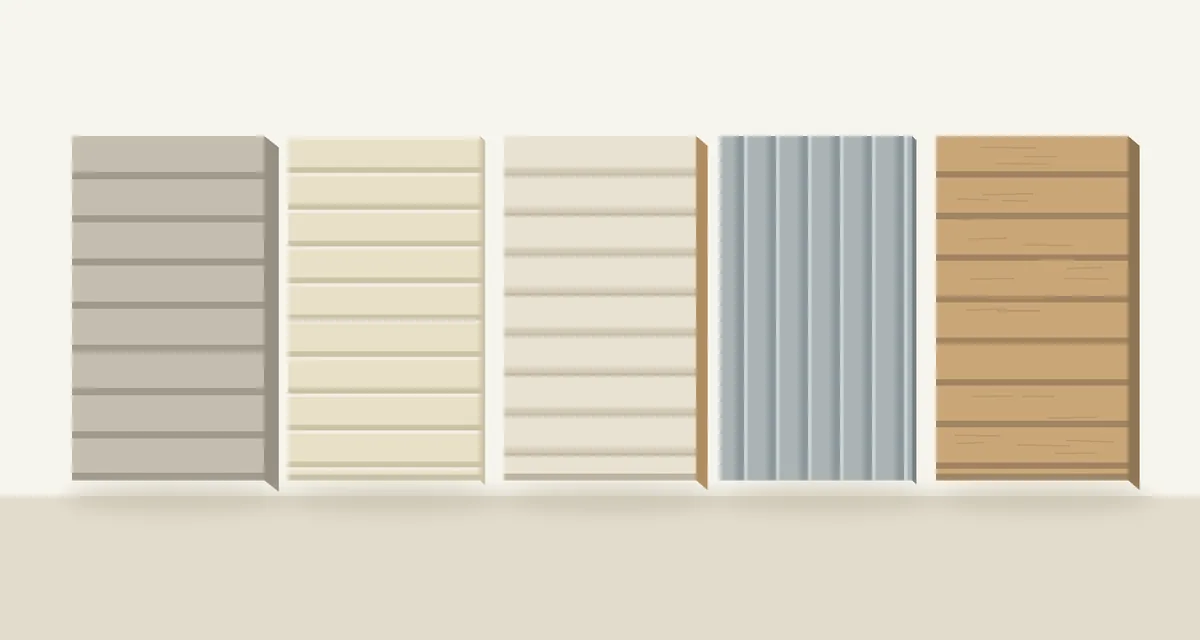
Fiber cement and Hardie siding
When people ask for hardie siding, San Antonio bids usually mean fiber cement planks. James Hardie sorts its lines into climate zones and describes its HZ10 products as built for “the brutal, humid heat of the south”; that is the maker's claim, and the zone for your address is on its own map. If you want james hardie siding, San Antonio bids should name the exact line, and keep it off any historic wood wall (see the guidelines below). Our fiber cement guide covers the rest.
Vinyl siding
For vinyl siding, San Antonio sun is the main test. Vinyl is light and can be repaired one course at a time, but reflected sun can warp it, as the next section explains. Before vinyl siding installation, San Antonio owners should ask for the panel thickness and color, since both change how a panel handles heat. Our vinyl guide covers the rest.
Wood siding
Wood siding: San Antonio neighborhoods of older houses still have plenty of it, often as drop siding with a curved or beveled top edge. It can be patched board by board, and in a historic district it is usually what the city expects you to keep. Our wood siding guide explains paint and rot.
Aluminum and metal siding
With aluminum siding, San Antonio houses re-sided decades ago tend to show dents after hail rather than cracks. Steel and other metal siding: San Antonio homes have less of it; ask about the coating and the warranty terms. Our metal siding guide walks through both.
Engineered wood
Engineered wood lap is lighter than fiber cement, and its warranty leans on the maker's installation instructions, so attach them to the contract. Our guide to types of siding compares it with the others.
Heat
Vinyl siding, low-e glass and reflected sunlight
Does vinyl siding warp in the sun? Hot air alone is not the usual story. A 2011 paper from Lawrence Berkeley National Laboratory looked at panels that warped for good next to energy-saving windows.
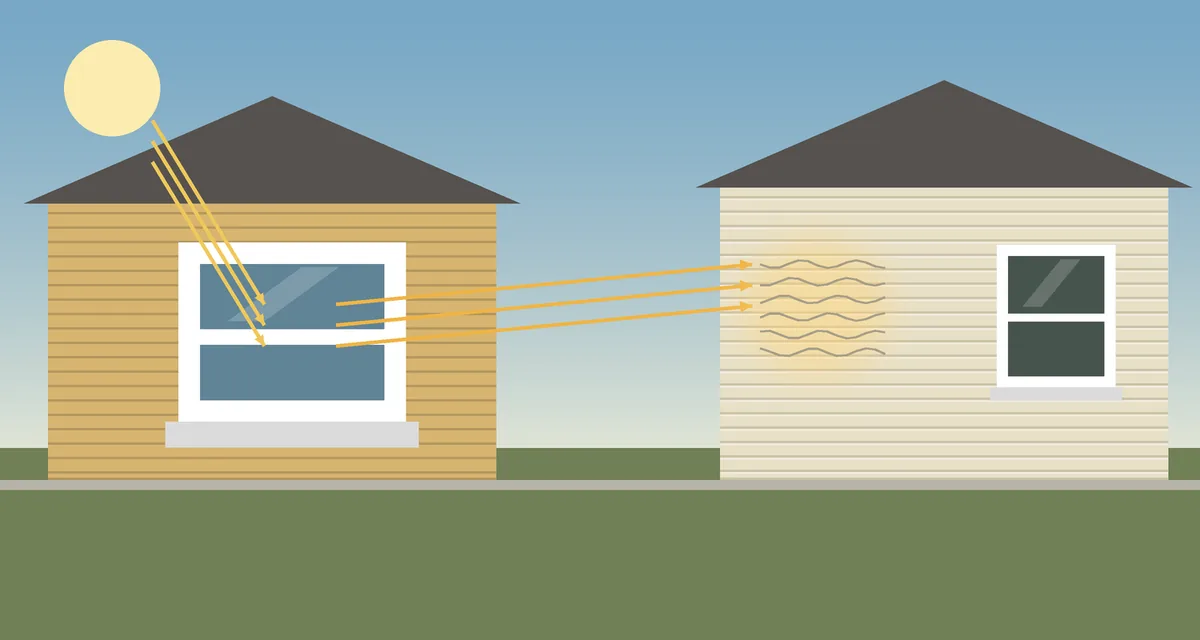
What the federal lab paper found
The LBNL report says news stories had blamed sunlight reflected from insulating window glass for the damage, and that “the warranties of all major vinyl siding manufacturers currently exclude damage caused by window reflections.” That sentence dates from 2011; read the current warranty for your panel.
Color, thickness and profile
The same report measured gaps of about 35°F between white and black vinyl in the sun, notes that the standard test for vinyl siding only checks to 120°F, and lists thicker panels and deeper profiles as more resistant. On a west wall facing a neighbor's windows, a light color and a heavier panel are the safer pair.
Questions about reflection before you sign
Ask whether the installer has seen distortion on this street and what the warranty says about reflected heat on the wall facing a neighbor's big window.
City Records
Home Improvement or Residential Building: the city's two registrations
What is a siding contractor in the city's eyes? The answer sits in the City of San Antonio contractor registration rules. Development Services says that “All City and State licensed contractors must be registered with Development Services before permits are issued.” Builders of homes fall into two registrations.
| Registration | Typical work | Checks the city asks for | Liability insurance, minimum per occurrence |
|---|---|---|---|
| Home Improvement Contractor | Non-structural remodeling, conversions, modernizations: limited repair and replacement | FBI national background check, photo ID, insurance certificate | $300,000 |
| Residential Building Contractor | New homes, additions, remodeling that involves structural work, foundation repair | FBI check, photo ID, insurance, a Residential ICC Certification held by the owner or one agent | $500,000 |
Home Improvement Contractor
Ask any siding company: San Antonio treats taking off old siding and putting on new, with the framing left alone, as the kind of limited replacement this registration covers. Ask for the number and the company name it is under, and check that the name matches the one on your bid.
Residential Building Contractor
If rotten studs or sheathing come out, the job crosses into structural work. The city then wants a Residential Building registration, and someone at the firm must hold a residential certification from the International Code Council or one the Building Official approves.
Insurance with the city as certificate holder
Both registrations need a certificate of liability insurance “with The City of San Antonio listed as the certificate holder.” Ask for your own copy and check the policy dates; the city's numbers are minimums, not a fit for your house.
City Records
Contractor Connect and the sanctions report
San Antonio registered contractors can be looked up by trade, and the city publishes the ones it has suspended. Both help with how to find a good siding contractor without a ranking site.
Searching registered contractors
Contractor Connect, the city's search tool, sorts building firms into three tiers: registered, registered plus and premier. The city says contractors are expected to pull every permit and close every inspection on time, and that keeping a tier is up to them.
The Contractor Sanctions Report
When a complaint holds up after a hearing, the Building Official can drop a firm a tier, or cancel or suspend its registration under Section 10-115 of the city code. Suspended and canceled firms go on a public report with the registration number, the reason, the sanction and the date.
Permits
Replacing siding takes a Residential Repair Permit
For siding replacement, San Antonio wants a permit, and that sets it apart from many Texas cities. The Development Services form for home repairs, revised in October 2025, lists siding replacement among the jobs it covers.

The line on the form
The form's checklist reads “Siding replacement (No permit required for installing new siding over existing siding).” So for siding in San Antonio, TX, removing the old cladding and installing new is permitted work. Ask the bid to say who applies and who pays the city's fee.
New siding over old
Laying new siding over the existing layer needs no permit, by the same line. That does not make it the better choice: a second layer hides rot, adds thickness at windows and trim, and in a historic district the city's guidelines push the other way.
Two or more walls means plan review
The form warns that if two or more exterior walls will be repaired, modified or replaced, plan review is required and the form should not be used. Siding installation in San Antonio, TX on a whole house usually crosses that line, so expect the contractor to submit plans.
Framing and final inspections
If framing is done, a framing inspection is required, and the inspector may ask for an engineer's report. A final inspection closes the permit, which stays valid for six months after it is issued. Pay the last installment after the final passes.
Permits
The homeowner permit and the 12-month occupancy pledge
You can pull the repair permit yourself. The form asks a homeowner to initial that they own the house and will own it, living there or renting it out, for 12 months after the work, citing City Code 10-115(a)(1). The homeowner then answers for every inspection. A contractor who asks you to pull the permit in your name is handing you that duty; ask why.
Historic Districts
32 local historic districts and the Certificate of Appropriateness
The Office of Historic Preservation lists 32 locally designated historic districts, from Leon Springs, three parcels, to the Mission Historic District, about seven miles long on the south side. They are separate from San Antonio's 20 National Register districts.
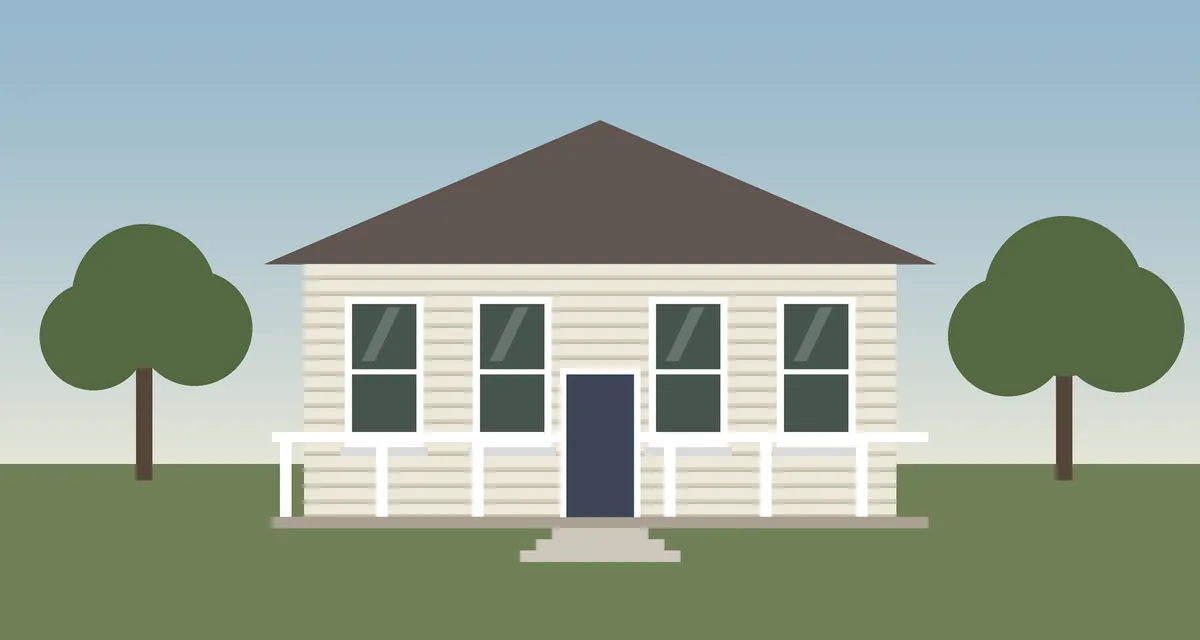
Every exterior repair needs a COA
Under the city's development code, “all exterior modifications and repairs for properties with a historic zoning overlay require a Certificate of Appropriateness (COA)”, side and rear walls included. The approval has to be in hand before work begins, and the Development Services packet points owners to the preservation office at 210-207-0035.
Staff approval or a hearing
The city says most items can be approved administratively by staff. Requests that do not fit the rules for staff approval go to a public hearing before the Historic and Design Review Commission, which takes longer. Put the COA date in the contract schedule.
Checking your address on the Explorer Map
The preservation office's Explorer Map shows whether a parcel is in a district or is a landmark on its own. Check before you collect bids, so nobody prices the wrong material.
Historic Districts
What the Historic Design Guidelines say about wood siding
The city's guidelines and its 2022 policy guide on substitute materials are blunt about siding, and they shape which San Antonio siding companies can bid on a district house.
Repair before replacement and the 50 percent rule
The policy guide prefers patching and spot repair, and says that when “more than 50% of an exterior wall plane is deteriorated beyond repair,” replacement siding comes into play. Full replacement needs staff to agree the old boards are beyond repair.
Composite and cementitious siding on historic wood
The guide says not to install composite or artificial siding as a replacement for wood, and the exterior chapter calls Hardiboard and other cementitious materials not recommended. It also asks owners to consider exposing original wood that is covered with vinyl or aluminum.
Matching the drop-siding profile
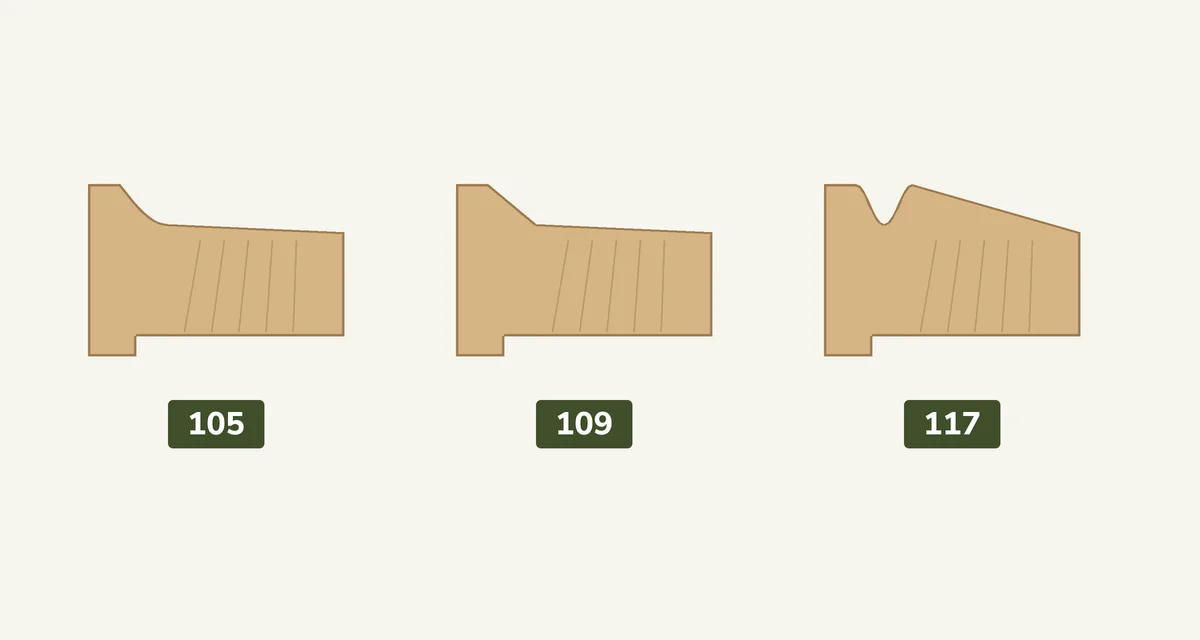
New boards should match the old pattern and exposure. The guide names three profiles as common in San Antonio: 105, 109 and 117 drop siding. A mill can cut them if a lumberyard has none, so ask the bidder where the boards will come from.
Texas Law
No state license for siding work in Texas
There is no Texas siding license to look up. The state's residential construction commission ended in 2009; the Sunset Advisory Commission records that “House Bill 2295 failed to pass, abolishing the Texas Residential Construction Commission.” Trades such as electrical and plumbing still carry state licenses. That leaves the city registration, the insurance certificate and the contract as the checks you can make on a siding firm in San Antonio.
Texas Law
Insurance claims after Bexar County hail
Hail jobs often start with a claim. Two Texas statutes draw a line between the firm that fixes the wall and the people who settle the money.
Your deductible stays yours
Business and Commerce Code Section 27.02 covers goods or services of $1,000 or more expected to be paid from a property claim. The seller may not pay, waive or absorb your deductible, or offer a rebate to cover it; breaking that rule is a Class B misdemeanor. The Texas Department of Insurance calls the offer illegal in plain words.
A contractor cannot work your claim
Under Insurance Code Section 4102.163, “A contractor may not act as a public adjuster or advertise to adjust claims for any property for which the contractor is providing or may provide contracting services.” Your siding contractor can measure the walls and write an estimate. Talking to the adjuster about the settlement is your job, or a licensed public adjuster's.
For the longer Texas checklist after a storm, including the disaster-contract rules for out-of-town crews, see our page on siding contractors in Dallas; the state laws are the same in both cities.
Texas Law
Sales at your front door and the right to cancel
After a big storm, sellers knock on doors across the north side. Texas Business and Commerce Code Chapter 601 lets you cancel a purchase over $25 made away from the seller's place of business until midnight of the third business day after you sign. The Attorney General adds that the notice must be in the language of the sales talk, Spanish included, and suggests mailing your cancellation so you can prove the date. The federal FTC Cooling-Off Rule sets a similar three-day window.
Texas Law
Liens, payments and the final bills-paid affidavit
An unpaid supplier can claim a lien on your house even after you paid the contractor. Property Code Chapter 53 gives owners tools that belong in any siding contract.
The disclosure and the subcontractor list
Before you sign a residential contract, the contractor owes you a written disclosure headed “KNOW YOUR RIGHTS AND RESPONSIBILITIES UNDER THE LAW,” and before work starts, a list of the subcontractors and suppliers it expects to use.
Ten percent for thirty days
The statute has owners keep back 10 percent of the contract price until 30 days after the work is done. Write the hold-back into the payment schedule so nobody is surprised.
Final payment
When you make the final payment, ask for the bills-paid affidavit, a sworn statement that the crews and suppliers have been paid or a list of who has not.
Contract
What a San Antonio siding estimate should spell out
These are the questions to ask a siding contractor before the first visit is over. The Attorney General's advice after disasters is to get more than one estimate and everything in writing; a siding bid here also has city steps to name.

Who holds the permit
Name the permit holder and the city registration number. The form calls this person the registration holder, and that is who answers to the inspector.
Product line, wrap and trim
The bid should name the siding line and color, the house wrap, the trim and flashing at windows, and what happens to rotten sheathing if the crew finds it. Measure the walls yourself with our siding squares calculator, so you can check the quantity without trading prices.
Inspections and the final
List the inspections the job needs and tie the last payment to the final inspection. If the house is in a district, put the COA in the schedule ahead of the start date.
Warranty paperwork
Ask who registers the product warranty with the maker and who stands behind the labor, for how long, and in writing. The two are often separate papers.
No blank lines
“Do not sign a contract with blanks,” the Attorney General warns. Cross out empty lines, keep a signed copy, and hold the final payment until the work is done.
Repair
Fixing a few boards versus re-siding
Can siding be repaired? Often, yes. For siding repair, San Antonio homeowners need a different kind of bid than for a new wall, and after a single storm it is often the right call.

A handful of cracked boards
For San Antonio siding repair after hail, a few cracked courses on one wall can come out and be matched. Our siding repair guide shows how each material is patched and when a patch shows.
When the repair permit applies
Once the job becomes siding replacement, the repair permit applies, and at two walls or more plan review does too. Who replaces siding on a permitted job is a registered contractor or you on a homeowner permit.
Older Homes
Lead paint in homes built before 1978

Many houses in the older districts were painted long before 1978. The EPA's Renovation, Repair and Painting rule requires anyone paid to disturb painted surfaces in homes built before 1978 to be certified and to work lead-safe. Ask for the firm's certificate along with its city registration.
Search Results
Who showed up in the map pack in our check
On October 28, 2026 we searched “siding contractors san antonio” from six places: the U.S. as a whole, San Antonio, Alamo Heights, Converse, Schertz and Helotes.
Southwest Exteriors and Spartan Roofing & Siding were in the map pack in all six searches, M&M Roofing, Siding & Windows in five, and Integrity Roofing & Siding in one. Below the map came a forum thread, Facebook groups, directories and firms' own top-company lists. A map spot is not a review of the work; check the registration either way.
We publish no ranking of San Antonio siding companies, and none of the siding companies in San Antonio pays for a place on this page. Schertz, Converse, Alamo Heights and other nearby cities run their own permit offices.
Work It Out
Check the permit path for your San Antonio job
Choose what applies to your house. The tool lists the city steps and Texas rules that touch the job, from the pages quoted above. It gives no price.
Every contract keeps the lien-law steps: the disclosure, the list of subs, 10 percent held for 30 days and the bills-paid affidavit.
How We Help
How Siding Pros USA introduces homeowners to contractors
We have no crews and install nothing. We introduce San Antonio homeowners to independent siding firms, and the bid, the permit and the warranty are theirs.
Tell us the street, the walls involved and whether a claim is open. Our fee is the same for every introduction; the about page explains how we are paid.
Questions
San Antonio siding questions, answered briefly
Do I need a permit to replace siding in San Antonio?
Yes, inside the city: siding replacement is on the Residential Repair Permit. New siding over the existing layer needs none, and two or more walls go to plan review.
How do I check a siding contractor's city registration?
Ask for the registration number, look the firm up in Contractor Connect, and read the city's Contractor Sanctions Report for suspensions.
Does Texas license siding contractors?
No. The state commission for home builders was abolished in 2009. San Antonio registers the firms that pull permits in the city.
Can I use fiber cement on a house in a historic district?
On a house with historic wood siding, the city's guidelines say cementitious and composite siding is not recommended. Ask the preservation office before you sign.
When is hail season in San Antonio?
In our Bexar County count, April and May hold most hail reports, with March, June and even February in play. Storms tend to start late in the day.
Can the siding firm deal with my insurer for me?
It can write an estimate, but Texas law bars it from acting as your public adjuster or paying your deductible.
Do you install siding?
No. We introduce San Antonio homeowners to independent siding firms and are paid the same whatever the job.
Where This Comes From
Sources and dates
- Hail and wind, three counties: NOAA National Centers for Environmental Information, Storm Events Database, files StormEvents_details-ftp_v1.0, 2006 to 2025; revisions c20260323 for 2006-2011, 2013-2016, 2018-2021, 2023; c20260519 for 2017; c20260625 for 2022; c20260728 for 2024; c20260819 for 2025; c20261026 for 2012. Our tally. Severe hail threshold: NOAA Storm Prediction Center, About the SPC.
- Heat at the airport: NOAA NCEI, Global Historical Climatology Network Daily, station USW00012921, file dated October 27, 2026, and its format notes. Our tally.
- Which counties San Antonio spans: Census Bureau place codes for Texas, 2020.
- Registration and permits: City of San Antonio Development Services, Contractor Registration and Licensing, Building and Home Improvement, Find a Contractor, Residential Repair Permit Application (Rev 10/25) and IB 101 Residential Packet.
- Historic districts: City of San Antonio Office of Historic Preservation, Historic Districts, Before Getting Started, Historic Design Guidelines (Exterior Maintenance and Alterations; Substitute Materials, September 2022).
- Vinyl and reflected sun: Lawrence Berkeley National Laboratory, Research Needs: Glass Solar Reflectance and Vinyl Siding, LBNL-5022E, July 2011. Maker's claim: James Hardie, Hardie Zone System.
- Texas law and guidance: Texas Sunset Advisory Commission; Business and Commerce Code Section 27.02 and Chapter 601; Insurance Code Chapter 4102; Property Code Chapter 53; Texas Department of Insurance, Roofing and insurance: Know the law; Texas Attorney General, Disaster Scams and Door-to-Door Sales.
How we check what we publish is set out in our editorial standards. The hail and heat counts are ours, from the public files named above, and anyone can repeat them. For a wood house on the coast, see wood siding in Houston. We make introductions; the siding work is always done by the contractor. Last updated .
Before you call anyone
The flat-fee match — we are paid for the introduction, not for the size of your job
Most siding advice is written by the company that wants to do the work or the company that makes the product. That is not a failing of the people who read it; it is a defect in who is talking: the measurement, the estimate and the invoice come from one party, and no amount of care on your side fixes that.
We are built the other way round. We do not install, repair or sell anything, so the payment reaches us when you are connected to a licensed, insured siding contractor — the same amount whether you need one panel replaced or four walls re-clad. Nobody here has a reason to talk you into the larger number. You can check that rather than take it on trust: how we make money is written down, and this site keeps telling readers when one wall is enough. Why does not everyone work this way? Because a flat fee leaves money on the table every time the job turns out to be big.
Waiting is the one thing that actually costs money. A wall that is open to the weather does not get better and does not wait for a convenient week; the water that gets behind the siding finds the sheathing, the framing and the drywall inside. A cracked panel over a window lets the next storm in. And if it turns out to be one panel and a quarter-hour, say so when you ask. We will tell you, and that answer earns us nothing.
Not for you if: you want a price over the phone — nobody honest gives one without measuring the house; you need a guarantee of arrival within the hour — we cannot promise that for a company we do not run; the building is commercial; or you would rather do it yourself, in which case the pages on this site are written so that you can.