Siding Installation · Long Island, New York
Siding installation on Long Island: built for the wind that comes off the water
Home › Long Island siding installation · Researched by the Siding Pros USA editorial team · · 19 min read
Siding installation on Long Island is a wind job first. NOAA files hold wind records for Nassau and Suffolk on 148 separate days in twenty years, most of them in winter. Here is what that means for the siding, the nails, the calendar, and the county rules.
Siding installation on Long Island in six points
People who search “siding long island ny” or “long island house siding” get a map of three firms first. The map does not say what the wall will face here, or which county rules apply. These six points do.
- Wind, not hail, tests the wall. 148 days with wind records in the NWS zones against 31 days of hail an inch or larger.
- The windy season is winter. 73 percent of those days fall between November and March.
- The product carries a label. New York’s code wants vinyl “certified and labeled” to ASTM D3679, and the wall’s wind load decides the rest.
- Salt air eats cheap nails. Cedar shingles near salt water take stainless Type 316 under the state code.
- Each county licenses the contractor. Nassau and Suffolk run their own home improvement licenses; work without one is against the law.
- New York writes the contract terms. General Business Law § 771 lists what the paper must say, how deposits are held, and the three days to cancel.
Our Count
Twenty years of Long Island wind records: our NOAA count
We counted every High Wind, Strong Wind and Tropical Storm record in the NWS forecast zones of Nassau and Suffolk, in twenty yearly NOAA Storm Events files.
| County zones | High Wind | Strong Wind | Tropical Storm | All records | Separate days | Strongest gust |
|---|---|---|---|---|---|---|
| Nassau | 53 | 37 | 7 | 97 | 75 | 71 knots |
| Suffolk | 200 | 116 | 18 | 334 | 141 | 83 knots |
| Long Island | 253 | 153 | 25 | 431 | 148 | 83 knots |
Nassau and Suffolk side by side
Suffolk is the bigger and more exposed half, with 334 zone records to Nassau’s 97. It has four forecast zones to Nassau’s two, so one storm writes more lines there. That is why we also count days: Suffolk 141, Nassau 75, the island 148, from 431 records in all.
North shore and south shore
Both counties split their zones along the island. The northern zones logged more: Suffolk 180 north against 154 south, Nassau 54 against 28. Another 15 Nassau records predate the split and cover the whole county.

When It Blows
Most windy days fall between November and March
Of the 148 windy days, 108 fall between November and March: 73 percent. February leads the months, and June has no zone record at all in twenty years. These are the nor’easters and winter lows, not summer storms.
| Month | Zone wind records | Hail reports, 1 inch or larger |
|---|---|---|
| January | 59 | 0 |
| February | 70 | 0 |
| March | 58 | 0 |
| April | 38 | 0 |
| May | 3 | 3 |
| June | 0 | 16 |
| July | 7 | 15 |
| August | 15 | 24 |
| September | 11 | 3 |
| October | 54 | 1 |
| November | 54 | 1 |
| December | 62 | 0 |
| Twenty years | 431 | 63 |

The Peaks
The strongest gusts in the record, and Sandy’s date
Sandy’s date at the top of the file
Both county peaks share one date, October 29, 2012, the day Sandy came ashore. A measured gust of 83 knots (about 96 mph) in Northwest Suffolk tops the file. Northern Nassau logged an estimated 71 knots, about 82 mph.
How often gusts pass 58 knots
Peaks are rare; strong gusts are not. Gusts of 58 knots or more appear in 44 Suffolk records and 9 in Nassau. The busiest single day in the file is recent: December 19, 2025, with 6 Suffolk zone records.
For Comparison
Hail matters less here than in the Plains
Hail does fall, mostly from June to August. Nassau logged 30 reports of an inch or larger on 15 days, Suffolk 33 on 21. The island’s largest stone, 3.00 inches, fell in Nassau. Nassau’s reports cluster in August and June (70 percent), Suffolk’s in July and August (61 percent).
| County | Hail 1 inch or larger | Hail 1.75 inches or larger | Largest hail | Storm wind 50 knots or more | Storm wind 65 knots or more |
|---|---|---|---|---|---|
| Nassau | 30 (15 days) | 7 | 3.00 in | 178 | 2 |
| Suffolk | 33 (21 days) | 2 | 1.75 in | 314 | 13 |
Summer thunderstorms bring their own gusts, logged per county rather than per zone. Planning for hail first, as on the Omaha siding page, does not fit here.
Method
Reading the count honestly
A zone record is one zone in one event, so a single storm can write six lines. Under NWS Instruction 10-1605, High Wind means sustained winds of 35 knots or gusts of 50. Strong Wind is a lower wind that caused damage or injury. These are reports, not every storm; we show no trend and no losses.
The Product
What a vinyl siding wind rating actually measures
A vinyl siding wind rating is a design pressure in pounds per square foot, from a test to ASTM D3679. It is not a mile-per-hour promise. The wind rating for vinyl siding you see in a brochure is usually tested over solid sheathing, FEMA notes.
Design pressure is not a mph number
The pressure on a wall depends on the design wind speed, the height, and the exposure. Open shoreline counts as a more exposed site than a street of houses. FEMA’s fact sheet on high-wind siding puts it plainly: “Vinyl siding can be used successfully” in a coastal setting, if it is properly designed and installed.
Where to find the rating on a product
Look for the certification listing. The Vinyl Siding Institute program tests “Weatherability, wind load, and impact resistance”, and its listings mark coastal uses: “Compliance for standard and specialized applications, including coastal construction, is clearly identified and easy to reference.”
The Code
New York’s residential code on siding
The 2025 Residential Code of New York State sets the floor in Chapter 7. On vinyl it reads: “Vinyl siding shall be certified and labeled as conforming to the requirements of ASTM D3679 by an approved agency.” Installation follows the maker’s instructions.
| Section | Rule | What to ask |
|---|---|---|
| R703.11 | Vinyl certified and labeled to ASTM D3679 | Which listing is on the carton? |
| R703.11.1.3 | Nails of 0.120-inch shank with a 0.313-inch head | What nail, and from whose manual? |
| R703.11.1.4 | At least 1¼ inches into the nailable base | What is behind the panels? |
| R703.11.1.5 | 16 inches apart on horizontal siding, 12 on vertical | What spacing does the maker allow? |
| R703.11.2 | Over foam sheathing alone, a rated wind load design pressure | Is there solid sheathing under the foam? |
| R703.3.2 | Above 30 psf, attachment designed for the wind load | What design pressure did the town’s map give? |
Wind speed comes from the code’s map, and your town’s building department applies it. We do not quote a mph figure for any address.
Choosing a Wall
Best siding for high wind areas on the island
The best siding for high wind areas is the one rated and fastened for the wall it goes on. Material matters less than the listing, the nail and the sheathing behind it. Here is what to check for each common choice.
| Material | Standard or listing | What to check on the coast |
|---|---|---|
| Vinyl | ASTM D3679, certified and labeled | Design pressure, coastal listing, nailing hem |
| Insulated vinyl | ASTM D7793 | Rating over the actual sheathing |
| Fiber cement | ASTM C1186, Type A, Grade II minimum | The maker’s product line for the region |
| Cedar shingles | Two nails per shingle | Stainless Type 316 near salt water |
Vinyl, the most common choice
Search “vinyl siding long island ny” and the results talk colors. For the best vinyl siding for high wind areas, FEMA describes high wind vinyl siding as having “an enhanced nailing hem” and often thicker panels. Ask for the design pressure in writing. More on the product itself is on our vinyl siding guide.
Fiber cement, and the hurricane question
Searches for fiber cement siding hurricane performance meet a maker’s claim, not a test standard. James Hardie markets HZ10 for “Hurricane-Force Winds” and HZ5 for cold; its site sets the zone by ZIP code. See our fiber cement guide.
Wood and cedar shingles
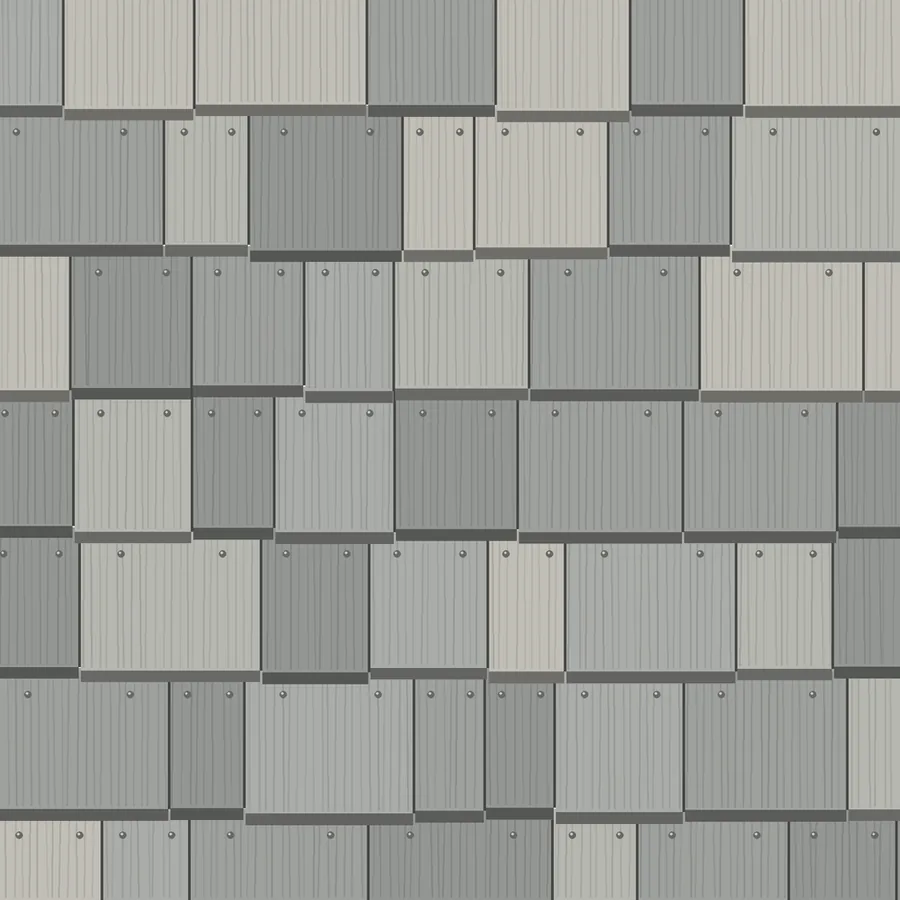
Shingles are the old island look, and the code is strict about their nails. Each shingle takes two corrosion-resistant box nails, set above the next course. Our wood siding guide covers cedar upkeep; for steel panels, see metal siding.
Is vinyl siding hurricane proof?
No product is. Hurricane resistant siding is siding rated for the design pressure of your wall and installed to its manual. That is the honest answer for vinyl, and for every other wall.

Salt Air
Salt air and the fasteners behind the siding
On the coast, the fastener often fails before the siding does. The state code allows “aluminum, galvanized, stainless steel or rust-preventative coated nails or staples” for wall coverings. For shingles it goes further.
Shingles within 15 miles of salt water
“Fasteners installed within 15 miles (24 km) of saltwater coastal areas shall be stainless steel Type 316.” That line sits in the shingle and shake section, R703.6.3. On a shingled house near the water, ask which grade is in the box.
Hardware and trim on a coastal wall
For the best siding for coastal homes, FEMA’s guidance on building materials adds: “Use hot-dip galvanized steel or stainless steel” hardware. For vinyl siding for coastal homes, it advises corrosion-resistant nails, with aluminum or stainless fasteners on aluminum trim.
Installation
How installers keep vinyl siding from blowing off
The nail sits in the middle of the slot
How to keep vinyl siding from blowing off comes down to the nail. FEMA’s high-wind fact sheet says to “Position nails in the center of the nailing slot”, to leave the head slightly loose, and: “Do not face-nail or staple through the siding.”
Why panels rattle in the wind
A panel that cannot slide buckles in the sun and pulls in the wind. Vinyl siding noise when windy is often that: a panel locked too tight, or one that has come unlocked. General steps and gaps are on the Omaha installation page; here, the coast adds the fastener grade.

After a Storm
Vinyl siding blew off: what to do if siding comes off
Photographs before cleanup
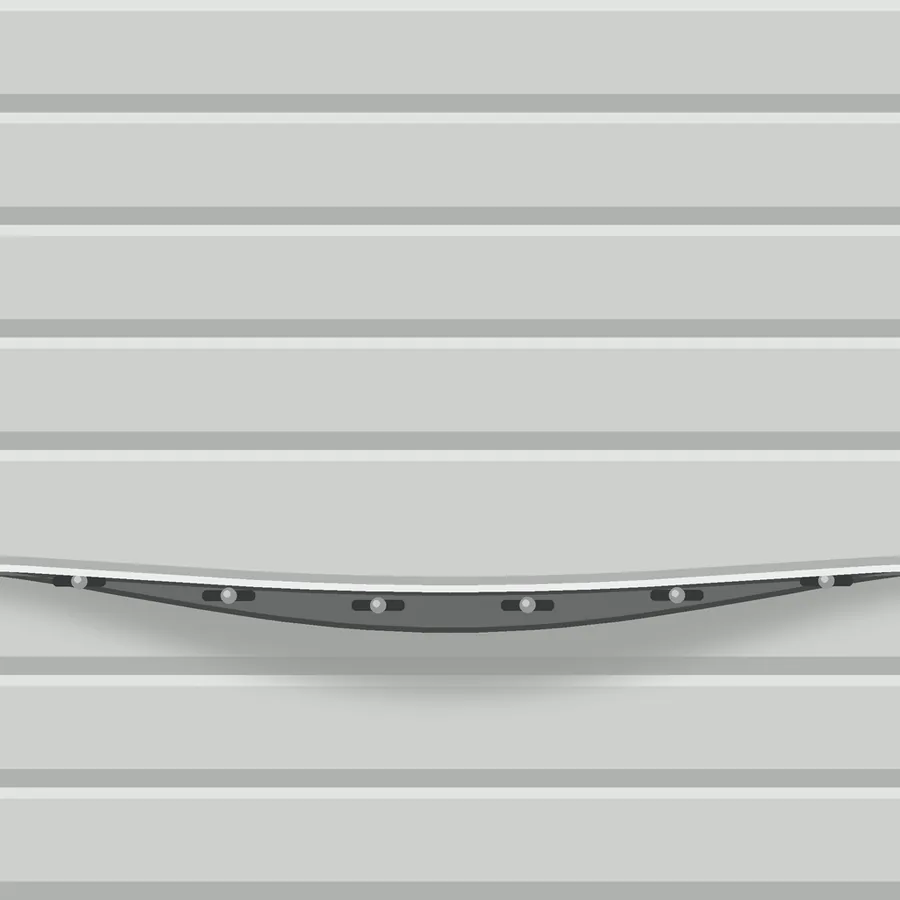
If vinyl siding blew off in a storm, photograph the wall and the pieces before anything is moved. Keep loose panels; they show the color and profile. Check whether the wrap behind is torn, since that lets water in.
Storm repairs need the license too
Our siding repair guide covers how damage is read and fixed. Searches for siding repair nassau county ny bring up firms offering storm work; the county license applies to repairs too.
Scheduling
Planning an installation date around the island’s seasons
Our count suggests a simple rule: finish the wall before the windy months. A wall half done in December faces the busiest stretch of the file with open seams. Summer brings the hail and thunderstorm gusts instead.
Winter work is possible. Ask the installer which part of the maker’s manual covers panels hung in the cold, and how a half-done wall is closed up overnight.
The Houses
Most Nassau homes went up before 1960
Census figures for 2024 place 64.6 percent of Nassau homes in 1959 or earlier, and 33.2 percent in the 1950s alone. Most are single-family houses: 75.8 percent detached. Old walls change an installation.
| Measure | Nassau | Suffolk |
|---|---|---|
| Homes counted | 480,668 | 582,899 |
| Built 1959 or earlier | 64.6% | 30.6% |
| Built in the 1950s | 33.2% | 18.0% |
| Built 1979 or earlier | 84.1% | 68.2% |
| Built 2000 or later | 8.6% | 13.3% |
| Single-family, detached | 75.8% | 80.5% |
| Owner-occupied | 81.3% | 82.5% |
Suffolk’s later building boom
Suffolk built later. Only 30.6 percent of its homes predate 1960, but 68.2 percent predate 1980, and 80.5 percent are detached houses. Either way, a large share of island walls carries layers from before the lead and asbestos rules.
What the age of the house changes
An older wall may hide lead paint, cement shingles, or rot under one layer of newer siding. Two rules follow, and they use different years: 1974 for the state asbestos survey, 1978 for federal lead rules.

Old Shingles
Asbestos shingles and New York’s Rule 56 survey
New York’s Industrial Code Rule 56 starts with a survey. Before renovation or repair work, a licensed asbestos contractor checks the part of the building to be disturbed. The survey is submitted “prior to commencing” the work.
The rule exempts buildings whose construction began on or after January 1, 1974. It also excuses the owner of a one- or two-family home who hires the work out and does not direct it. Ask the firm how it handles the survey before the old shingles come off.
Old Paint
Lead paint under old siding
For homes built before 1978, EPA requires “that anyone paid to perform work that disturbs painted surfaces in homes, childcare facilities and preschools built before 1978 be certified”. Ask for the firm’s EPA certification. Nassau adds a lead-safe course to its license rules.
Nassau County
Nassau County home improvement license
The Nassau County home improvement license comes from the Office of Consumer Affairs. “It is against the law to operate a home improvement business in Nassau County without a license.” A siding company nassau county homeowners hire needs it before the work starts.
Applicants show “5 years of recent relevant verifiable experience”, insurance and a bank account for deposits. Shoppers comparing vinyl siding Nassau County firms install can check each one in the Nassau County home improvement license lookup.
The county is blunt about the stakes: “Working without a license is a Class A misdemeanor punishable by a fine of up to $5000 and/or 1 year in jail as well as seizure of vehicles and tools.”
Suffolk County
Suffolk County home improvement license
Suffolk’s Department of Labor, Licensing and Consumer Affairs lists siding by name among home improvement trades. “Unlicensed contractors are subject to arrest and prosecution for working without a license.” A search for “siding companies suffolk county ny” returns firms; the license number sorts them.
The Suffolk County home improvement license matters after the job, too. The county’s Restitution Fund pays only on judgments against a licensed firm. Unlicensed work is “NOT eligible for the Restitution Fund”.
For a Suffolk County home improvement license lookup, use the county’s search of contractors with valid licenses. The county also suggests three written estimates.
The Paperwork
New York home improvement contract law in practice
New York home improvement contract law sits in General Business Law, Article 36-A. Section 771 says the contract is in writing and “signed by all the parties”. Here are the New York home improvement contract requirements, item by item.
| Item | What the contract must contain |
|---|---|
| (a) | Contractor’s name, address, phone and license number |
| (b) | Approximate start and substantial completion dates |
| (c) | Work and materials, with make and model, and the price |
| (d) | Notice about mechanic’s liens, in bold type |
| (e) | Notice that payments are deposited, or a bond is posted |
| (f) | A schedule of any progress payments tied to stages of work |
| (h) | Written notice of the owner’s right to cancel |
| (i) | The insurance policy that covers the work, with contacts |
Deposits held in trust or covered by a bond
Money paid before substantial completion goes “into a trust (escrow) account in a bank located in New York State within five business days”, Nassau’s instructions explain. The firm may give a bond instead. Ask which, in writing.
Three business days to cancel
Section 771(h) lets the owner cancel until midnight of the third business day after signing, by written notice. A federal rule covers sales made at home as well. Suffolk advises: “IF YOU DECIDE TO CANCEL, DO IT BY CERTIFIED MAIL, RETURN RECEIPT REQUESTED.”
The insurance disclosure added in 2022
Since April 23, 2022, item (i) requires the contract to name the property or casualty policy covering the work, with the insurer’s phone and address. Check that it is filled in.

Permits
Building permits: towns and villages decide, not the county
Searches for building permits nassau county ny or building permits suffolk county ny lead to the wrong office. Both counties send you to the local one: “Call the Building Department in your city, village or town to find out what permits are needed.”
Does new siding require a permit? That answer differs by town and village, so ask before signing. The owner’s role is set out too: “As the owner, you are responsible for either getting the permits or seeing that the contractor gets them”.
What Google Showed
Who showed up in the Long Island map results on October 28
On October 28, 2026, we ran “siding installation long island” from six points: the United States, Hempstead, Massapequa, Huntington, Islip and Riverhead. A map pack opened every result. Long Island Roofing and Siding sat in its top three from all six points.
The other map places changed with the point. Below the map, long island siding companies shared space with a forum, directories and social pages. This is a record of what Google showed, not a rating; we rank no firm.
Before You Sign
Questions for a Long Island siding contractor
Long island siding contractors can answer these in one meeting. Each comes from a section above.
- License. Which county license do you hold, and what is the number?
- Deposit. Is my money held in a trust account, or do you give a bond?
- Rating. What design pressure is this siding rated for, over what sheathing?
- Fasteners. Which nails, and are they stainless near the water?
- Permit. Who files with the town or village, you or me?
- Old layers. Will you survey for asbestos and work lead-safe?
- Insurance. Which policy covers the work, as the contract must say?
Work It Out
Check your Long Island siding job
Six answers about the house and the deal; the panel lists the rules that reach the job.
Whatever the answers, start with the county license number.
Estimates
Estimates without prices: what to compare
We publish no prices. Compare estimates line by line instead: product and listing, square count, tear-off, wrap, trim, fastener grade, permit, and disposal. For vinyl siding installation long island bids or wood siding installation long island bids, the same list works.
Count your wall in squares first with our squares calculator, so every bid starts from one number.
How We Help
Where Siding Pros USA fits on Long Island
Siding Pros USA is a research site. We do not hang siding or send crews. On request, we match a homeowner with independent siding companies on long island; the estimate, contract and warranty stay between you and the firm you choose.
Request a match with island firms Measure your wall in squares
Questions
Long Island siding questions
Does a siding contractor need a license on Long Island?
Yes. Nassau and Suffolk each license home improvement contractors, and working without the county license is against the law.
How long should siding last?
It depends on the product and the warranty, so read the maker’s terms. On the coast, fastener grade and installation decide much of it.
What is the best house siding Long Island owners can pick for wind?
One rated for your wall’s design pressure and fastened to its manual, with corrosion-resistant nails near salt water.
When is the windiest time for siding work on Long Island?
In our count, 73 percent of windy days fell from November to March. Plan to close up the wall before then.
Can I cancel a siding contract in New York?
Yes, until midnight of the third business day after signing, by written notice under GBL § 771(h).
Do you install siding on Long Island?
No. We match homeowners with independent siding firms and do none of the work ourselves.
Where This Comes From
Where each Long Island number comes from
- Wind and hail: counted by us from the NOAA NCEI Storm Events bulk files, 2006 to 2025, file revisions c20260323 for 2006-2016, 2018-2021, 2023; c20260519 for 2017; c20260625 for 2022; c20260728 for 2024; c20260819 for 2025. Event types: NWS Instruction 10-1605; thresholds: NOAA SPC.
- Homes: Census ACS 2024 1-year tables B25034, B25024, B25003.
- New York law and code: GBL § 771; 2025 RCNYS, Chapter 7; 12 NYCRR 56-5.1.
- Counties: Nassau license FAQ, consumer checklist, license instructions; Suffolk license page, checklist.
- Federal and makers: EPA RRP; 16 CFR 429; FEMA P-499; VSI certified products; Hardie Zone System.
Read our editorial standards. Anyone can rerun our counts from the NOAA and Census files listed. Pennsylvania rules differ: see Pittsburgh. Last checked .
Before you call anyone
The flat-fee match — we are paid for the introduction, not for the size of your job
Most siding advice is written by the company that wants to do the work or the company that makes the product. That is not a failing of the people who read it; it is a defect in who is talking: the measurement, the estimate and the invoice come from one party, and no amount of care on your side fixes that.
We are built the other way round. We do not install, repair or sell anything, so the payment reaches us when you are connected to a licensed, insured siding contractor — the same amount whether you need one panel replaced or four walls re-clad. Nobody here has a reason to talk you into the larger number. You can check that rather than take it on trust: how we make money is written down, and this site keeps telling readers when one wall is enough. Why does not everyone work this way? Because a flat fee leaves money on the table every time the job turns out to be big.
Waiting is the one thing that actually costs money. A wall that is open to the weather does not get better and does not wait for a convenient week; the water that gets behind the siding finds the sheathing, the framing and the drywall inside. A cracked panel over a window lets the next storm in. And if it turns out to be one panel and a quarter-hour, say so when you ask. We will tell you, and that answer earns us nothing.
Not for you if: you want a price over the phone — nobody honest gives one without measuring the house; you need a guarantee of arrival within the hour — we cannot promise that for a company we do not run; the building is commercial; or you would rather do it yourself, in which case the pages on this site are written so that you can.